Welcome to the official blog of Third Place Books
Showing posts with label Author Interviews. Show all posts

Wednesday, March 23, 2016

What Are You Reading Now? Featuring Helen Simonson

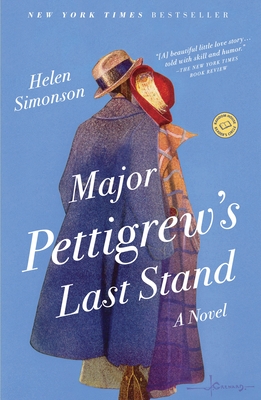
The release of Helen Simonson’s first novel since Major Pettigrew's Last Stand is perfectly timed. Just as America’s dramatic obsession with Britain’s World War I-era idiosyncrasies is left behind by the finale of Downton Abby, we get The Summer Before the War to put us right back in the English countryside. 

The Summer Before the War takes place, literally, the summer before World War I breaks out in 1914. But in Sussex, where the small towns and hamlets seem so removed from the violence of the Ottoman Empire, the most controversial thing to happen is the arrival of a young, attractive, female Latin teacher. 

Coming off the heels of Simonson’s first triumph with Major Pettigrew, as well as its reminiscence of Downton’s characters and imagery, Simonson’s new novel is already receiving high praise

In preparation for her appearance at our Lake Forest Park store on March 30th, we asked her what she’s been reading now that her novel’s hitting shelves. It’s a new series we’re going to feature on the blog and in our newsletter, but we thought Simonson would be the right author to start things off.       
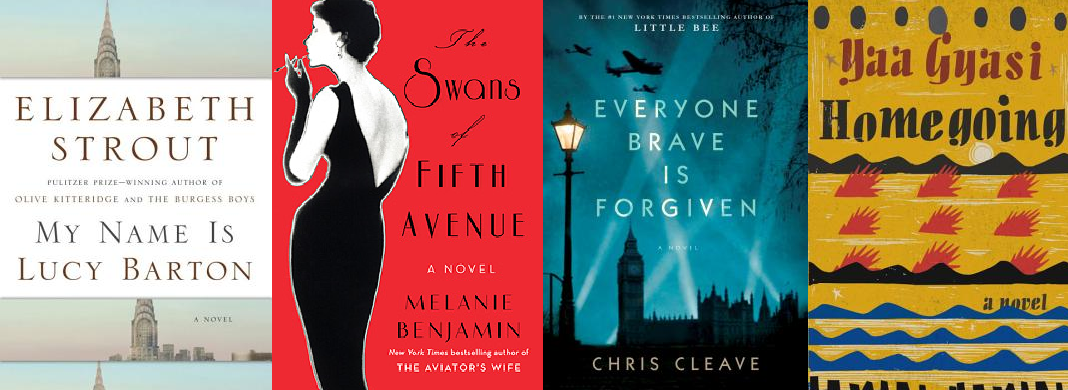
Maybe it's possible to find new pockets of time for reading?  I've just discovered that on a plane I can read a real book all through take off, landing and that endless waiting on runways for the ground crew to get back from lunch and open the gate. And what am I missing - mindless TV or the humiliation of snoring in the middle seat?  Among the high-flying books I've read?  Try The Swans of Fifth Avenue by Melanie Benjamin, a fascinating portrait of betrayal for Truman Capote fans. I've read and re-read My Name is Lucy Barton by Elizabeth Strout (just nominated for the Bailey's Prize) because it's a master class in creating a unique voice.  And I've been lucky enough to read advance copies of Everyone Brave is Forgiven, by Chris Cleave (coming May) and Homegoing by Yaa Gyasi (coming June).  The former is a gripping World War II story of love and duty set in London and the siege of Malta and the latter is a stunning debut exploring the history of slavery in Ghana and tracing many generations; including those who remained and those who were shipped as slaves to America.  With books as good as these, my new reading habit just might stick!

Please join us on Wednesday, March 30th at 7:00PM, for Helen Simonson in conversation with local fave, Jennie Shortridge.

Saturday, October 24, 2015

The Paris Review Interviews

Were you aware that the Paris Review, esteemed literary journal and propaganda tool of the CIA, prints extended interviews with novelists, poets, playwrights and at least one comics artist? Perhaps so. But were you also aware that you can access their entire archive of interviews via the globally connected computer network known as the Internet? And I recommend that you do. I can't get enough of them. They date all the way back to the 1950s and include everyone from T.S. Eliot and Ernest Hemingway to Brett Easton Ellis, and the mysterious Elena Ferrante. Here's a random selection of excerpts from some of my favourites.

***
Joyce Carol Oates on the advantages of being a woman writer:

Advantages! Too many to enumerate, probably. Since, being a woman, I can't be taken altogether seriously by the sort of male critics who rank writers 1, 2, 3 in the public press, I am free, I suppose, to do as I like. I haven't much sense of, or interest in, competition; I can't even grasp what Hemingway and the epigonic Mailer mean by battling it out with the other talent in the ring. A work of art has never, to my knowledge, displaced another work of art. The living are no more in competition with the dead than they are with the living . . . Being a woman allows me a certain invisibility. Like Ellison's Invisible Man.

Gore Vidal engaging in exactly the kind of masculine one-upmanship that Joyce Carol Oates disapproves of:

Every writer ought to have at least one thing that he does well, and I’ll take Truman’s word that a gift for publicity is the most glittering star in his diadem. I’m pretty good at promoting my views on television but a washout at charming the book-chatters. But then I don’t really try. Years ago Mailer solemnly assured me that to be a “great” writer in America you had to be fairly regularly on the cover of the Sunday New York Times book section. Nothing else mattered. Anyway, he is now what he wanted to be: the patron saint of bad journalism, and I am exactly what I set out to be: a novelist.

Italo Calvino on trying to work in the morning:

Each morning I already know I will be able to waste the whole day. There is always something to do: go to the bank, the post office, pay some bills . . . always some bureaucratic tangle I have to deal with. While I am out I also do errands such as the daily shopping: buying bread, meat, or fruit. First thing, I buy newspapers. Once one has bought them, one starts reading as soon as one is back home—or at least looking at the headlines to persuade oneself that there is nothing worth reading. Every day I tell myself that reading newspapers is a waste of time, but then . . . I cannot do without them. They are like a drug. In short, only in the afternoon do I sit at my desk, which is always submerged in letters that have been awaiting answers for I do not even know how long, and that is another obstacle to be overcome.

Pablo Neruda on symbols:

NERUDA I don’t believe in symbols. They are simply material things. The sea, fish, birds exist for me in a material way. I take them into account, as I have to take daylight into account. The fact that some themes stand out in my poetry—are always appearing—is a matter of material presence.

INTERVIEWER What do the dove and guitar signify?

NERUDA The dove signifies the dove and the guitar signifies a musical instrument called the guitar.


Check them out for yourself, and let us know what your favourites are!

-Stephen

Saturday, August 30, 2014

Meet the Author: Stuart Rojstaczer and The Mathematician's Shiva

We here at the Ravenna location are getting pretty keyed-up for our upcoming events. This fall is chock full of great author visits, and other awesome activities like a pajama party for kids, storytime for grown-ups, and some huge author luncheons.

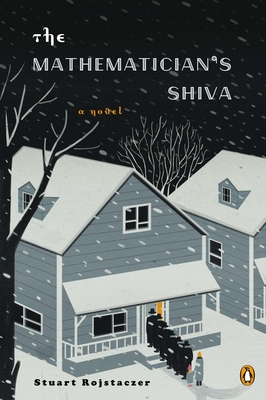
First up, we are so excited to welcome Stuart Rojstaczer and his new novel The Mathematician's Shiva. Stuart has been a university professor, a dishwasher, a musician, a scientist, the nation's foremost expert on grade inflation, and now a novelist. To get you equally keyed-up, and as a sort of introduction, we've asked Stuart a few bookish questions.

Stuart will join us at the Ravenna location on Satuday, September 6th at 7 PM.

What is the last really great book you read?
The last new or newish book was The Orphan Master's Son by Adam Johnson. The last older book was Dead Souls by Nikolai Gogol (a re-read).

What are the next few books on your to-read list?
If you could read one book again for the first time, what book would it be?
Candide by Voltaire. I think that was the first time I realized you could be smart and funny and still be important as a writer. I loved the feeling that recognition gave me and I'd love to re-experience it.

What book would people be surprised that you've read and enjoyed? 
Cheaper by the Dozen by Frank Gilbreth and Ernestine Gilbreth Carey. I read it to my daughter years ago. It's not well written, but it's a fun story about a geeky, brainy family. That's my kind of family.

How are your bookshelves arranged at home?
All fiction and letters of fiction writers are in one grouping arranged alphabetically by author. Then there is a travel section arranged alphabetically by city/country. Then there is a baseball section. Then there is an education section. Then there is the "everything else" section arranged alphabetically by author.

What is your favorite bookstore? 
Books Inc. in Palo Alto, CA. It's not only a great little bookstore with a knowledgeable staff, but that staff will also, on occasion, serve up a stiff margarita. Take that, Amazon!

Who are your 5 favorite authors?
That's a loaded question! If favorite means, ooh, a new book is coming out, I've gotta get it, then number one right now would be Ian McEwan. There are a boat load of contemporary authors I admire. In terms of living American writers who have paid their dues and would be first on a ballot of Hall of Famers (and there should be a Writers Hall of Fame somewhere in America): in no particular order, Doctorow, Smiley, Ford, Chabon, Pynchon, and Banks. That's six. I'll stop there.

Do you have any weird writing process quirks?
I say a little "prayer" in Yiddish when I start. It's a kind of summoning. Seems to set the mood quite nicely.
  
What's next for you? 
Finish my next novel!

You should also check out Stuart's interesting Publisher's Weekly piece on the difference between doing science and writing novels.

The Mathematician's Shiva by Stuart Rojstaczer

“A brilliant and compelling family saga full of warmth, pathos, history, and humor.” –Jonathan Evison, author of West of Here 

“A hugely entertaining debut.” –Publishers Weekly

When the greatest female mathematician in history passes away, her son, Alexander “Sasha” Karnokovitch, just wants to mourn his mother in peace. But rumor has it the notoriously eccentric Polish émigré has solved one of the most difficult problems in all of mathematics, and has spitefully taken the solution to her grave. As a ragtag group of mathematicians from around the world descends upon Rachela’s shiva, determined to find the proof or solve it for themselves—even if it means prying up the floorboards for notes or desperately scrutinizing the mutterings of her African Grey parrot—Sasha must come to terms with his mother’s outsized influence on his life.

Spanning decades and continents, from a crowded living room in Madison, Wisconsin, to the windswept beach on the Barents Sea where a young Rachela had her first mathematical breakthrough, The Mathematician’s Shiva is an unexpectedly moving and uproariously funny novel that captures humanity’s drive not just to survive, but to achieve the impossible.

Tuesday, July 5, 2011

Charles Yu Interview

Charles Yu's debut novel, How to Live Safely in a Science Fictional Universe, now in paperback from Vintage, is a creative and evocative time travel story, about a young man searching for his missing father. Along for
the journey are a fictional dog and a time machine with attitude problem. It's a book that equally investigates human nature as it does quantum physics. Charles Yu stopped by Third Place Books to sign books and chat with
Vladimir over at Third Place Press.

V: HTLSIASFU is one of those books that, when you start to talk to someone who's read it, or is reading it, suddenly you end up finding all these different facets to the book. We talk about some of the narrative dynamics, we also talk about some of the world-building; there's so much stuff that we can explore each time, it's kind of prismatic, we all come up with a new thing. And for me, being a life-long science fiction fan, it's amazing: your book is very concise, and with all the ideas that you have in it you could write a book five times bigger. How did you stop yourself from making your book so detailed?

C: Every book starts with fear. I was a little afraid--I would also describe myself as a science fiction fan, I'm still confident in my fandom. I read Asimov when I was in eighth grade and I became hooked--and I wanted to touch on all of these things and then when I got to some of the world-building and, as you said, some of the meta-science fiction stuff and then the
science fiction stuff itself, as I would get too far down the road in any one area, I would get a little afraid that I was getting in over my head. I didn't want to start building a world and then suddenly realize I didn't
Author Charles Yu
have all the tools to make this what it should be. So I would consciously stop myself as say, "O.K. I'm making my world simpler, I'm going to make this smaller," and then on a large scale that's really what I did; the universe in which the book takes place is Minor Universe 31, and I really did want to get the feeling of a place that was pretty compact; it was easier for me to manage and feel like I could do a small world justice, I'll
try for a bigger world sometime in the future.
 
  V: It's interesting because by the very fact that you didn't have confidence in your world-building, you actually made the book much more accessible to people who don't usually read genre, because sometimes I think when people who don't read genre approach it, they're put off by all the meticulous details. Your book comes off a lot more similar in tone to certain poetry like Alan Lightman's "Einstein's Dreams". I don't know if you've read it-- 
C: Yes, yes I have. I appreciate at comparison. I love that book.
Vlad
V:--  [your book] is so hard to describe and I had to find a starting point so that people could access the book. It's worked out in your favor in that it will have a broader appeal, because of the fact that you restricted
yourself. You mentioned earlier Asimov; are there any other influences that went into making your book?

C: The other big influence-- Asimov, because in the Foundation series he invents a science called Psychohistory, which was an inspiration for me creating Chronodiegetics- this fake science my book. The other major influence that I kept going back to was Nicholson Baker whose very first book, "The Mezzanine", is a book that takes place basically, during the course of a guy riding an escalator one level. The very first words in the book--I'm afraid I might get is wrong--are 'At almost one o'clock.' So he's already indicating to you that this is a book about being stuck between levels, stuck between moments; it's a book filled with footnotes, digressions, it's a book made from digressions essentially. And it's kind of about thought itself and what it's like to be in-between, and keep slicing more and more finely and more and more thin, the moment, and really look at something so closely. It's a book that takes place entirely in this guy's head. And as strange as it sounds, I wanted to write a book about an entire universe that in a sense, is an interior space. 
V: your thoughts on genre-- some people might say that this is a cross-genre book, but you were heavily influence by genre. How do feel about genre distinctions, how do they apply to writers and the industry. Any thoughts you have on that? 

C: I can't speak for anyone but myself, but I'm going to go ahead and try.
My guess is that a lot of writers who are not hard and fast in the genre,
don't approach the book at all--in terms of thinking in genre. They're
approaching it from a very one-off stance; they're saying, " what is *this*
book going to be?" and from book to book they can go wildly in one direction
or another. So unless you're writing Noir or Hard SF, or Fantasy, you're
probably not super-comfortable with labels. That said, I've now written two
books--the short story collection [Third Rate Superhero], and this novel,
and both have elements of speculative fiction, and I'm working on something
now and if I had to guess, it will also end up having many speculative
fiction elements in it. I don't know why, I'm not really trying to get away
from it, and I'm not trying to do it consciously.

V: They're essentially writer's tools rather than something that people think of as genre: convention-goers and such. It seems like a lot of writers outside of genre seem to be embracing these tools because they make stories more creative.

C: That's a great way to put it. I think with these tools you get to have
the benefit of lots of other stories as reference. There are symbols,
markers that I get to put in the background while you're reading my story,
and I get to cheat, I get to piggyback on some of those other stories.
Science Fiction is very rich with conventions, and I don't mean with
'rules'; people know how to read SF, they are expecting certain things, or
they know that there's this universe of stories told already, so that you
have this mental library of what's been done. And because of that it's
actually not limiting, it's more freeing, because people can go and read
your brand-new story having had some kind of instruction on how to read a
story like it but not exactly like it Did that make sense?

V: Yes, yes it did. That's a great way of putting it. 
 
Order your copy at Third Place Books.com

Saturday, October 9, 2010

Sloane Crosley Interview, part deux

VV: Take a Stab At It is a good example of what I kind of see as a bit of hyper-realism that approaches fiction. It was a very interesting surprise that happens in the middle of that essay suddenly I found myself in the middle of a ghost story and I didn’t expect it. Your essays made me think of – I had to look it up because I’d forgotten what the term was but now they call it New Journalism, Creative Nonfiction, authors like Didion and Wolfe and Truman Capote – were they a big influence on you?

SC: They definitely are. Oh my gosh! They’re so big that that I wouldn’t even name them as influences because I feel almost uncomfortable at all being mentioned in the same breath. It’s not like I was writing and I thought, “Well, God, you know, geez, what did Truman Capote do? Let me look.” And think that I could possibly even pretend to imitate. But I think there’s some sort of subconscious way that they’re influencing me while I write. I try not to read – I read those people or reread works of theirs that I love, you know, God, I mean, Truman Capote, Other Voices, Other Rooms, and Goodbyes and all that and the Didion and stuff like that. But you go back and visit something like Slouching Towards Bethlehem, but afterwards. While you’re writing it, I think it’s important to read the phone book, or the back of cereal boxes—or a big giant novel, or anything, anything else. But yeah, that particular essay, it’s funny, because people have all these tiny little things that seem embarrassing that really aren’t risking that much. And you know? That’s the gamble of the last essay, that’s risking a lot. And that essay you just referenced, Take A Stab At It, is risking a lot because it’s much more risky to say, “I full-on believe I saw a ghost when I was nine and here’s the story,” versus, you know, “Oh, I got caught picking my wedgie in the street.” Wooooooo! It’s not – it’s so funny that the things people think are everyday embarrassments, I don’t feel remotely shy about sharing.

VV: Ah, yes. An Abbreviated Catalog of Tongues. It’s a great title and also the experience of raising countless amounts of animals is really spot on because that’s what happened with me and my family. My mother and my older brother were always having this just obsessive need to have pets around. You know, they did have a lot of pets in the family –

SC: [Laughs.] Oh, they’re family. Don’t confuse, yeah – if you have a loyalist in your household, do not make the mistake of calling them ‘pets’ – they’re brothers and sisters. [Laughs.]

VV: And it was really funny, because, you know, you’d think you’d go through as traumatic an experience as the loss of an animal and then, nope, a few weeks later or a few months later, there’d be a new animal.
Do you own a pet now?

SC: I’m so happy you asked, because I’m proud to be a crazy cat lady. Although I think you’re not a crazy cat lady if you have one. And I do have one, and her name is Mabel. And she was adopted from a family. She was abandoned in an apartment complex in North Carolina and my friend who went to West Point and was stationed at Fort Bragg and was renting out somehow an apartment in this complex and found Mabel as a kitten. She was given birth to by this cat who had been abandoned, I’m sure – and this is not a very interesting story – but the one funny part is that I ended up adopting her and she – you know, if you’re going to get a cat and adopt it, you should have it litter trained by someone who went to West Point.  Because the cat has never done anything wrong. She’s like the most perfectly affectionate, lovely animal, who’s never pissed or shat anywhere otherwise than where she’s meant to. So – it’s not my fault she’s so cute. She was born that way. So that is my story, to answer your question, “Do I have an animal?”

VV: Well, I was wondering if you had been burned out by the whole experience of growing up with animals.

SC: I had a long, long time in which I had no pets, and perfectly happily, so, I mean, obviously through college, and about the first four or five years in New York, and you know, and then I had no intention of getting one, actually, and then she came my way.

VV: Well, okay. So a couple of very brief questions, and I know you hate being put on the spot about this sort of stuff.

SC: I do? I do hate that? Have I gone the record saying that I hate –

VV: Phobias.

SC: Phobias. Oh yes do I ever. I hate knives. And little kids with sticky lollipops who are unmanned – just running around with sticky things, and I don’t know where their parents are. And then my biggest phobia by far is, I don’t like speed. Roller coasters. Planes taking off. Motorboats, that’s a big one. Just speed. Anything that moves super-duper-duper fast.  I really, really, really hate it. That is my biggest fear. So…

VV: Huh. So no dream of being an astronaut?

SC: No.

VV: [Laughs.]

SC: I hate planes; it’s funny. I have a pretty terrible fear of flying and turbulence and things of that nature because of that. It’s very specific –I have no claustrophobia, I’m not afraid the plane’s going to crash, I’m fine with being in that space for a while. None of that’s a problem. So it’s funny when you’re flying and you explain what it is to people and they’ll inevitably – even if you explain it’s takeoff – they say, “Oh, but it’s a short flight!” Well, do you have to leave the ground because of it? So I guess a speedy chamber with lollipops everywhere and knives sticking out would be my worst nightmare.

VV: Wow. That would be one interesting astronaut training program.

SC: Yes.

VV: So several of your essays involve traveling to places like Alaska and Portugal and so on. Any places you’re still craving to visit?

SC: Oh, my gosh. Yes, tons.
The truth is, if anyone expects this to be a travel book, they’re going to discover that I’m quite poorly traveled. I mean, I would love to go to Japan, Thailand, Africa especially, India.  I would love to go to Brazil. Yeah, places like that. So the list is endless. Unlike the fears, which are finite, the list of places I want to travel is pretty huge.
I can’t read a travel article without thinking, like, “Okay….now how am I going to do this?”

VV: How involved are you with the Internet?

SC: I am poorly involved with the Internet. I do have a Twitter feed and I do have a Facebook account. I try and keep them up, and I think certain writers, Colson Whitehead is a good example, we were just talking about him earlier, and he has taken to it like a fish to water. And certain writers have the humor of the pithy remark. And some just don’t care for the format of it. I do like it but I don’t do it nearly enough. But I also don’t have the Internet at home.

VV: [Laughs.] Really?

SC: Total Luddite. Yeah, I don’t have it at home. I mean, I have a day job where I have it all day long. I’m constantly exposed to media, all sorts of magazines, books, whatever. I’m constantly online, you know, refreshing various web pages. I have a BlackBerry for emergency emails, and I just don’t have it at home.
It’s rarely, rarely a problem.

VV: The reason why I was asking is that it crops up with certain writers about how distracting the Internet is.

SC: Yes. I’m not really distracted by it.

VV: The other part of that question was, “Do you Google yourself?”

SC: Oh, yeah. Sure. I’ll self-Google. But not a lot.

VV: Is it surprising what you come across sometimes?

SC: Mmm – nah. I don’t think I’ve ever been just shocked or anything like that. I’m not surprised by reviews. I think sometimes people’s personal blogs can be surprising because I think, even if it’s negative, a weird part of me is flattered because I rarely have the urge to share my opinion with everyone constantly. And that can be good or bad. I’m certainly grateful for the people that have enjoyed my stuff and they do share it with their friends. I mean, word of mouth and buzz is really I think how a book like this exists. And sometimes it can be intense – really, really fun. I mean, critiques like, “Why are you not writing for somewhere else?” And sometimes the negative ones can be fun too. But I’ve just never had  the urge to directly interact with the person who either provided the entertainment or the horror.  I‘ve enjoyed something, or been appalled by it, and I’ve taken it into my own life and told people about it.

VV: How does it feel being in the publishing industry now you’re actually kind of the product rather than the promoter or the publisher? How does that inform your overall understanding publishing now?

SC: Well, think there was something I had lost a little bit when my first job was for a literary agent where you’re taught,  the author is right’ and you’re ‘protecting the author against the big bad publishing house,’ and then pretty quickly I ended up working for a big publishing house, and then another big publishing house, and I’ve been there for about nine years. And I think that you now realize, you see things a little more balanced. I think I’d gone too far the other direction of thinking that people’s expectations were too high, or not worrying enough about different authors’ feelings, and I now see what it’s really like to be on the road and it’s rough. But on the other side is, not that rough. You know, I’m sorry you have to wake up at 6:00 AM so that you can then go to a bookstore where people will listen to what you wrote, because someone’s bound it. Like, that’s a pretty sweet experience. So unless you’re AS Byatt, you’re Philip Roth, you’re Toni Morrison – who should never be woken up at 6:00 AM for a flight, you know – aside from that? Suck it up. That’s my conclusion.

Friday, October 8, 2010

Sloane Crosley Interview

Sloane Crosley stopped by Third Place Books recently to sign some copies of her newest collection of essays, “How Did You Get This Number?” While she was here Vladimir, who runs Third Place Press and operates ‘Ginger’, our Espresso Book Machine, had the opportunity to ask Sloane a few questions:

(Vladimir is introduced to Sloane Crosley. A brief moment of awkwardness while they discuss accents, podcasts, the Espresso Book Machine in the room, being a fan, and finally Vladimir figures out that his tape recorder is actually working)

VV: When you first started writing, was the essay form your aim, or just something that kind of happened to come up?

SC: I think the concept of making people laugh is certainly an aim. It’s not always the aim, but when I first started writing I thought I was going to write fiction – and I still might write fiction but the essay form for now, at least, is what’s coming more naturally to me.
Writing is a strange thing. I mean, you’re a volunteer. No-one needs you, so the question is sort of, “Why write?” Because you try to respect yourself and you try and get close to whatever it is you feel you have to say or whatever it is, the combination of what you feel you have to say and what you feel other people have to hear. It’s important to have the balance between that. I start writing essays, I generally know about 80% of what’s going to go in there. And then I generally end up learning, through a boomerang effect about 20%, something I didn’t know before I started writing about how I feel about an experience or really about what something means. And that’s what I do like about the essay format, and when you get that with fiction.

VV: How does the humor always slip in?

SC: Hopefully naturally and hopefully amusingly. I don’t really know. I think humor is a very difficult thing to talk about because the second you try and address why something is funny, how it’s funny, – when do you pull back,?when do you insert something? – . It kills it a little bit. Yyou do have a natural instinct when you’re editing, thinking, “Well, this is going too far in one direction. You know, too slapsticky, or this is trying too hard, not trying hard enough.” You have a sense when you edit it, but when you first write it, I have no idea. It’s a funny thing that – I mean, I don’t know how one gets funny or how –

VV: You’d rather leave it a little mystical?

SC: I would actually rather do the opposite. I’d rather know exactly how it works, because then I could harness it a hell of a lot better and make all these essays perfectly funny.

VV: Do you think the label of a “humorist” can get in the way of a writer’s ability to grow?


SC: I think any kind of label does that, I mean, unless your label is, you know, “Pulitzer Prize winner.”
You could probably grow under that, with that kind of soil. But it does get in the way a little bit. You just want to make sure people know what they’re buying. It’s the same thing as if you label something “chick lit” and it’s not, or you label something as “Memoir” but this doesn’t really feel like a memoir to me. I mean, they’re essays. That’s something very different. I don’t think of myself as telling my life story, you know. If people are disappointed because they don’t like your book, or they think they wanted it to be better, or they don’t think it’s “whatever” enough, that’s fine. That’s totally their right, but it’s dangerous if they think, “Oh, this is going to be just like this other writer,” and then it ends up being maybe a little sadder, maybe a little darker than they thought it was going to be. You just want to make sure that everyone knows what they’re getting into.

VV: So, it must be risky to lay your life out so honestly. What kinds of reactions are you getting from friends and family?

SC: Mostly good. While this sort of a slightly darker, more melancholy book [Than the first collection, “I Was Told There Would Be Cake’], it is nicer in a way. I think [the people I’ve written about] could take it in a lot of ways and there are a couple tributes to certain friendships and obviously those people aren’t going to complain. Most of them sort of aim the ridicule at me, and sometimes they turn the shield outwardly [toward] people that I’m not really talking to so I don’t know what they think. But they know that they’re buried, any identifying characteristics or salient details are completely glossed over. They’re not their real names or where they work and they’re also essays, so therefore they’re not, you know, permeating the entire collection, so at a certain point the responsibility comes off me and is back on to them. If they want to tell everybody that they’re outraged that I said that I had a roommate I didn’t get along with—I’m not telling anyone who it is.
It is kind of a funny line to walk, though. At what point does the responsibility no longer become you. It’s the same thing with reading in general. At what point have you lost control of what you’ve written and the fact that it’s now public domain?

VV: True. When people sit around and discuss your book and it turns out they’ve pulled things out that were never there?

SC: Mmm. That’s amazing. I mean, that’s actually something everyone learns in fifth grade when you start reading the sonnets or whatever, and you start: “ the host of golden daffodils” and what this means and you think, “I had that, Marshall McLuhan moment from Annie Hall when Woody Allen is, you know, on a line and someone’s debating about the director’s work and what it means. And all of a sudden the director appears and says, “Actually, no, that’s not at all what I meant. You’re totally wrong. You’re way off base.” You kind of wish for that.

VV: This is kind of a follow-up to what you just mentioned, but I did notice that your new book is – it’s more nuanced. It’s still very funny, but you’ve developed a deeper sympathy towards the world at large and how your personal experiences fit into it which I think enriches the whole experience of your essays. Was it harder to write this book because of that?

SC: It’s interesting. I mean I thought maybe people might read this one. [Laughs.] I didn’t write the other one thinking that anyone would, and I think that honestly maybe it boils down to something as simple as that. But beyond that, I wanted to challenge myself a little more. I wanted to write about things that were objectively unfunny. Being lost; Having a weird crisis about furniture; Having a violent experience with a bear; Being broken up with; almost moving into a crazy old brothel. You know, these are not always really funny. And I think the trick is to make them funny, and if you can do that—I don’t know if all of these pull it off or not—but when they do, I think that’s the writing I’m most proud of. And really the last essay, which is almost novella-like, was really hard to write —I’ve never really written about relationships because it’s not something I’m particularly interested in writing about. These aren’t very female-oriented essays except that one. That is the only one that kept me up at night.

VV: Well, speaking of that essay, that was probably the one that I connected with the most, and I think any writer’s hope is to be able to make that kind of connection with someone. You mentioned that was more of a female kind of perspective, but I think you really managed to walk that line. I have to say, vouching from a guy’s point of view, I think that the things you explore in that story are universal. I personally found it cathartic for personal reasons so I really appreciate it.


SC: Oh good! I mean, that’s the thing. It’s so hard, especially with narrative non-fiction – if something—not bad, even, but just off-kilter—something significant happens to you, the world is not your therapist. What are you working out on the page? And that line between essentially blogging and journaling and actually creating something that has structure, that has meaning, that is at least trying for something. I would never say that all of these succeed in that. But I know I can say with authority that they’re all at least trying to connect somehow.
I think the “only connect” thing – might be the answer to why I’m writing to begin with. [Laughs.]

VV: I get that. I think ego is kind of out of the equation when it comes to writing. At a certain point, everybody just wants to get in touch with the world at large sometimes.


SC: Yeah, it enters back in when you’re thinking, “Which one of these should be my author photo?” But you cannot possibly be in your head when you’re writing, if you want to write anything.

Stay tuned for Part 2 of the Sloane Crosley interview coming tomorrow!

Thursday, February 18, 2010

An Interview with Chris Bohjalian

Recently our very own Cheryl McKeon was able to sit down with bestselling author, Chris Bohjalian. Check out her interview below.

Secrets of Eden, Chris Bohjalian’s twelfth novel, again examines a social issue as revealed through engaging characters and gripping plot twists.

Why does he choose these often controversial topics for his books?

“Nobody wants to write a 15,000 word Op-Ed piece,” he laughs, “but I do want to tell a ripping good yarn.”

And his popularity and sales attest to the fact that, indeed, his yarns are good ones. Secrets of Eden appeared on the Publishers’ Weekly bestseller list just 5 days after its release.

“I base my novels on one precise idiosyncratic moment,” he said in a recent Third Place Books visit. While researching The Law of Similars, a 2000 novel, he met with a victims’ rights advocate who showed him Polaroid photos of head indentations in sheetrock.

“I never stopped thinking about those images,” he said. After Double Bind, his eleventh novel, was published, sexual violence and domestic abuse victims from around the country wrote asking if they’d met him, because he seemed to know their stories.

With the Polaroid images still on his mind, he researched Secrets of Eden, which opens with a husband and wife’s apparent murder – suicide, and includes a “snarky” pastor whose involvement in the tragedy forces him to examine his faith.

Asked who his most autobiographical character might be he referred to Stephen Drew, the minister. “I fear that’s who I’d be as a pastor!” Bohjalian says with a slight shudder.

The novel is set in his home state of Vermont, which he says is known for foliage, syrup, and gourmet ice cream, but where two-thirds of its homicides (15 in 2008) are domestic abuse.

Growing up in a family that moved frequently, Bohjalian treasures his home, family and life as a writer that revolves around that stability. Nine of his 12 books are set there.

He is proud of his recognized ability to write from the perspective of female characters, noting that a reviewer of Midwives complimented “Chris Bohjalian’s accurate description of her childbirth experience...”

He plans to write a sequel to Skeletons at the Feast, an exception to his Vermont setting, a WWII novel set in Poland and Germany. The last sentence in the book gives a clue to what will happen, he shares.

And the protagonist of his next book is a pilot of a small plane who does not share Sully Sullenberger’s story but crashes in a deadly Lake Champlain landing, and his attempt to recover from the tragedy by moving to a small – yes, Vermont – town.

Autographed copies of Secrets of Eden and Bohjalian’s other titles are available at Third Place.

Posted by Cheryl

Thursday, February 11, 2010

Connie Willis Talks to Third Place Books

Interview conducted by Monica Jacobson and Cheryl McKeon

"When the dust settles on the 20th century’s writers, it’s the genre authors who will be remembered" -- Connie Willis

Science fiction author Connie Willis knew at 13, when she read Robert Heinlein’s Door Into Summer, that she wanted to spend her life as a writer.
Now, after 10 Hugo and six Nebula Awards, and on the release of Blackout, her first novel since 2002, she says, “How many of us get to do what we wanted to do at 13?”

Recently inducted into the Science Fiction Hall of Fame, she reflects on her adoration of Heinlein and the fact that her first visit to a Science Fiction Convention was just a year after Heinlein’s last appearance. “It’s just as well,” she says, imagining that she would have embarrassed herself by admitting that “I even knew his cats’ names!”
Heinlein's Have Space Suit – Will Travel was also an early influence on Willis, and it was in that novel that she first encountered Jerome K. Jerome's Three Men in a Boat which later inspired her own novel To Say Nothing of the Dog. Most sci-fi readers of the time read Three Men in a Boat after Have Spacesuit; and those who did not, Willis notes, are those who didn't believe Jerome's book was real.