Welcome to the official blog of Third Place Books
Showing posts with label NYRB. Show all posts

Saturday, January 16, 2016

I Think You Forgot Something: L.J. Davis

In an interview on KCRW's Bookworm, Lydia Millet says "humor is about objectification…I have to have the freedom to objectify because of the distancing that always happens when you objectify something. Distance is created that then can be brought back and telescoped into the too-closeness of communion. The idea that we can step out of ourselves and be with others in some fundamental way, the impossibility of that is also present." It's a balancing act few pull off well because, as Millet later goes on to say, "that kind of humor only works when the humorist loves the thing he/she objectifies, that if not handled lovingly, it is simply cruelty." In her inimitable style, Millet perfectly expresses what is so appealing to me in satire or subversive humor.       

This idea and the high-wire act it demands is present in all of L.J. Davis's fiction. The author of four novels first published between 1968 and 1974 (all but one of which, preposterously, is out of print), he was seemingly fascinated by the threat gentrification can pose to the working-class. Tossing well-intentioned, if somewhat self-indulgent, social misfits into the lion's den of  capitalism and alcoholism (synonymous conditions in his work), as well as grimace-inducing look at misogyny and perceptions of race. Davis's characters are men who drowsily saunter after the American dream, hellbent on the simplest of things: a nice place to hang their hat and an occasionally nice girl on whom to hang it. If this description paints the characters as a touch hypocritical, it's not by accident. Blithe can be charming but it is navel-gazing as well. Davis's characters tend to be overly sensitive but defensive men; they are victims but oftentimes that victimhood is borne of their own solipsistic demands. Lena Dunham with a John Wayne complex, perhaps.


Lowell Lake, the protagonist of A Meaningful Life (the one work still in
print), evaluating his marriage:
The old dim pleasantness had departed from their dealings as completely as if there'd never been any to begin with, but a peculiar side effect of this development was that Lowell found himself interested in his wife's personality. He couldn't remember a time when he'd been so interested in it, not even in college, when what had principally interested him had been her ass, if the truth be told, although he had also concerned himself with her personality at least to the extent of finding out whether she had a good one or a bad one. He'd decided she had a good one. Since then he'd thought about it very little except on the infrequent occasions when something seemed to go awry with it, but it always seemed to get fixed pretty quickly, and then it was all okay again, like a table whose wobble had been repaired. The rest of the time it just sort of stood there, a good and serviceable object whose height, width, length, shape color, and approximate density were assumed to be known. You could always count on it; it was exactly the same when you returned as when you left, never mind those phone calls to her mother and the midnight crying fits in the bathroom. It was a good little piece of furniture. For nine years Lowell had been married to a table.
His protagonists move through the novels with absolutely no impulse control, sometimes (mis)guided by a sense of do-goodery, their actions always to the detriment of everyone involved. They are little id-fueled narcissists who "disliked merry people and always suspected there was something wrong with their heads." This past reading of A Meaningful Life, my third, I found myself downright mortified twice but lost count of how many times I laughed out loud. I also found myself squirming through some of his startlingly dry social critique.

Not for everyone, to be sure. But as we move into a new year, the sleepiest time of year for new book releases, and Seattle's weather inflicts its worst on our collective Seasonal Affective Disorder, exploring Davis or one of his contemporaries (Percival Everett's novels, Joy Williams's stories, Michael Robbins's poetry)  could very well be your saving sardonic grace.


-Wesley

Monday, June 2, 2014

New Release Tuesday!

There are tons of new books coming out this week. Tons. Our new release tables will not be able to withstand the weight. I'm serious. You think I'm joking. I'm not.

Here are just a few...
New Hardcovers

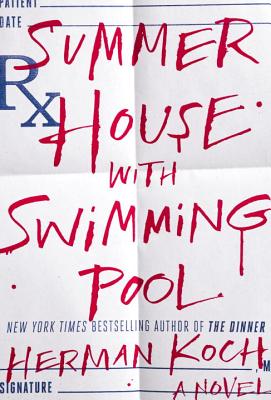
Summer House with Swimming Pool by Herman Koch
Here's the latest from the author of The Dinner.

When a medical procedure goes horribly wrong and famous actor Ralph Meier winds up dead, Dr. Marc Schlosser needs to come up with some answers. After all, reputation is everything in this business. Personally, he’s not exactly upset that Ralph is gone, but as a high profile doctor to the stars, Marc can't hide from the truth forever. 

It all started the previous summer. Marc, his wife, and their two beautiful teenage daughters agreed to spend a week at the Meier’s extravagant summer home on the Mediterranean. Joined by Ralph and his striking wife Judith, her mother, and film director Stanley Forbes and his much younger girlfriend, the large group settles in for days of sunshine, wine tasting, and trips to the beach. But when a violent incident disrupts the idyll, darker motivations are revealed, and suddenly no one can be trusted. As the ultimate holiday soon turns into a nightmare, the circumstances surrounding Ralph’s later death begin to reveal the disturbing reality behind that summer’s tragedy. 

Featuring the razor-sharp humor and acute psychological insight that made The Dinner an international phenomenon, Summer House with Swimming Pool is a controversial, thought-provoking novel that showcases Herman Koch at his finest.

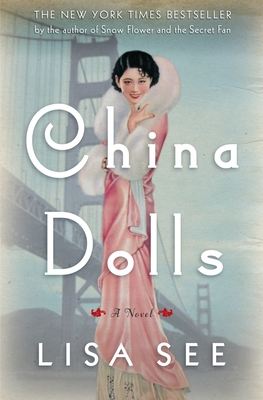
China Dolls by Lisa See
A new one from the author of Snow Flower and the Secret Fan

It’s 1938 in San Francisco: a world’s fair is preparing to open on Treasure Island, a war is brewing overseas, and the city is alive with possibilities. Grace, Helen, and Ruby, three young women from very different backgrounds, meet by chance at the exclusive and glamorous Forbidden City nightclub. Grace Lee, an American-born Chinese girl, has fled the Midwest with nothing but heartache, talent, and a pair of dancing shoes. Helen Fong lives with her extended family in Chinatown, where her traditional parents insist that she guard her reputation like a piece of jade. The stunning Ruby Tom challenges the boundaries of convention at every turn with her defiant attitude and no-holds-barred ambition. 


The girls become fast friends, relying on one another through unexpected challenges and shifting fortunes. When their dark secrets are exposed and the invisible thread of fate binds them even tighter, they find the strength and resilience to reach for their dreams. But after the Japanese attack Pearl Harbor, paranoia and suspicion threaten to destroy their lives, and a shocking act of betrayal changes everything.

Problems with People: Stories by David Gutterson
A new collection of short stories from the author of Snow Falling on Cedars

Ranging from youth to old age, the voices that inhabit Problems with People offer tender, unexpected, and always tightly focused accounts of our quest to understand each other, individually, and as part of a political and historical moment. 

These stories are shot through with tragedy—the long-ago loss of a young boyfriend, a son’s death at sea; poignant reflections upon cultural and personal circumstances—whether it is being Jewish, overweight and single, or a tourist in a history-haunted land; and paradigmatic questions about our sense of reality and belonging.

Spanning diverse geographies—all across America, and in countries as distant as Nepal and South Africa—these stories showcase David Guterson’s signature gifts for characterization, psychological nuance, emotional and moral suspense, and evocations of small-town life and the natural world. They celebrate the ordinary yet brightening surprises that lurk within the dramas of our daily lives, as well as the return of a contemporary American master to the form that launched his astonishing literary career. 

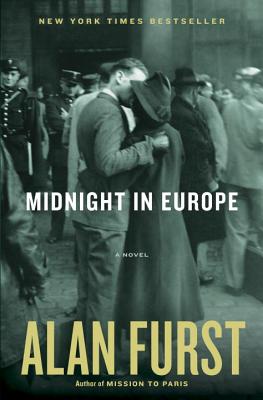
Midnight in Europe by Alan Furst

Paris, 1938. As the shadow of war darkens Europe, democratic forces on the Continent struggle against fascism and communism, while in Spain the war has already begun. Alan Furst, whom Vince Flynn has called “the most talented espionage novelist of our generation,” now gives us a taut, suspenseful, romantic, and richly rendered novel of spies and secret operatives in Paris and New York, in Warsaw and Odessa, on the eve of World War II. 

Cristián Ferrar, a brilliant and handsome Spanish émigré, is a lawyer in the Paris office of a prestigious international law firm. Ferrar is approached by the embassy of the Spanish Republic and asked to help a clandestine agency trying desperately to supply weapons to the Republic’s beleaguered army—an effort that puts his life at risk in the battle against fascism. 

Joining Ferrar in this mission is a group of unlikely men and women: idealists and gangsters, arms traders and aristocrats and spies. From shady Paris nightclubs to white-shoe New York law firms, from brothels in Istanbul to the dockyards of Poland, Ferrar and his allies battle the secret agents of Hitler and Franco. And what allies they are: there’s Max de Lyon, a former arms merchant now hunted by the Gestapo; the Marquesa Maria Cristina, a beautiful aristocrat with a taste for danger; and the Macedonian Stavros, who grew up “fighting Bulgarian bandits. After that, being a gangster was easy.” Then there is Eileen Moore, the American woman Ferrar could never forget.

New Paperbacks 

Let's Explore Diabetes with Owls by David Sedaris

A guy walks into a bar car and...

From here the story could take many turns. When the guy is David Sedaris, the possibilities are endless, but the result is always the same: he will both delight you with twists of humor and intelligence and leave you deeply moved. 

 Sedaris remembers his father's dinnertime attire (shirtsleeves and underpants), his first colonoscopy (remarkably pleasant), and the time he considered buying the skeleton of a murdered Pygmy. The common thread? Sedaris masterfully turns each essay into a love story: how it feels to be in a relationship where one loves and is loved over many years, what it means to be part of a family, and how it's possible, through all of life's absurdities, to grow to love oneself.

Last Words From Montmarte by Qui Miaojin
Here's some NYRB action for you.  Man, I love these.

When the pioneering Taiwanese novelist Qiu Miaojin committed suicide in 1995 at age twenty-six, she left behind her unpublished masterpiece, Last Words from Montmartre. Unfolding through a series of letters written by an unnamed narrator, Last Words tells the story of a passionate relationship between two young women—their sexual awakening, their gradual breakup, and the devastating aftermath of their broken love. In a style that veers between extremes, from self-deprecation to pathos, compulsive repetition to rhapsodic musings, reticence to vulnerability, Qiu’s genre-bending novel is at once a psychological thriller, a sublime romance, and the author’s own suicide note. 

The letters (which, Qiu tells us, can be read in any order) leap between Paris, Taipei, and Tokyo. They display wrenching insights into what it means to live between cultures, languages, and genders—until the genderless character Zoë appears, and the narrator’s spiritual and physical identity is transformed. As powerfully raw and transcendent as Mishima’s Confessions of a Mask, Goethe’s The Sorrows of Young Werther, and Theresa Cha’s Dictée, to name but a few, Last Words from Montmartre proves Qiu Miaojin to be one of the finest experimentalists and modernist Chinese-language writers of our generation.

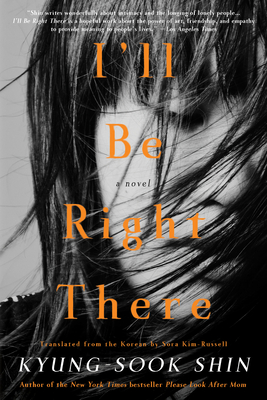
I'll Be Right There by Kyung-Sook Shin

Set in 1980s South Korea amid the tremors of political revolution, I’ll Be Right There follows Jung Yoon, a highly literate, twenty-something woman, as she recounts her tragic personal history as well as those of her three intimate college friends. When Yoon receives a distressing phone call from her ex-boyfriend after eight years of separation, memories of a tumultuous youth begin to resurface, forcing her to re-live the most intense period of her life. With profound intellectual and emotional insight, she revisits the death of her beloved mother, the strong bond with her now-dying former college professor, the excitement of her first love, and the friendships forged out of a shared sense of isolation and grief. 

Yoon’s formative experiences, which highlight both the fragility and force of personal connection in an era of absolute uncertainty, become immediately palpable. Shin makes the foreign and esoteric utterly familiar: her use of European literature as an interpreter of emotion and experience bridges any gaps between East and West. Love, friendship, and solitude are the same everywhere, as this book makes poignantly clear

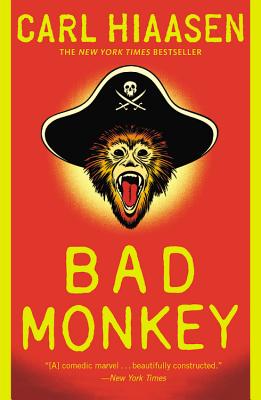
Bad Monkey by Carl Hiasen
Michael loved this one!

Andrew Yancy-late of the Miami Police and soon-to-be-late of the Monroe County sheriff's office-has a human arm in his freezer. There's a logical (Hiaasenian) explanation for that, but not for how and why it parted from its shadowy owner. Yancy thinks the boating-accident/shark-luncheon explanation is full of holes, and if he can prove murder, the sheriff might rescue him from his grisly Health Inspector gig (it's not called the roach patrol for nothing). 

But first-this being Hiaasen country-Yancy must negotiate an obstacle course of wildly unpredictable events with a crew of even more wildly unpredictable characters, including his just-ex lover, a hot-blooded fugitive from Kansas; the twitchy widow of the frozen arm; two avariciously optimistic real-estate speculators; the Bahamian voodoo witch known as the Dragon Queen, whose suitors are blinded unto death by her peculiar charms; Yancy's new true love, a kinky coroner; and the eponymous bad monkey, who with hilarious aplomb earns his place among Carl Hiaasen's greatest characters. 

Here is Hiaasen doing what he does better than anyone else: spinning a tale at once fiercely pointed and wickedly funny in which the greedy, the corrupt, and the degraders of what's left of pristine Florida-now, of the Bahamas as well-get their comeuppance in mordantly ingenious, diabolically entertaining fashion. 

See, tons.

Sunday, March 30, 2014

Books About Pets

Do you have a young reader who's also a pet owner...or maybe a young reader who wants  to be a pet owner?  If so, here are two new children's illustrated books that they will love.  You will too.

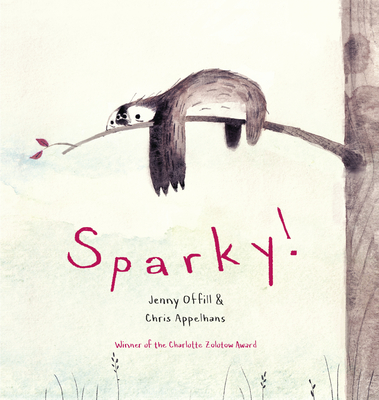
Sparky! by Jenny Offill and Chris Appelhans

The ingenious author of 17 Things I'm Not Allowed to Do Anymore and a brilliant illustrator and production designer of the Coraline movie have created a hilarious, touching picture book perfect for young animal lovers. Like the Caldecott Medal-winning Officer Buckle and Gloria, Sparky stars a pet who has more to offer than meets the eye. When our narrator orders a sloth through the mail, the creature that arrives isn't good at tricks or hide-and-seek . . . or much of anything. Still, there's something about Sparky that is irresistible.

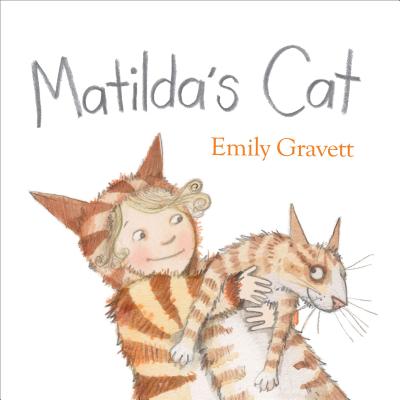
Matilda's Cat by Emily Gravett

This delightful picture book with Emily Gravett's signature twist ending sweetly depicts the relationship between a child and her beloved pet. Matilda is desperate to figure out what her cat will enjoy. She tries everything she can think of: climbing trees, playing with wool, even tea parties and dress-up games, but as Matilda gets more and more creative in her entertainment attempts, her cat moves from unimpressed to terrified. Will Matilda ever figure out what her cat likes? This young picture book is an insightful, fond, and funny look at the relationship between a little girl and her cat that's sure to strike a chord with anyone who's ever loved a pet.

I just love Matilda's Cat.  It's the perfect kind of picture book.  Beautiful drawings, humor, sweetness, and not too many words.  I like my picture books short and sweet, the less words the better.  It's the only way to finish an entire book with my nephew. I'm sure some of you can relate.

***

And speaking of pets, I just finished a lovely little (grown up) novel about a dog named Evie and what happens to her when her owner is sent to prison. It starts out light and humorous but eventually becomes a weighty family drama exploring the darker sides of jealousy and judgment. Really excellent.

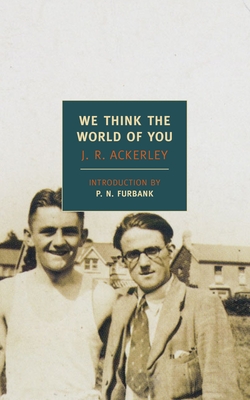
We Think the World of You by J.R. Ackerley

We Think the World of You combines acute social realism and dark fantasy, and was described by J.R. Ackerley as “a fairy tale for adults.” Frank, the narrator, is a middle-aged civil servant, intelligent, acerbic, self-righteous, angry. He is in love with Johnny, a young, married, working-class man with a sweetly easygoing nature. When Johnny is sent to prison for committing a petty theft, Frank gets caught up in a struggle with Johnny’s wife and parents for access to him. Their struggle finds a strange focus in Johnny’s dog—a beautiful but neglected German shepherd named Evie. And it is she, in the end, who becomes the improbable and undeniable guardian of Frank’s inner world.

Sunday, March 2, 2014

Beautiful Covers, Beautiful Books


Whoever coined that tired, "cover-judging" cliche surely never saw an NYRB Classic from New York Review of Books. NYRB has done something remarkable with their covers.  They've made them all distinct and beautiful, but kept the basic format the same.  So it's incredibly easy to spot an NYRB, even though each cover is uniquely its own. The clean lines, bold colors, and stunning artwork make the NYRBs an object of beauty.  And it's more than just looks, there's something substantial; something that just feels good about holding an NYRB book.  Michael at Ravenna says that anyone designing a book should study the NYRB collection. He's right.

I've read quite a few NYRB books and I have loved a lot of them.  Stoner and The Summer Book come to mind.  But even if I haven't loved an NYRB, I've always enjoyed them- always found something worthwhile and important in reading them.  So I guess I will continue judging those NYRB covers, it hasn't failed me yet.

We've put up a little display at Ravenna featuring the genius of a well-designed collection of books.  Of course there's the NYRBs, but we're also loving Melville House's Neversink Library, and Art of the Novella collection.  Come judge them for yourself.

The Skin by Curzio Malaparte

This is the first unexpurgated English edition of Curzio Malaparte’s legendary work The Skin. The book begins in 1943, with Allied forces cementing their grip on the devastated city of Naples. The sometime Fascist and ever-resourceful Curzio Malaparte is working with the Americans as a liaison officer. He looks after Colonel Jack Hamilton, “a Christian gentleman . . . an American in the noblest sense of the word,” who speaks French and cites the classics and holds his nose as the two men tour the squalid streets of a city in ruins where liberation is only another word for desperation. Veterans of the disbanded Italian army beg for work. A rare specimen from the city’s famous aquarium is served up at a ceremonial dinner for high Allied officers. Prostitution is rampant. The smell of death is everywhere.

Subtle, cynical, evasive, manipulative, unnerving, always astonishing, Malaparte is a supreme artist of the unreliable, both the product and the prophet of a world gone rotten to the core.

Zuleika Dobson: Or, an Oxford Love Story by Max Beerbohm

Sir Henry Maximilian “Max” Beerbohm was, like his friend Oscar Wilde, such an acclaimed wit (and essayist, caricaturist, and parodist) that George Bernard Shaw dubbed him “the incomparable Max.” But Beerbohm’s comic masterpiece Zuleika Dobson—one of the Modern Library’s top 100 English-language novels of the twentieth century—is the only novel he ever wrote.

Strangely out of print in the United States for years, this crackling farce is nonetheless as piercing and fresh as when it first appeared in 1911: a hilarious dismantling of academia and privilege, and a swashbuckling lampooning of class systems and notions of masculine virtue.

The all-male campus of Oxford—Beerbohm’s alma mater—is a place where aesthetics holds sway above all else, and where witty intellectuals reign. Things haven’t changed for its privileged student body for years . . . until the beguiling music-hall prestidigitator Zuleika Dobson shows up.

The book’s marvelous prose dances along the line between reality and the absurd as students and dons alike fall at Zuleika’s feet, and she cuts a wide swath across the campus—until she encounters one young aristocrat for whom she is astonished to find she has feelings.

As Zuleika, and her creator, zero in on their targets, the book takes some surprising and dark twists on its way to a truly startling ending—an ending so striking that readers will understand why Virginia Woolf said that “Mr. Beerbohm in his way is perfect.”

Sunday, December 8, 2013

One More Reason to Read It

We've been raving about Stoner by John Williams for a year now.  Ami loved it.  Robert chose it as one of his top ten books for 2012.  I read it at the beginning of the year and it will definitely be making an appearance on my top ten list for 2013.  Here's what we had to say about it back in February.

Now, British book retail giant Waterstone's has chosen the novel as their book of the year.  It's currently their number two fiction bestseller.

Stoner went out of print just one year after its original 1965 publication, and wasn't brought back until New York Review of Books dusted it off and re-released it.  Even that NYRB edition came out in 2006, seven years ago.  So why now?  Why the sudden groundswell for this long-forgotten book?  Maybe some of it has to do with passionate booksellers.  Perhaps it just takes seven years for word of mouth to work its magic.  Or maybe such a lovely, near-perfect novel, was always going to make its mark...it was just a matter of when.

Here's a great article on the Stoner phenomenon from the Globe and Mail.  And after you're done reading that, read Stoner.  Really, you won't regret it.