Welcome to the official blog of Third Place Books
Showing posts with label Staff Reviews. Show all posts

Monday, July 24, 2017

I Think You Forgot Something : William Giraldi

In 2012 the New York Times Sunday Book Review published a very negative (and very hilarious) front-page evisceration of two works by a young, largely unknown fiction writer. The review sparked much debate and launched a thousand tweets about what a book review can or should do. Condemned for being "mean", a descriptor that I personally feel criticism should never pay heed nor extend an ounce of patience, William Giraldi's scathing summation of a novel and collection of stories by Alix Ohlin ruffled many feathers, albeit almost entirely of the twee, "lives in Brooklyn" variety.


Whether you agree with the review or not, it is inarguably the epitome of modern criticism: it entertains, it informs, and it ultimately saves the savvy reader time, effort, and money. In lambasting Ohlin with dazzling verbosity and originality, he accidentally adds insult to injury with prose that upstages his subject's. In just a handful of columns, he manages to wield his own talents in a way that destroys Ohlin's chances of enduring while cementing his own.

What is most powerful in the review is the obvious chasm in capabilities between reviewer and reviewed - when passages of the examined works are framed by Giraldi's crackling and lacerating wit, they become all the more washed out and painfully flat.  
Ohlin:
“Nobody could look their best when lying in a hospital bed after a car accident.”
Giraldi:
"When self pity colludes with self-loathing and solipsism backfires into idealism, the only outcome is insufferable schmaltz."
Nice? Not really. More accomplished? Clearly. What bothered me most about the ensuing debate was not the lack of authenticity from the angry villagers demand for artificial, folded-hands pleasantry in a book review (which certainly rankles) but, selfish bookseller that I am, that the backlash overshadowed Giraldi's utterly brilliant debut novel, published in hardcover the year prior.
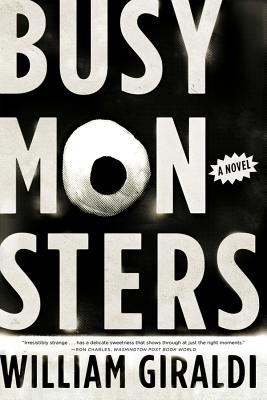
The kind of first novel both reader and writer dream about, Busy Monsters is an intelligent, entertaining yarn whose premise nods to the familiar mythologies of fiction we know, love and yearn to experience again. It is a hero's journey narrated by a broken-hearted narcissist in search of the giant squid that is the heart's desire of his heart's desire.  With a protagonist that reads like an Odysseus raised on Mad Magazine and Gawker, it is a novel that proudly recognizes it is slapstick while achieving what high comedy rarely does in in fiction: generates chuckles without feeling broad or dopey. Even when Bigfoot makes a cameo.
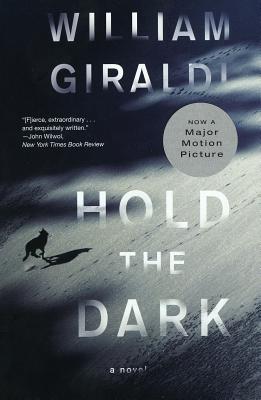

With seemingly no interest in the theory of lightning striking twice, his sophomore effort, Hold the Dark, is as enormous a departure as Giraldi could take. The ribaldry and humor of Busy Monsters is replaced by a violent moodiness and sense of dread more in line with Cormac McCarthy than A Confederacy of Dunces. Murder, revenge and a feral landscape all feature prominently but never bog the book down into any genre tropes. In an interview around the time of Hold the Dark's publication, Giraldi said that all worthwhile literature strives to be religion, that it intends to outlive its creator and endure all trends and fads that rear their heads in its wake and it was that soundbite that informed my reading of Hold the Dark. I felt beholden to the book and its holy trinity of atmosphere, plot and tone, each so engrossing I was held in what can only be described as reverence. 
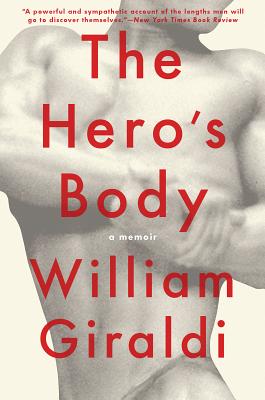

Giraldi's third book, published this past year by W.W. Norton, sees him reaching even further. On paper, a coming-of-age memoir about bodybuilding and motorcycles interests me only slightly more than a 200-page history of the socks you're wearing. Knowing Giraldi and his otherworldly rapturous prose, though, there was really no choice but to give The Hero's Body at least ninety pages of my time. Lo and behold, while the muscle and motor are the narrative's tent poles it is far more than this: it is a moving examination of a soul's evolution, one that searches for a balance and reason. Not just in a flat, presumptuous summary of gender division but by subjectively exploring the fallacies and many stripes of masculinity outside textbook definition:
The psychodynamics are not hard to untie: the vauntingly masculine and competitive are always trying to silence that inner whisper saying You're not man enough. It didn't occur to them, as it never occurred to my adolescent self, that a ranting masculinity is often the inverse of what it purports to be... The male bodybuilder and the female anorexic are equal through opposite manifestations of steady social arm-twisting. Women will be thin, men will be muscular, or both will be nobody.
What I find most striking is his ability to take such a seemingly surreal, typically caricatural world and translate it into one of pragmatic contemplation. 

Much of my life I have been (all in good jest, I'm sure) given a hard time for my concentration on art that concerns itself with the interior lives of women; rarely finding myself drawn to work that focuses on the traditional male perspective. Plots or writers that emphasize overt boyishness or even remotely imply machismo tend to make me roll my eyes so hard my mother's voice rings in my ears: "One day they're going to get stuck like that." 


My matronly tastes is in direct opposition of all this bombastic masculinity Giraldi's jacket copy implies and what, quite honestly, on paper looks like plain old white maleness more synonymous with Kurt Vonnegut or Tom Robbins than I can usually stomach. But maybe it is just that: Giraldi's prose, an award-worthy mixture of punch and good old-fashioned lyricism, illuminates some strange corner of my psyche that when lit, like the protagonist of Busy Monsters, I find myself attracted to something that repulses me and discover it actually provides comfort in a surprising, unexpected way. 

The books vacillate wildly in tone and provide that comfort I seek in a book. Boiled down to the simplest of meanings, they are each about the things for which we all search: love, justice, meaning itself. And great literature.

-Wes

Thursday, May 4, 2017

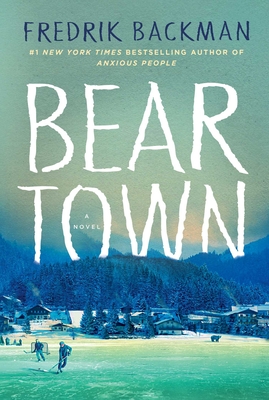
A Man Called Fredrick Has a New Book Called Beartown!

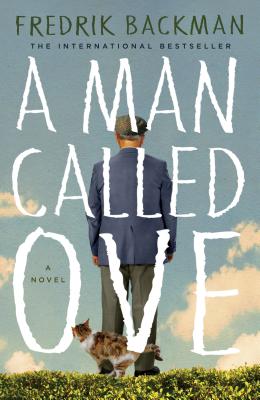
Last week, Fredrick Backman released his latest title, Beartown. It follows his hugely successful A Man Called Ove, Britt-Marie Was Here, and My Grandmother Asked Me To Tell You She's Sorry

A Man Called Ove has been a book club staple and staff favorite since its release. Emily says this: 
In Ove's ideal world, everyone would follow the rules, act with integrity at all times, and drive a Saab. Unfortunately, the rest of the world has other ideas. Hilarious, heart-wrenching, and a little absurd, this novel won me over on the first page. The short chapters make this the perfect book to keep in your bag for spare moments in the waiting room or on the bus. 
About Beartown she says:
No detail is superfluous in this portrait of a small forest town and the young hockey team that feels the weight of its collective hopes and fears. Love and loyalty to place, friends, and family are tested when a rift opens in the community. Even those who would stay out of the fight unwittingly take sides.

And next month, we are so pleased to welcome Fredrick Backman to Third Place Books in Lake Forest Park. He will be here to read and sign books on Monday, June 20th at 7:00PM. This is a ticketed event. Tickets are available with a purchase of the book. Each copy of Beartown includes entrance for two people. If you would like to attend, you must have a ticket to enter. You can purchase books and tickets from our website, or by calling or visiting any Third Place Books location. Find more information here.


***

Beartown by Fredrick Backman
People say Beartown is finished. A tiny community nestled deep in the forest, it is slowly losing ground to the ever encroaching trees. But down by the lake stands an old ice rink, built generations ago by the working men who founded this town. And in that ice rink is the reason people in Beartown believe tomorrow will be better than today. Their junior ice hockey team is about to compete in the national semi-finals, and they actually have a shot at winning. All the hopes and dreams of this place now rest on the shoulders of a handful of teenage boys. 

Being responsible for the hopes of an entire town is a heavy burden, and the semi-final match is the catalyst for a violent act that will leave a young girl traumatized and a town in turmoil. Accusations are made and, like ripples on a pond, they travel through all of Beartown, leaving no resident unaffected. Beartown explores the hopes that bring a small community together, the secrets that tear it apart, and the courage it takes for an individual to go against the grain. In this story of a small forest town, Fredrik Backman has found the entire world.

Tuesday, January 10, 2017

New Arrivals : It's a Book!

There is a bit of a curse in being a book lover—there are many, many books in this world and try though you might, you can't read all of them. I’m occasionally struck by an overwhelming dread about this fact, and I know I’m not alone. The thing is, even if you’re not on an epic quest to read every book ever written, there are still so many books and more come out every Tuesday. How do you choose?

It is a wonderful and horrible problem to have—this indecision, but we here at Third Place Books would like to help you out a little bit by highlighting our favorite new releases, on New Release Tuesday.

So here we go!

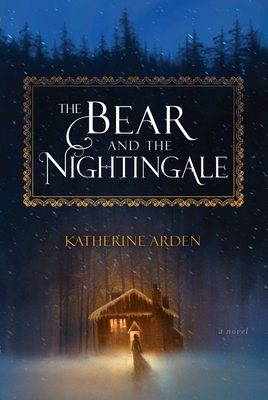
The Bear and the Nightingale by Katherine Arden

The Bear and the Nightingale begins with Vasya and her sibling huddled around a fireplace as their nurse spins tales about Frost, the winter demon. Arden’s voice and world building is strong—she envelops you with sensory details of Vasilisa’s world. Reading the opening pages you can almost feel the sharp bite of cold as you come in from outside. The fire is warm, the smell of honey cakes redolent in the air, and the creaky, worn voice of the storyteller beckons you to sit closer. The story is rich with fairy tale elements, but also steadied by the reality of 14th century Russia.
My coworker, Vlad, states it more eloquently:
What struck me from the very first paragraph in The Bear and the Nightingale was the confidence of the writing; I was immediately pulled into a liminal space, between historical and fable. The lives of Vasya and her family, and their medieval Russian culture are painted in evocative detail, and yet Arden effortlessly slips the reader into this fantastical layer of ancient spirits large and small that permeates the Russian countryside.
The book draws from a wealth of folklore and fable without losing a certain modern appeal: Vasya's struggle as a young woman against a strict patriarchal tradition; the clash between faiths—the old beliefs versus Christianity; the ageless human urges and failings, vanity, deceit, lust, fear.

Arden's prose itself is lively and engaging, and bolsters the intricate balance of her story.

There is, in fact, a heady richness to the novel, and it’s especially remarkable when you consider that the book is Arden’s debut. The Bear and the Nightingale immediately puts her into good company—the book is being likened to the works of Neil Gaiman, Erin Morgenstern, and Naomi Novik. I would recommend her for fans of Leigh Bardugo’s books as well.
And luckily, this book is just the first course. The Bear and the Nightingale is the first book in a three book series, so you have more to look forward to. The book hits the shelves today, so come on down and take a peek. (Or you can even take a sneak peek on Katherine Arden’s website as she has some excerpts posted!)

-Lish

Saturday, October 22, 2016

Read This Book : Shirley You Jest Edition

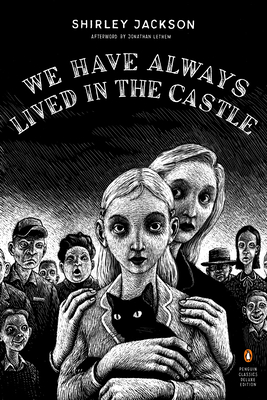
Dean and Halley say, "Read this book:"


Well, Jackson did it again! This beautiful strange novel leaves quite a distinct and lingering impression. In this tale of mystery and isolation we are met by two sisters cut off from the world. They live alone, happily and ferally in their dilapidated family home in an almost mundanely mystical lifestyle a la Grey Gardens. Delivering and effortless sense of unease, this captivating and understated story will leave you in a satisfying state of unknowingness.
-Dean

Merricat lives with her older sister and uncle after her family is killed due to the mysterious appearance of arsenic in the sugar bowl. After her sister is acquited of the murder, she and Merricat are ostracized by the village. For a time, they are content in their isolation...until a visitor comes to stay. Strange and haunting, this novel stayed with me long after I finished it. Shirley Jackson managed to tell a story without violence, gore, or horror and yet by the end you're left chilled to the bone.
-Halley

***

And speaking of Shirley Jackson, just now is a pretty good time to be an SJ fan (or to become one) as the queen of horror is experiencing a bit of a resurgence. And it's about time too. 

When Shirley Jackson was first introduced by The New Republic, it was as, "Shirley Jackson, the wife of Stanley Hyman... living in New Hampshire and writing a novel." Not as she should have been, "Shirley Jackson the bad*ss writer of truly haunting and creepy short stories is writing a novel and lives in New Hampshire where she has to drive Stanley Hyman (the husband of Ms. Jackson) around because she knows how to drive and he doesn't." Not that not being able to drive is a reason for ridicule.

All I'm trying to say is it's time to give this author and licensed driver the appreciation she deserves. And with a new biography, last year's novel based on her life, and a soon to be released graphic novel based on one of her most well-known short stories, we finally are! -Erin


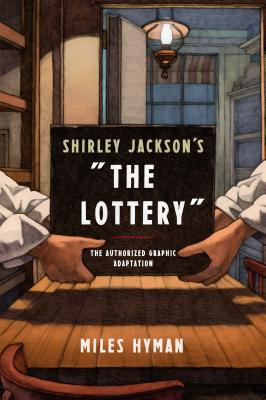
Shirley Jackson's The Lottery continues to thrill and unsettle readers nearly seven decades after it was first published. By turns puzzling and harrowing, it raises troubling questions about conformity, tradition, and the specter of ritualized violence that haunts even the most bucolic, peaceful village. 

This graphic adaptation, published in time for Jackson's centennial, allows readers to experience The Lottery as never before, or discover it anew. The visual artist--and Jackson's grandson--Miles Hyman has crafted an eerie vision of the hamlet where the tale unfolds, its inhabitants, and the unforgettable ritual they set into motion. His four-color, meticulously detailed panels create a noirish atmosphere that adds a new dimension of dread to the original tale. Perfectly timed to the current resurgence of interest in Jackson and her work, Shirley Jackson's The Lottery: The Authorized Graphic Adaptation masterfully reimagines her iconic story with a striking visual narrative.

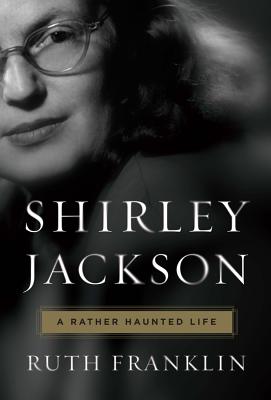
Shirley Jackson : A Rather Haunted Life by Ruth Franklin

Placing Jackson within an American Gothic tradition that stretches back to Hawthorne and Poe, Franklin demonstrates how her unique contribution to this genre came from her focus on "domestic horror." Almost two decades before The Feminine Mystique ignited the women's movement, Jackson stories and nonfiction chronicles were already exploring the exploitation and the desperate isolation of women, particularly married women, in American society.Franklin's portrait of Jackson gives us a way of reading Jackson and her work that threads her into the weave of the world of words, as a writer and as a woman, rather than excludes her as an anomaly (Neil Gaiman).

The increasingly prescient Jackson emerges as a ferociously talented, determined, and prodigiously creative writer in a time when it was unusual for a woman to have both a family and a profession.A mother of four and the wife of the prominentNew Yorkercritic and academic Stanley Edgar Hyman, Jackson lived a seemingly bucolic life in the New England town of North Bennington, Vermont. Yet, much like her stories, which channeled the occult while exploring the claustrophobia of marriage and motherhood, Jackson's creative ascent was haunted by a darker side. As her career progressed, her marriage became more tenuous, her anxiety mounted, and she became addicted to amphetamines and tranquilizers. In sobering detail, Franklin insightfully examines the effects of Jackson's California upbringing, in the shadow of a hypercritical mother, on her relationship with her husband, juxtaposing Hyman's infidelities, domineering behavior, and professional jealousy with his unerring admiration for Jackson's fiction, which he was convinced was among the most brilliant he had ever encountered.

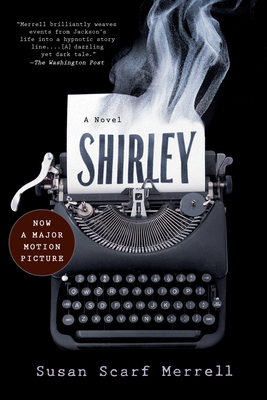
Shirley by Susan Scarf Merrell 

In this darkly captivating novel, Susan Scarf Merrell uses the facts of Jackson's life as a springboard to explore the 1964 disappearance of Paula Weldon, a young Bennington College student. 

Told through the eyes of Rose Nemser the wife of a graduate student working with Jackson's husband, Bennington professor Stanley Edgar Hyman Shirley reimagines the connections between the Hymans volatile marriage and one of the era's great unsolved mysteries.

Monday, August 29, 2016

When Nobody Loves the Book You Love

Have you ever watched your child perform really poorly? Like you're at the soccer field and your kid can't even drink his Gatorade without spilling it all down his front, let alone run fast or kick the ball with any sort of accuracy? How about a television show you love being cancelled after one season? Or when they stop making your favorite brand of novelty breakfast cereal (you broke my heart Rice Krispies Treats Cereal)? All of those feelings of sadness, disappointment, abandonment, and unfairness...those are the feelings I feel every day when I walk by the book I love and you haven't bought it yet. 

Only I feel all those feelings times one million.

I bet you didn't think bookselling involved such angst and anguish. Well, it does, and it's mostly your fault. You see, I read this book, this book I really loved. I told people about it. I staff picked it. I put it on Instagram. It featured on one of our monthly theme tables. But you didn't care. You ignored it. It's like I'm shouting to an empty room. Or a room filled with angry people trying to read the books they bought instead of the book I'm suggesting.

So here's my last ditch effort, and if a hastily crafted, marginally edited blog post won't convince you to buy it, I guess I'm not very good at my job. Fair warning, I'm not above some pretty dubious tactics. Like pilfering words from this New York Times Book Review by Leonard Pitts Jr.:
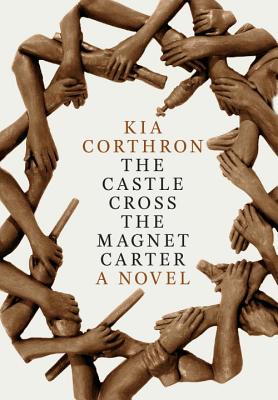
 The Castle Cross the Magnet Carter... a narrative that sweeps forward (and then back) between World War II and the first decade of the new millennium, touching on the civil rights movement, AIDS, deaf culture, lynching, love and sexuality, that emotional terrain remains the book’s bedrock.
...what Corthron does best in this book. She blindsides you. She sneaks up from behind. Sometimes, it is with moments of humor, but more often with moments of raw emotional power — moments whose pathos feels hard-earned and true.
The Castle Cross the Magnet Carter is a big book that has a lot — arguably too much — on its mind. But it succeeds admirably in a novel’s first and most difficult task: It makes you give a damn. It also does well by a novel’s second task: It sends you away pondering what it has to say.
What he said. 

And what's a little plagarism compared to the exploitation of a good friend's emotional health and job stability? Because, I haven't been entirely unable to sell this book, in fact I convinced a friend to read it and she loved it. She loved it so much she had to call in sick while she was reading it. She couldn't wait to finish and refused to read at work because she didn't want to cry in front of coworkers. Those are real emotions people.

I will even do the thing I hate most about bookselling: the comparison. Here goes:
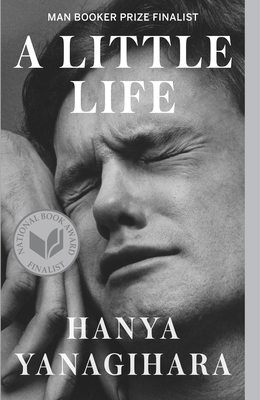
If you loved Hanya Yanagihara's A Little Life, then you will love The Castle Cross the Magnet Carter even more. They are both super long, super big books. 10 pounds each. Serious. Both have these characters your heart will break for. And both will make you weep. Castle Cross just does it WAY better.
And last but not least... I understand the importance of cover design, so I have updated the original cover with everyone's favorite things in an attempt to appeal to a wider audience.


All joking aside. The Castle Cross The Magnet Carter is a beautiful book. A sprawling, messy, sweeping epic. It gives you the chance to burrow in and really connect with the characters. Weirdly, Kia Corthron does a lot of things I usually hate: child narrators, dialects, switching perspectives, jumping through time. But in her hands they become this perfect conduit for a heartbreaking tale of race, sexuality, disability, familial strife, and the power of brotherhood. These pages deal with a lot of hate, sadness, and confusion but there's also a lot of courage and love here too. I wish this book were 800 more pages, and then 800 more after that.

Please read it. Don't let it be the book on the sidelines with Gatorade all down its front.

-Erin

Saturday, July 30, 2016

I Think You Forgot Something : Macdonald Harris

A dik-dik, to save you from googling 
I once worked with a young Harvard graduate, summa cum laude, the whole bit. On paper, she looked like the ideal person with whom to discuss literature: well-educated, great taste, interests best described as widely flung. But in reality, you could have more stimulating conversations about books with a drug-addled dik-dik. The most elaborate praise available from her was “it was good,” or “I liked it.” Sometimes, that little nudge can be enough to sway me; maybe I’m curious about a book or an author but for whatever reason don’t trust myself and the plaudits of another, no matter how mild, can bring my wallet into the light. But not often.

Most booksellers spend forty odd hours on the clock surrounded by unread and unfamiliar books and another 128 off the clock also surrounded by more unread and only slightly more familiar tomes. In our reading, it is the bookseller's curse that we are reading either six months ahead or ten years behind everyone else. Most booksellers find the traditional nightstand replaced by stacks of books, both the old and forgotten as well as the coveted not-yet-released. Over time, it can become difficult to entertain suggestions because those stacks, that daunting, swollen mass just cannot possibly bear another ounce.

Years ago, however, a novel came to my attention through a librarian pal whose recommendation was so fulsome, so bombastically positive, I had no choice but to heed it. Both title and author were unknown to me and the journey to reading it proved to be quite the undertaking. Published in 1964, Mortal Leap by Macdonald Harris went out of print almost immediately and it is impossible to find a decent copy for less than a cool six hundred dollars. It became my personal holy grail, the damn thing’s elusiveness creating an almost feral desire. I suggested it to the New York Review of Books for reprint multiple times, even creating an alias to submit multiple suggestions. I checked used book sites daily for a decent copy under three hundred dollars, the most I can conceive of paying for anything that doesn’t come with a roof or a motor.

Eventually I disavowed myself of the notion I could own a copy and, with a five dollar bill and the willingness of the good librarians of Issaquah, settled in with a brittle, near ruined copy of the book that had felt like nothing but pure myth for years. Lo and behold, it was worth every moment of the hunt, every failed footstep of the pursuit forgotten. Mortal Leap is a book so far beyond “good” that its greatness can only be experienced.


This is fiction writing at its finest: a story in the classical mode, lushly wrought with details that immediately establish a fully realized character and landscape. Harris reawakens a childlike sense of wonder and fascination, a passion for the possible that transports the reader fully. His gift is truly a marvel, an ability to craft stories that are so fantastic and immersive it borders on the terrifying. The relationship between the reader and the physical object is marvelously indescribable and only a true, ethereal talent can to make a pound of paper feel alive in your hands.

If you peruse the synopses of Harris’s other work, you can immediately see no two are alike. It is a motley collection of novels and is only unified by, other than its greatness, man’s elusive inability to know himself. If you’ve read five novels by white men, at least four addressed this moral mission. Yawn, yawn, yawn, right? Not here.

Mortal Leap is a quintessential, exemplary model of what fiction can and should do. In the most reductive terms, it is an adult's adventure tale, a la Jack London: affect-less Mormon boy, disinterested in the life laid out before him, follows his existential malaise to sea. There is a plot outside of little boy lost, but the book is so beautifully written and such a singular experience, I would be doing it an enormous disservice dressing it in the rags of my fumbling fanboydom. But if you need convincing, the book speaks for itself beautifully:
It was a part of myself that was my enemy; I still had a childish illusion that the flesh on my own bones was somehow unique and precious to the universe, in some obscure corner of my mind I wanted the others to love me and make exceptions for me simply because I felt heat and cold, pain and loneliness as they did. Now this was gone once and for all, and I understood there were no exceptions and on one was invulnerable, we all had to share the same conditions and in the end this was simply mortality, the mortality of things as well as ourselves. After that I didn't expect anybody to love me...
And a passage that should make any reader weak-kneed:
 The books were a private part of me that I carried inside and guarded and didn't talk to anybody about; as long as I had the books I could convince myself I was different from the others and my life wasn't quite as stupid and pointless.

Harris's is a body of work I only become more passionate about, both as I explore titles I haven’t read or mull over the handful that I have. Looking at the novels on the whole, comparisons are most easily made to the work of Paul Auster. Harris’s novels carry the same ruminative tone and irreverent sense of adventure and both boldly wear an ambition to stretch their craft and sense of reality. Also like Auster, there’s no impression Harris was hankering for clout or accolades but simply a love of a pure, simple form of storytelling.

None of this is as succinct a recommendation as “it’s good,” I know. But so remarkable is Macdonald Harris, so deserving of full-volume, roof-shaking praise, his work could turn even my plaintively praising former colleague into an ivory tower of babble.

-Wes

Thursday, March 31, 2016

Read This Book : Author Event Edition

Brian Castner, author of The Long Walk, will discuss his new, highly anticipated follow-up All the Ways We Kill and Die at our Lake Forest Park Store on Monday, April 4th at 7PM

In an extended profile about recent war literature, famed book critic of the New York Times, Michiko Kakutani wrote:
“War cracks people’s lives apart, unmasks the most extreme emotions, fuels the deepest existential questions. Even as the wars in Iraq and Afghanistan morph into shapeless struggles with no clear ends in sight, they have given birth to an extraordinary outpouring of writing that tries to make sense of it all: journalism that has unraveled the back story of how and why America went to war, and also a profusion of stories, novels, memoirs and poems that testify to the day-to-day realities and to the wars’ ever-unspooling human costs.”
Over the past few years many books by ex-military writers have been released to great acclaim. It has become difficult to pick which ones to read. As someone with no close personal ties to anyone in active service, I find the subject deeply fascinating for the very reasons Kakutani mentions.
Former Explosive Ordnance Disposal (EOD) officer Brian Caster is one of the writers featured in the New York Times article. Castner is the best-selling author of The Long Walk, and with his new book, All the Ways We Kill and Die, he solidifies his place as one of the best military authors writing today. 
Castner’s first book, The Long Walk, chronicles on his deeply personal account serving three tours of duty in the Middle East as commander of the EOD unit in Iraq. Rather than detailing the specifics of the various campaigns he led, the book focuses primarily on his postwar experience and the psychological struggle he faced returning from war.
His new book, All the Ways We Kill and Die, again draws the reader in by appealing to the pathos of war. In the opening pages we see Castner learn his close friend and EOD-brother has been killed in action in Afghanistan while Brian and his family sit by their Christmas tree at home in Buffalo, New York. The story launches into action from there as Castner, no stranger to such tragedies, becomes obsessed with the question, “Who is the man who killed my friend?”

In telling the story of his friend’s death, Castner profiles the struggling widow, two war amputees, female biometrics engineer, a bomb-maker, a contractor for hire, and, in one of the more fascinating and stunning sections of the book, a drone pilot. With these detailed accounts, the book pieces together the story of “The Engineer,” the man responsible for the bombs. Considerably more technical than his first book (a 7-page glossary in the book helps readers navigate Arabic, military jargon, and acronyms),  All the Ways We Kill and Die is a book that brings readers backstage, intimately unveiling modern warfare in a way that is completely fresh. Castner’s books are a must read for anyone wanting to know more about the real individual lives of the soldiers who fight the wars of today.

Join us at the Lake Forest Park store on Monday April 4 at 7pm to meet Brian Castner.
-Kalani

Sunday, March 27, 2016

I Think You Forgot Something : Barbara Gowdy

Erin and I recently found ourselves in a high-pitched conversation around our shared love of Canadian television and resultant frustration of its categorical dismissal in the American cultural colloquy, if it's considered at all. It was a conversation so animated it scared other booksellers into hiding, which is a shame because Canadian television is worth a little shouting and you guys missed some great recommendations.

Namely it was our shared love of Don McKellar that brought us to a tremulous fervor, most specifically my bark bark barking about his most recent series, Sensitive Skin. McKellar plays Al Jackson, a newspaper columnist who writes light, humorous cultural criticism and is invited to sit on a literary award's panel. In his typical fashion, Al overanalyzes his responsibilities and presents full-blown dissertations on each nominated book, only to be mortified upon realizing the other, more esteemed panel members dismiss each submission with a single repudiation of "garbage," "terrible," etc.

Adding to my already immeasurable delight that a sitcom would incorporate a literary award was the brief cameo of author Barbara Gowdy as a panel member. It was a two second appearance that sent me reeling into a two month rediscovery of a staggeringly talented and original writer.

Gowdy in Sensitive Skin

***

Enormously esteemed in Canada (and Germany, apparently?), Gowdy is widely read and critically hailed for her luxuriant prose that nestles against tales revolving around the darker human impulses. Our neighbors to the North celebrate her work as most American literary institutions praise Eggers, Egan, etc. So why, in almost twenty years as a bookseller, have I only encountered a total of four other readers who know who the hell she is? That boils down to one every five years and, especially after rereading the majority of her work for the blog, the obtuseness of her work and reputation became increasingly lamentable with each passing sentence.

Barbara Gowdy became known to American readers with her fifth book, The White Bone, which has remained a fairly popular book club selection since its release almost twenty years ago but it is her story collection, We So Seldom Look on Love, that is the most fitting entry point to what she does best. A collection full of tales that seamlessly shift between the lyrical and the macabre, it is also her most exaggerated; each narrative carrying the haunting, ominous air of an Ennio Morricone score. An uncompromising otherness inhabits each story, a situation or description that feels abrasive and utterly foreign, almost pornographically close, yet undeniably attractive.

There is something shocking in the sheer beauty with which Gowdy translates her supremely discomfiting material: the awkward, almost grotesquely detailed physicality of a truly unlikable behaviorally disabled foster child; a necrophile's desires stripped of their brutal implications by the author's intoxicating ability to seduce the reader; the humiliating rebellion of every young person's body is taken to a narrative nightmare alley of extremes by the presence of a pair of small, extremely delicate extra legs growing out of the young protagonist's torso in "Sylvie". What makes these stories, and all of Gowdy's work, so remarkable is her very singular ability to make us question and examine just how far it is a person has to travel before repugnance gives way to attraction. And, occasionally, how terrifyingly short that trip is.

***

In all of her work, the beautifully undulating atmosphere and refined tone is Gowdy's greatest strength and she is working at the height of her powers when she relaxes and focuses not on our physical oddities but our emotional deformities, The Romantic being the best example. Nominated for the Man Booker, it is a coming-of-age novel whose foundation is built on an ominous, broiling darkness brightened only by the protagonist's persistent grasp on pragmatism and emotional compartmentalization, the book finding its heartbeat in that juxtaposition.

Shortly after her mother abandons Louise and her father, Louise becomes infatuated with her new neighbors, the Richters. Her initial fascination belongs to Mrs. Richter; Louise's desire to fill the empty spaces left by her mother's disappearance convincing Louise that Mrs. Richter is her first true love. But it is Abel, the adopted and only child of the family, who will take hold of Louise's affections for more than a decade. As children, he inadvertently provides Louise with a much-needed lesson in developing her inner strength and certitude while much later acquainting Louise with the rapturous nature of passion and its much less friendly cousin obsession. The tone of their relationship and it's duality between light and dark is foretold exquisitely in an early chapter where, in the wooded outskirts of their suburb, Abel exposes one of nature's small fascinations in the eyes of a frog:
I am rudely startled. That something so glamorous could be contained in something so loathsome offends both my sense of fair play and my nervous grasp of cause and effect.
As in her more unconventional work, there is also a wonderfully unexpected sense of play at work in the novel's underpinnings. The character of Aunt Verna, the sister of Louise's father, who arrives to relieve some of the familial tension brought on by the mother's fleeing infuses the novel with a little humor, broadening its emotional scope. A loud, brash, intensely demonstrative woman, Verna is a former private investigator whose crowning achievement was solving a case for the actress Sophie Tucker, "whose kidnapped Siamese cat [she] single-handedly located, bound and gagged but alive, in a hotel laundry hamper."

While willing to shine some light here and there, for Gowdy it is the devil in the details that is most enticing. She seems to have an endless wealth of eloquent but gruesome vividity at her disposal. Most often, Gowdy's touch is a finer, sneakier thing. Hints of darker things to come, a nascent sense of dread, is illustrated in the every day: after Louise's mother intentionally fails to provide enough chairs for dinner guests and enjoys the ensuing awkwardness, it feels symbolic of the growing discord in the family, a warning shot. Other times the imagery is overt, like Louise's deflowering, a sensation "like a hundred tiny bones snapping" (those same broken bones are conjured again soon after in the depiction of the resultant fetus and its "bones brewing" inside her).

Abel continually exposes tiny freedoms and unexpected beauty to Louise, making it difficult for her and the reader to decide if it is Abel himself that is so addicting to her childhood self and shackles her to a lifetime of unflagging devotion, or if she is simply looking to sustain that adolescent sense of wonder.

But conscious or not, Louise's driving force is undeniably her faith in Abel, though he seems to desire nothing but absolute self-obliteration. They both romanticize the void, the vacuum created by the oneness of their impulses and insatiable appetites for their respective objects of desire. I found myself wholly immersed and devoted to both characters, oscillating wildly in my opinion of whose addiction is costlier and, as a result, struggled to recalibrate to my physical surrounding when setting the tale aside.

And therein lies Gowdy's magnificence - her characters, no matter how familiar or difficult to translate they may seem, are woven into the reader's everyday tapestry with the most exquisite subtlety. Such effortless grace and depth are a gift to any reader and to plate darker, subversive tales and sticky morality plays on fine bone china would expose most writers as barbarians. Gowdy, though? Her murkiness is dressed in a deceptive prettiness, a loveliness that draws the reader in only to leave them abandoned on the side of a dark, unfamiliar road with no idea how such a lovely Sunday drive could end so unpleasantly.

That ability to manipulate her audience, to infiltrate their subconscious and rewire their perceptions and expectations of how a plot should unfold or what a story's hero should be makes it easy to draw comparisons to Canada's most famous literary export, Margaret Atwood. But Gowdy is Atwood's cooler but possibly emotionally unstable step-sister: full of sharp edges, intimidatingly unpredictable, occasionally cagey in morality  but ultimately an elegant, beguiling mystery.

-Wes

Friday, February 19, 2016

Hey, I've Read That: we review books everyone else read (fifty) five years ago

Indie Next, that flyer we have at the front of the store, all about new books, has started what they are calling Revisit and Rediscover, which looks suspiciously like this very, (sometimes) recurring, blog feature. Regardless, I am happy to see Revisit and Rediscover. I'm a big backlist reader, and feel there is still much to celebrate in old books.

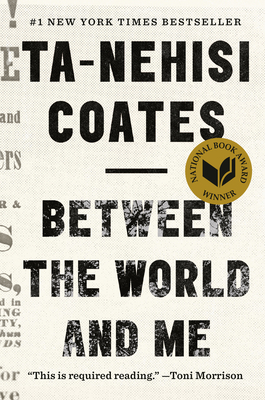
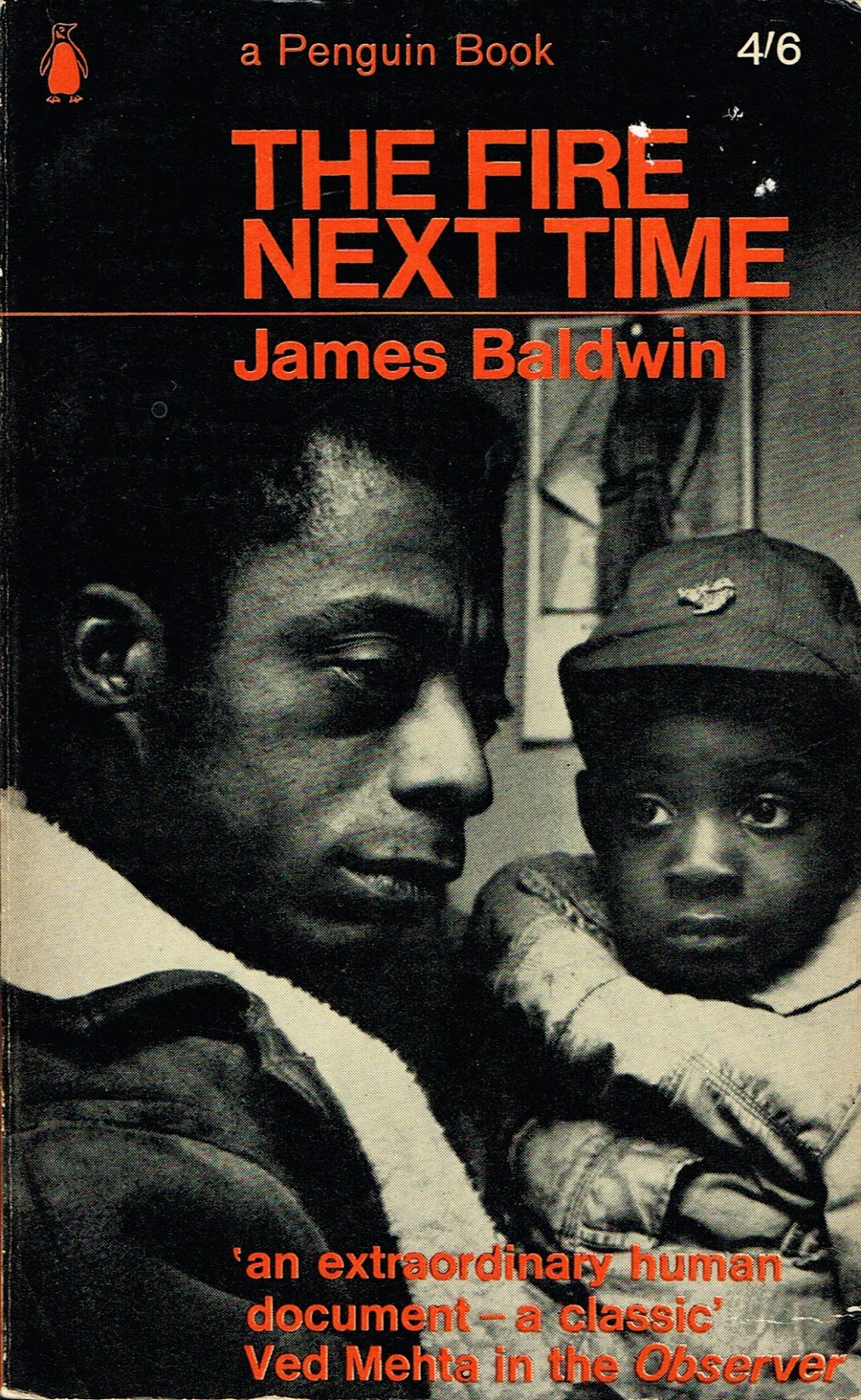
By weird coincidence, I recently read one of the February Revisit and Rediscover titles, The Fire Next Time by James Baldwin. Somehow I escaped this book in school. I've become increasingly concerned about the quality of my education considering the unforgivable number of classics my teachers didn't make me read. My dismal curriculum aside, I wanted to read The Fire Next Time after picking  up Ta-Nehisi Coates' Between the World and Me. There's a quote on the back from Toni Morrison. Among her praise of Coates. she says, "I've been wondering who might fill the intellectual void that plagued me after James Baldwin died." 

I decided to read The Fire Next Time first, given all the comparisons between it and Between the World and Me. And I have a strange affinity for James Baldwin. It's an admittedly recent love affair for me. I only read my first Baldwin a few years go, Giovanni's Room, which I could not get over. That book lead me on a rather intense foray into LGBTQ literature that has defined my reading for the last two years. I feel a sort of debt--an immense gratitude to Baldwin for this, and I was happy to increase the depth of my acquaintance with him.


The Fire Next Time is made up of two essays, the first being a letter to his nephew on the centennial of the signing of The Emancipation Proclamation, the other, an exploration of racism in Harlem, and the roles of Christianity and Islam in race relations. It is a slim volume, and so the amount of fury and anguish and fear and hurt and redemption and hope that tumble off its pages is surprising, as if from a much longer book.

Baldwin's descriptions of being stopped and frisked by police and left lying on a Harlem street as a teenager are eerily familiar. His agony over the unfairness of his nephew's place in life determined only by the color of his skin all too recognizable. "The limits of your ambition were, thus, to be set forever. You were born into a society which spelled out with brutal clarity, and in as many ways as possible, that you were a worthless human being."

For a country where one in three Black men can expect to be incarcerated, his words are sadly prophetic. And then the heartbreaking realization--those two letters were never meant to be a prophecy, that's just how little has changed since he wrote them in the early 1960's.  The overt racism of James Baldwin's United States has merely hidden itself behind our insidious institutional racism and the false promises of a "color blind" society, too proud of its ability to finally elect a Black man as president.

Beyond the sad timeliness of his subject, Baldwin's writing is hypnotic. "For here you were, Big James, named for me...here you were: to be loved. To be loved, baby, hard, at once, and forever, to strengthen you against the loveless world." The tone and cadence of his words seems to mimic the beat of his heart and with it, the obvious love he has for his nephew. The richness of his writing is matched only by the clarity of his thoughts:
Life is tragic simply because the earth turns and the sun inexorably rises and sets, and one day, for each of us, the sun will go down for the last, last time. Perhaps the whole root of our trouble, the human trouble, is that we will sacrifice all the beauty of our lives, will imprison ourselves in totems, taboos, crosses, blood sacrifices, steeples, mosques, races, armies, flags, nations, in the order to deny the fact of death, which is the only fact we have. It seems to me that one ought to rejoice in the fact of death--ought to decide, indeed, to earn one's death by confronting with passion the conundrum of life.
The Fire Next Time is a powerful and provoking manifesto, and a hopeful exploration of what we all must find within ourselves. It is indispensable--and a compelling companion for Between the World and Me. Read it. Read them both. Join the conversation.

-Erin

Wednesday, February 3, 2016

A Graphic Enlightenment

Growing up my father kept a shelf of Calvin and Hobbes collections on a high bookshelf in the back corner of a room we never went into. To get to these books you had to climb onto the back of an old green leather chair, push past dusty office ping pong tournament trophies, avoid the mini darts sitting next to a dartboard, and grab whatever thin Watterson book you could before sliding down the back of the chair into a pile of afghans. 

This was my knowledge of graphica.

About a year ago, a good friend of mine suggested I read Watchmen, the classic Alan Moore superhero send up. Coming from a friend with Criterion Collection taste, I borrowed the graphic novel and skeptically sat down to read it. I scoffed at the idea of reading a comic. I was a novel reader. A poetry reader. I didn’t need pictures in my books like some child. 

Two days later I was done. 

The art enchanted me, the combination of graphics and narrative astounded and confused me; this was a completely new method of storytelling that blew the door wide open on the art of writing as far as I was concerned. 

And so with Calvin, Hobbes, and Alan Moore whispering in my head I venture into the confusing, and at times seemingly-impenetrable, world of graphic novels. I knew right from the start that the serialized superhero comic was not for me, despite my good friend Andy’s insistence at a deeper mythology. It's just not for me. But Andy is a persistent man.


He finally found something on his bookshelf that felt right; that combined my love of slapdash plot with pure insanity in the form of Manhattan Projects. Written by Jonathan Hickman and illustrated by Nick Pitarra, Manhattan Projects follows an alternative history starting at the end of World War II in which the end of the war and the development of the atomic bomb leads to, to put it simply, high concept sci-fi rigmarole. 

Without giving too much away, you have the main players in the real-life Manhattan Project: Oppenheimer, Feynman, Fermi, and Einstein, but they are all surreal versions of themselves. The opening of the book posits this question: What if Oppenheimer had an evil twin that destroyed the “real” Oppenheimer? And what if that twin had control of the atomic bomb? 

What I found so completely absorbing about MP was its total disregard for, yet amazing respect for, the truth. Hiding underneath the insanity, death, drug-use, and smashing of idols is a tightly written, historically-semi-accurate subplot. The events that unfurl throughout the first couple of books in the series read like a Lewis Carrol’s Wonderland version of United States history. 

I devoured these books. I started borrowing them one at a time and then just emptied his collection into my backpack and ran away. Reflecting on my journey into the graphic medium it is easy to see why these grabbed me as firmly as they did. The absurdity of Calvin mixed with the philosophic nature of Hobbes with the sci-fi bent of Watchmen all wrapped in an Adult Swim feel. This was tailor made for me and placed me firmly in the graphic novel fan camp. 

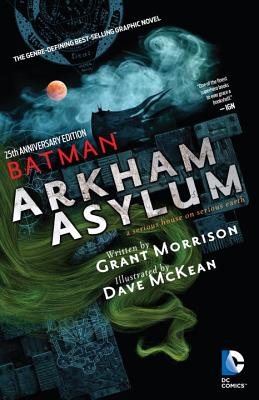
So now I enter into the dark woods of graphic novels with a few key guides at my side. Andy hands me superhero comics to see if they stick along with more high-concept sci-fi (see:Black Science). Coworkers of mine who come at graphica from an artists viewpoint hand me David Clowes, Eleanor Davis, and Chris Ware. Another coworker places in my hands Batman Arkham Asylum, which completely destroyed my view on the “super hero” graphic novel, along with Y The Last Man, which I will probably talk about at a later time. 

The graphic novel is not simply a book with pictures, nor is it art with words. It is the perfect merging of those two forms; the culmination of visual and textual storytelling. This descent into graphica and comics feels equally like a descent into madness and a step into a very new and beautiful world.

-Ryan

Saturday, January 16, 2016

I Think You Forgot Something: L.J. Davis

In an interview on KCRW's Bookworm, Lydia Millet says "humor is about objectification…I have to have the freedom to objectify because of the distancing that always happens when you objectify something. Distance is created that then can be brought back and telescoped into the too-closeness of communion. The idea that we can step out of ourselves and be with others in some fundamental way, the impossibility of that is also present." It's a balancing act few pull off well because, as Millet later goes on to say, "that kind of humor only works when the humorist loves the thing he/she objectifies, that if not handled lovingly, it is simply cruelty." In her inimitable style, Millet perfectly expresses what is so appealing to me in satire or subversive humor.       

This idea and the high-wire act it demands is present in all of L.J. Davis's fiction. The author of four novels first published between 1968 and 1974 (all but one of which, preposterously, is out of print), he was seemingly fascinated by the threat gentrification can pose to the working-class. Tossing well-intentioned, if somewhat self-indulgent, social misfits into the lion's den of  capitalism and alcoholism (synonymous conditions in his work), as well as grimace-inducing look at misogyny and perceptions of race. Davis's characters are men who drowsily saunter after the American dream, hellbent on the simplest of things: a nice place to hang their hat and an occasionally nice girl on whom to hang it. If this description paints the characters as a touch hypocritical, it's not by accident. Blithe can be charming but it is navel-gazing as well. Davis's characters tend to be overly sensitive but defensive men; they are victims but oftentimes that victimhood is borne of their own solipsistic demands. Lena Dunham with a John Wayne complex, perhaps.


Lowell Lake, the protagonist of A Meaningful Life (the one work still in
print), evaluating his marriage:
The old dim pleasantness had departed from their dealings as completely as if there'd never been any to begin with, but a peculiar side effect of this development was that Lowell found himself interested in his wife's personality. He couldn't remember a time when he'd been so interested in it, not even in college, when what had principally interested him had been her ass, if the truth be told, although he had also concerned himself with her personality at least to the extent of finding out whether she had a good one or a bad one. He'd decided she had a good one. Since then he'd thought about it very little except on the infrequent occasions when something seemed to go awry with it, but it always seemed to get fixed pretty quickly, and then it was all okay again, like a table whose wobble had been repaired. The rest of the time it just sort of stood there, a good and serviceable object whose height, width, length, shape color, and approximate density were assumed to be known. You could always count on it; it was exactly the same when you returned as when you left, never mind those phone calls to her mother and the midnight crying fits in the bathroom. It was a good little piece of furniture. For nine years Lowell had been married to a table.
His protagonists move through the novels with absolutely no impulse control, sometimes (mis)guided by a sense of do-goodery, their actions always to the detriment of everyone involved. They are little id-fueled narcissists who "disliked merry people and always suspected there was something wrong with their heads." This past reading of A Meaningful Life, my third, I found myself downright mortified twice but lost count of how many times I laughed out loud. I also found myself squirming through some of his startlingly dry social critique.

Not for everyone, to be sure. But as we move into a new year, the sleepiest time of year for new book releases, and Seattle's weather inflicts its worst on our collective Seasonal Affective Disorder, exploring Davis or one of his contemporaries (Percival Everett's novels, Joy Williams's stories, Michael Robbins's poetry)  could very well be your saving sardonic grace.


-Wesley

Saturday, December 26, 2015

New Author Crushin'

There are many joys that come with bookselling, naturally other booksellers being top of the list. Besides their wit, kindness, humor, and general all-around goodness, they're also readers. And as a reader, I often turn to these other, more well-read readers for ideas on what I should read next.

Wes!
So when I was hoping to find some books or essays on obsession, I knew just who to go to. Wes is invariably the guy you want to talk to if what you're searching for is just a little bit unsavory, just a little outside the mainstream, just a little cringe-inducing, but hugely fascinating. What's great about Wes is his ability to offer books that target just what you need but also suggestions so weird they couldn't possibly work and then turn out to be exactly what you're looking for. So in my search for obsession, Wes offered up a book about stalking, and one about drinking, and also one about a diary.
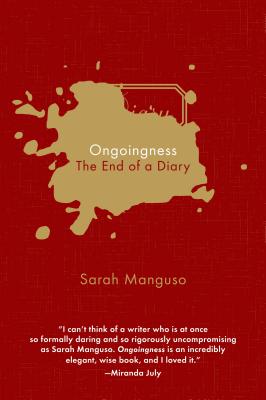
Well, more precisely, it's about a woman keeping a diary, and then not keeping that diary. The book is Ongoingness: The End of a Diary, and the author is Sarah Manguso. Wes had figured that Manguso's obsession with recording her life, (her diary had stretched to 800,000 words-- for a frame of reference, War and Peace is just a little shy of 600,000,) was exactly the kind of obsession I was looking for. He was right.

Ongoingness is one of the best books I've read this year, perhaps my favorite. Instead of a memoir, it's more of a commentary on the keeping of her diary. What it meant to her, what she wanted it to be, how it failed. It seems no coincidence that Manguso's manifesto comes in this slim little volume; miles away from 800,000 words.

Of the diary, she says, "I wrote so I could say I was truly paying attention. Experience in itself wasn’t enough. The diary was my defense against waking up at the end of my life and realizing I’d missed it."

Illustration by Montse Bernal/Reference:
Andy Ryan; From the New Yorker
Ongoingness feels like a study of thinking and overthinking. It's spare and  precise; brilliant. And eerie in it's universality. She explores motherhood, mortality, purpose, but mostly her compulsion to record evidence of her own existence. Manguso reads my mind and writes about my exact worries, yet she says it with an elegance and economy that is startling. So many times I stopped, and reread, and opened my journal to record her words and my own meager thoughts about those words. There is no way to read this brilliant woman and not feel like a dullard in comparison, but the kind of dullard who may just be on the right track

After Ongoingness, I inhaled more of her work. The Guardians, an elegy on the loss of her friend, his madness, and her fear of her own. And The Two Kinds of Decay a study of the rare disease Manguso battled in her twenties and the depression and havoc it lead her to. All of her books are beautiful; all of her thoughts, wise. She is the writer I wish I was, the thinker I aspire to be.

Read her.

-Erin

Monday, December 7, 2015

Bookseller Spotlight!

Christina at Ravenna

It was probably always Christina's fate to wear big glasses and work with books.

How long have you worked at Third Place? Less than six months. Before that I worked in speciality coffee for several years.

What section(s) do you shelve? History, Gardening, Crafts, Fashion/Beauty, Art/Architecture/Photography, Adult Coloring Books (a burgeoning section if ever there was one!), African-American Studies, Native American Studies, Women's Studies, LGBT, Economics, Business, Nature, and Environment. (editor note: Christina also handles Ravenna's Instagram account, go see her beautiful pictures.)

Most underrated/ book in your section? I am always very happy when people take home a copy of An Indigenous Peoples' History of the United States by Roxanne Dunbar-Ortiz!

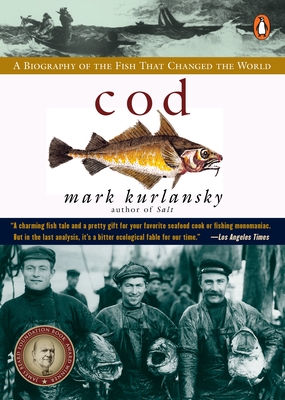
What's your favorite section in the store? Probably history. There is always, always something to learn, and I think the more familiar one can be with history, the greater perspective and compassion one can gain. Also, history has Mark Kurlansky and that guy loves cod enough to make it interesting, which is pretty miraculous (see his 1997 book, Cod: A Biography). I think about Kurlansky's cod monomania and the paths his wonkish interest took him down almost as often as I think about how Joanna Newsom and Andy Samberg are married.

What book do you recommend most? Right now I'm recommending my November staff pick, Sofia Samatar's A Stranger in Olondria from Small Beer Press. I'll quote from my review: "Samatar is an incredible writer and [her novel's] plot of a naive young man drawn into matters over his head will speak to anyone whose travels have made them both sick with excitement and the longing to go home. "

Favorite bookstore, besides Third Place? My favorite bookstore will always be Book People in Austin, TX. I pretty much grew up there! My summers as a kid were often spent there, dropped off at my request with lunch money and quarters for the pay phone. My family were late adopters of cellphones so that line about pay phones probably makes me sound older than I am.


What are you reading now? Right now I am reading Eichmann in Jerusalem, by Hannah Arendt and also a Georgette Heyer omnibus. I suspect I am not alone in wanting to leaven heavy reading with something light.

Do you have to finish a book once you've started, or do you give up on books? Uh, I give up on books all the time. I try to give every book a fair chance but sometimes the book is awful or you just aren't in the right mood. Also, the grim satisfaction to be found in discarding a book that's driving you up a wall is not to be missed. My grandmother and mother both claim that Gravity's Rainbow is the only book they've ever (independently within their own histories as readers) thrown across the room. I didn't throw it. I set it down very firmly.

A book you regret not reading sooner or a book you regret never having read? I wish I had read
Octavia Butler sooner! Everyone should read Butler as soon as possible.

Favorite author, or three, or five? Susanna Clarke, Octavia Butler, Fumiko Enchi, Nnedi Okorafor, Dorothy Sayers, Karen Armstrong, Ursula LeGuin, Natsuo Kirino, Gao Xie, Yoko Ogawa, PD James, Barbara Tuchman, Per Petterson, Tove Jansson, Miyuki Miyabe, Roxane Gay, Karen Lord, Junichiro Tanizaki, Rabih Alemeddine, Sofia Samatar, Janet Mock, the Bronte sisters, Wilkie Collins, NK Jemisin...

Do you have an all-time favorite book? What is it? I'll say instead that a book I wish I'd written is The Ill-Made Mute, by Cecilia Dart-Thornton.

Guilty reading pleasure? I am firmly in the camp of "there is no such thing as guilty reading". If we feel guilty about reading something--romance novels, erotica, thrillers, whatever--it is probably because there is a problematic social stigma against it that has nothing to do with the work's content or value, and everything to do with narratives about whose words are important or what subjects are "legitimate".

Do you keep books? Borrow them? Lend them? Borrow and lend! I love that a thing my coworkers do at Third Place is buy multiple copies of their favorite books expressly for the purpose of loaning them out with no expectation of getting them back. That's awfully cute.

How are your bookshelves arranged at home? My bookshelves at home are like a messed-up Tetris level. There are floor stalagmites of books which I have tried to arrange aesthetically. There are two booksellers in my household, so...

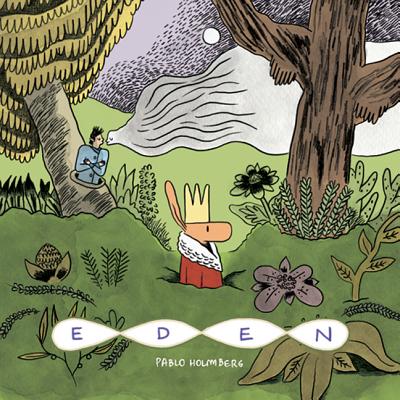
A book you loved that you wouldn't have read if someone hadn't recommend it to you, who recommended it? Eden, a graphic novel/comic by the Argentinean artist Pablo Holmberg. My partner recommended it to me!

Favorite movie version of a book, or a movie that most ruined a book? The news that a favorite book is being adapted into a movie usually causes either wild panic or a headache. Like, the Golden Compass adaptation was cringeworthy. But the BBC miniseries adaptation of Jonathan Strange and Mr Norrell is amazing. I was so scared it would be bad, but it's not!