Welcome to the official blog of Third Place Books
Showing posts with label Suggested Reads. Show all posts

Monday, July 24, 2017

I Think You Forgot Something : William Giraldi

In 2012 the New York Times Sunday Book Review published a very negative (and very hilarious) front-page evisceration of two works by a young, largely unknown fiction writer. The review sparked much debate and launched a thousand tweets about what a book review can or should do. Condemned for being "mean", a descriptor that I personally feel criticism should never pay heed nor extend an ounce of patience, William Giraldi's scathing summation of a novel and collection of stories by Alix Ohlin ruffled many feathers, albeit almost entirely of the twee, "lives in Brooklyn" variety.


Whether you agree with the review or not, it is inarguably the epitome of modern criticism: it entertains, it informs, and it ultimately saves the savvy reader time, effort, and money. In lambasting Ohlin with dazzling verbosity and originality, he accidentally adds insult to injury with prose that upstages his subject's. In just a handful of columns, he manages to wield his own talents in a way that destroys Ohlin's chances of enduring while cementing his own.

What is most powerful in the review is the obvious chasm in capabilities between reviewer and reviewed - when passages of the examined works are framed by Giraldi's crackling and lacerating wit, they become all the more washed out and painfully flat.  
Ohlin:
“Nobody could look their best when lying in a hospital bed after a car accident.”
Giraldi:
"When self pity colludes with self-loathing and solipsism backfires into idealism, the only outcome is insufferable schmaltz."
Nice? Not really. More accomplished? Clearly. What bothered me most about the ensuing debate was not the lack of authenticity from the angry villagers demand for artificial, folded-hands pleasantry in a book review (which certainly rankles) but, selfish bookseller that I am, that the backlash overshadowed Giraldi's utterly brilliant debut novel, published in hardcover the year prior.
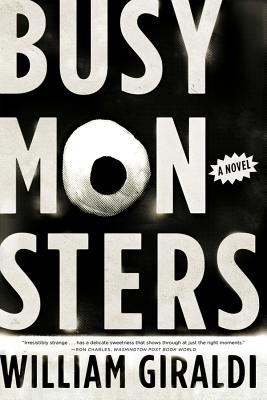
The kind of first novel both reader and writer dream about, Busy Monsters is an intelligent, entertaining yarn whose premise nods to the familiar mythologies of fiction we know, love and yearn to experience again. It is a hero's journey narrated by a broken-hearted narcissist in search of the giant squid that is the heart's desire of his heart's desire.  With a protagonist that reads like an Odysseus raised on Mad Magazine and Gawker, it is a novel that proudly recognizes it is slapstick while achieving what high comedy rarely does in in fiction: generates chuckles without feeling broad or dopey. Even when Bigfoot makes a cameo.
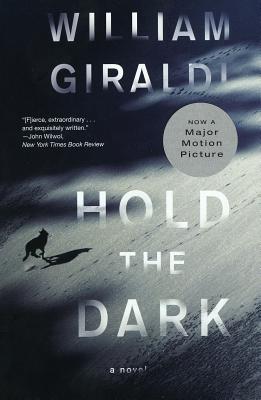

With seemingly no interest in the theory of lightning striking twice, his sophomore effort, Hold the Dark, is as enormous a departure as Giraldi could take. The ribaldry and humor of Busy Monsters is replaced by a violent moodiness and sense of dread more in line with Cormac McCarthy than A Confederacy of Dunces. Murder, revenge and a feral landscape all feature prominently but never bog the book down into any genre tropes. In an interview around the time of Hold the Dark's publication, Giraldi said that all worthwhile literature strives to be religion, that it intends to outlive its creator and endure all trends and fads that rear their heads in its wake and it was that soundbite that informed my reading of Hold the Dark. I felt beholden to the book and its holy trinity of atmosphere, plot and tone, each so engrossing I was held in what can only be described as reverence. 
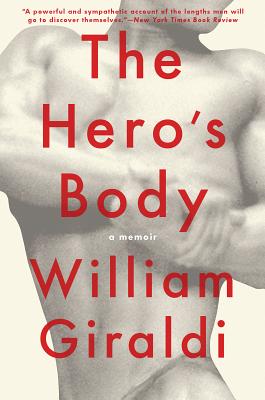

Giraldi's third book, published this past year by W.W. Norton, sees him reaching even further. On paper, a coming-of-age memoir about bodybuilding and motorcycles interests me only slightly more than a 200-page history of the socks you're wearing. Knowing Giraldi and his otherworldly rapturous prose, though, there was really no choice but to give The Hero's Body at least ninety pages of my time. Lo and behold, while the muscle and motor are the narrative's tent poles it is far more than this: it is a moving examination of a soul's evolution, one that searches for a balance and reason. Not just in a flat, presumptuous summary of gender division but by subjectively exploring the fallacies and many stripes of masculinity outside textbook definition:
The psychodynamics are not hard to untie: the vauntingly masculine and competitive are always trying to silence that inner whisper saying You're not man enough. It didn't occur to them, as it never occurred to my adolescent self, that a ranting masculinity is often the inverse of what it purports to be... The male bodybuilder and the female anorexic are equal through opposite manifestations of steady social arm-twisting. Women will be thin, men will be muscular, or both will be nobody.
What I find most striking is his ability to take such a seemingly surreal, typically caricatural world and translate it into one of pragmatic contemplation. 

Much of my life I have been (all in good jest, I'm sure) given a hard time for my concentration on art that concerns itself with the interior lives of women; rarely finding myself drawn to work that focuses on the traditional male perspective. Plots or writers that emphasize overt boyishness or even remotely imply machismo tend to make me roll my eyes so hard my mother's voice rings in my ears: "One day they're going to get stuck like that." 


My matronly tastes is in direct opposition of all this bombastic masculinity Giraldi's jacket copy implies and what, quite honestly, on paper looks like plain old white maleness more synonymous with Kurt Vonnegut or Tom Robbins than I can usually stomach. But maybe it is just that: Giraldi's prose, an award-worthy mixture of punch and good old-fashioned lyricism, illuminates some strange corner of my psyche that when lit, like the protagonist of Busy Monsters, I find myself attracted to something that repulses me and discover it actually provides comfort in a surprising, unexpected way. 

The books vacillate wildly in tone and provide that comfort I seek in a book. Boiled down to the simplest of meanings, they are each about the things for which we all search: love, justice, meaning itself. And great literature.

-Wes

Saturday, April 8, 2017

New and Upcoming Graphica

2017 has not given me a lot to look forward to. Nonetheless, even as chaos rages all around, books are still being written and published. And that gives me little glimmer of hope for what’s to come. Here are some of my most anticipated adult graphica recently or soon to be released! 

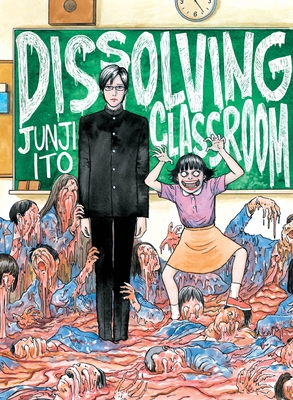
Junji Ito is a Japanese manga artist best known for his dark, disturbing works Uzumaki and Gyo. His newest manga, Dissolving Classroom, follows two cursed siblings, the older brother who is possessed by the devil, and the younger sister, who’s just plain evil. Wherever the two go, trouble seems to follow, as it weaves together stories sure to haunt you.

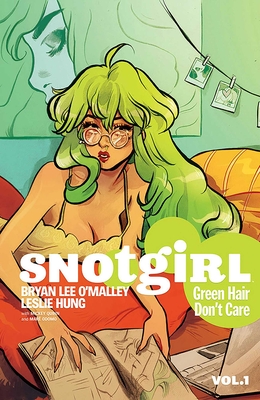
Lottie Person, aka Snotgirl, is a fashion blogger whose life looks like a dream online, but is pretty much a hot mess. She is surrounded by fake friends, keeps running into her ex, has a flowing river of snot and tears for a face (thanks allergies), and has to live with her own, honestly, terrible personality. To top it all off she seems to be teetering on the edge of a breakdown. Snotgirl is sure to be another great read from Scott Pilgrim creator, Bryan Lee O’Malley. 

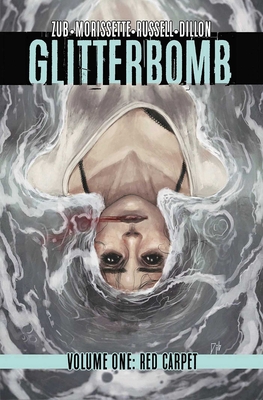
Jim Zub won me over hard with his ongoing series, Wayward, and I’ve been waiting for Glitterbomb to come out in trade paperback for what seems like ages. Horror meets Hollywood in this comic, as the dark side of the entertainment industry is personified in this chilling read.

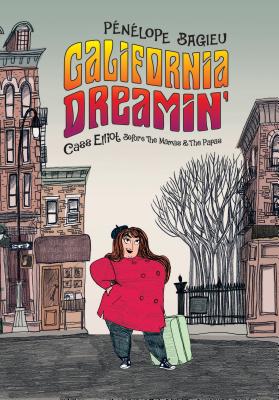
Cass Elliot was the astounding singer who formed The Mamas and the Papas, but is unfortunately known more for her untimely death and the false urban legends surrounding it. Penelope Bagieu explores Mama Cass’ life before hitting it big, giving this talented woman the story she deserves. If you’ve never belted out “Make Your Own Kind of Music” at the top of your lungs, hopefully California Dreamin’ will inspire you to do so. 

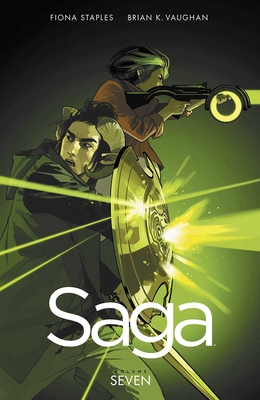
Saga volume 7 may be the title I’m anticipating most this coming year. Me and everyone else in the world. If you haven’t picked up this amazing story, you’re missing out. Be sure to catch up before April, because Saga truly lives up to its name.

I have to be honest, I’m not really a fan of superheroes. That being said, I am a fan of
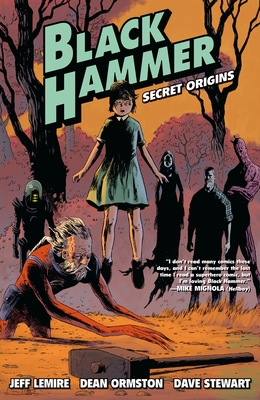
  Jeff Lemire (Sweet Tooth, Descender), as well as narratives about outcasts. I’m pretty pumped to read Black Hammer, the story of a group of superheroes living a rural, farm-town lifestyle after being written out of their own timeline.

Now, more than ever, is a time we need to be non-compliant. In a not-so-distant future, women who do not comply with their roles in life (being mild and submissive wives and daughters to men) are imprisoned and reprogrammed on a lonely piece of rock floating through space dubbed “Bitch Planet”. After hopes have been crushed in the last volume, I think we can all relate to the characters in Bitch Planet Volume 2 who will surely be saying, “no more”. 

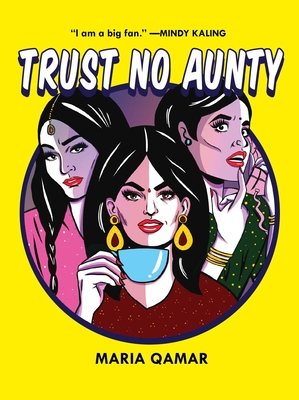
Trust No Aunty is Bollywood meets pop art in the best way possible. Maria Qamar’s experiences as a Pakistani-born Canadian are brought to life in her vivid, pointed,  and often hilarious paintings. I can’t wait to sit down and absorb her artwork in book-form.

-Ashley

Tuesday, January 24, 2017

New Arrivals : It's A Book!

Today on New Arrival: It’s a Book—twins! Because we have two books we’re excited about. Only they are very different books, so we’ll consider them fraternal twins.

Sometimes at Third Place Books, we have a hard time articulating why we love a book. There are times where we just shake our heads and shove it at you saying, “Trust me.” Then there are books we can wax poetic on, practically writing you a dissertation on why it made our hearts grow three sizes. Different books require different kinds of recommendations—it’s not one size fits all. But then, there are many kinds of books and many kinds of readers in this world, and we try to cater to all of them.

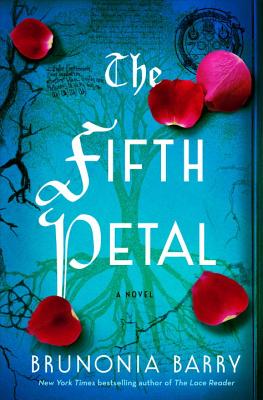
First, we have The Fifth Petal by Brunonia Barry. When I asked my fellow bookseller Chelsea, why she loved The Fifth Petal so much her review was focused less on the actual book and more about how it made her feel to read it. To paraphrase Chelsea:
When you read it, there’s a spooky feel. Like it’s October and you’re listening to Fleetwood Mac while draped in flowy blankets. It’s light and full of magic and mystery and set in Salem. I think it will appeal to a lot of genre readers. It gave me the Stevie Nicks feels. -Chelsea
Honestly, based on that alone, I know several people who will love it. It’s set in the same world as Barry’s last book, The Lace Reader, but you don’t have to read that before you dive into The Fifth Petal.

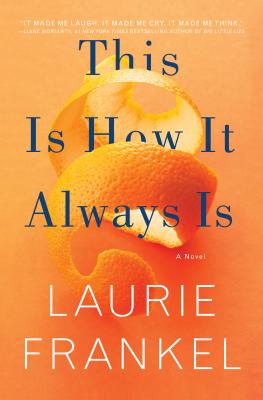
The second book we’re featuring is This is How It Always Is by Laurie Frankel. Emily, also at the Lake Forest Park location, will be recommending this title to book clubs. The subject is timely, the writing light, and the author local. That’s a solid trifecta right there. 
Laurie Frankel's new book is fantastic and very current. I read the whole thing in one sitting - a 336 page manuscript devoured on my phone in a clunky format, and I hate reading electronically and knew a paper copy would be on my desk within a few days. I dipped in and just couldn't stop!  It's a big-hearted novel of family, full of loveable characters that feel like friends. Frankel deals with serious social issues while keeping the tone light. Highly recommended for book clubs. -Emily
This is How It Always Is has received many starred reviews and is getting a lot of love from readers already. And honestly, I also hate reading books on my phone, so that’s really a testament to how much Emily loved it!

-Lish

Wednesday, January 18, 2017

New Arrivals : It’s a Book!

Sometimes the stars align, the planets fall into place, the heavens open, and you fall in love with a book. Nothing is better than that feeling. And then you find out that the author has another book coming out and suddenly you’re swamped by two very different and conflicting emotions. On one hand, you are excited and happy that you get more from a talented writer that speaks to you on a bone-deep level. On the other hand, what if that last book was a fluke? What if the next one doesn’t live up to everything the last book promised?

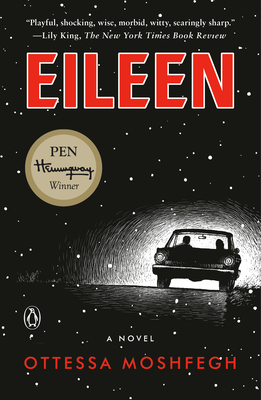
In 2015, Ottessa Moshfegh released the book Eileen to much fanfare. It was an Indie Next pick, it was short listed for the Man Booker prize and the National Book Critics Circle Award, won the PEN/Hemingway Award for debut fiction, and David Sedaris picked it as his recommended book for his Fall 2016 tour. Basically, Moshfegh knocked it out of the park. We had two separate staff recommendations for it:


“Oh Eileen. You are antisocial, you are untrustworthy, you are selfish and self-hating at the same time. You are obsessive, you are put-upon. The way you live your life makes my skin crawl. So why do I love you so much?” –Anje
 “A pretty wild departure from her debut (but equally excellent) novella McGlue, Eileen is a gut-wrenching journey with one of the most intriguing antiheroes I've ever encountered. Darker, complex interior lives of seedy characters are Moshfegh's stock-in-trade but that murkiness shouldn't dissuade potential readers. It is a fearless, compulsively readable novel that reads as if it's on fire.” –Wes
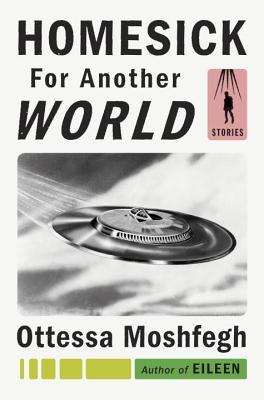
This week, Moshfegh’s new short story collection, Homesick for Another World, is out. And if you think Eileen got a lot of attention, people have been chomping at the bit for this collection. Why? Because Moshfegh is particularly known for her short stories. She’s been published in The Paris Review, The New Yorker and Granta. Her short stories have earned her a Pushcart Prize, an O. Henry Award, the Plimpton Discovery Prize, and a grant from the National Endowment for the Arts.
Moshfegh has been described as our Flannery O’Conner, which is saying something. (Basically that the stories will be weird and awesome.) So if you love a great short story, this collection is for you. If you’re new to short stories, Homesick for Another World is a good place to start. Wes described it as, “The weirdness and darkness of ‘Eileen’ ratcheted up to a ten, to all of our benefits.” 
He also sent me this gif, which I assume means, “this book is number one.” You’ll just have to judge for yourself.


-Lish

Sunday, January 15, 2017

Why, Eh? : Adventures of an Adult Reader

It's Perfectly Normal

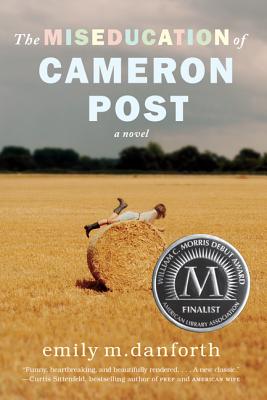
A couple months ago I was thrown headfirst into the vast ocean that is YA reading. Instead of choking and drowning in the dark abyss ala Jack Dawson, I found myself happily treading water. Soon after,  I was wandering around the YA aisles when I saw the book A Miseducation of Cameron Post by Emily Danforth. A wonderfully magnificent book that features a young gay girl as the protagonist.

WHAT? This exists?! My entire belief system was rocked. In all my time stumbling around on this earth I never once considered that there would be young adult books with queer protagonists. WHAT HAVE I BEEN MISSING ALL THIS TIME?!  I suddenly felt like Scrooge McDuck, but nicer. I just wanted to fill a room with these books and swim in them all day long whilst happily cackling to myself.


Growing up, finding any positive queer representation in any sort of media was hard enough, let alone in books. In fact, the first queer YA book was published in 1969, a year when homosexuality was still considered a mental disorder by the American Psychatric Association. LGBTQIA+ Americans were barred from government positions, and it was considered criminal in every state but Illinois. Since then the amount of YA queer books has grown from one a year in the 70s, to seven per year in the 90s, and now roughly 50 a year.

Before finding this paradise of inclusivity, much of the media I encountered featured queer characters and themes focusing on the pain and heartbreak that comes with being a gay kid. The general story was always that not everyone is accepting and there are garbage people out there, and sometimes they are the ones closest to you, and yeah it sucks. Its terrible and damaging and frightening and sad.

But these new YA books paint a different picture. They often include the character's "coming out" and their first same sex relationship and it's so cute and nostalgic it makes my teeth rot. The great thing about  reading these now, is seeing that it is seriously okay. You'll find your own family, and you'll find people who love and support you. With all the garbage happening lately, it's critical to show that not every queer story is a tragedy. When the real world is cruel to queer people, especially queer and trans people of color, then it seems even more important to imagine worlds where it is not. It is essential to carve out spaces where being queer and happy are not seen as mutually exclusive. Of course we need stories that represent our struggles, but we also need stories to nourish us, and to comfort us in times of grief and pain.

Living in a world, even an imaginary one, centered around heterosexual love perpetuates the false and frankly dangerous belief that heterosexulaity is the norm, and anything else is alien, strange, other. Instead of reinforcing this, we should be eradicating it. There is something immensely powerful in recognizing yourself in all types of media. Diversity in YA provides role models for marginalized teens, but also creates empathy for people different than ourselves. Empathy is such a powerful tool in the fight against intolerance and bigotry. These books help with learning what it means to be a social creature, to understand how and where we fit in society.

YA books are a  microcosm for our society, because they are geared toward the next generation. The changes in YA literature reflect changes in our world. And sexuality isn’t something that springs up on people in their mid twenties. Its something we are born with. When hormones kick in and we all start frantically trying to figure out how our bodies work, queer people are trying to figure out if their longings are important in addition to all the everyday angst. This shouldn't be something queer kids finally stumble upon in their 20s while researching for a blog post. This should be something they get to read about as they're experiencing it. Instead of leaving them out in the cold these books can show them that their longings are universal. They're not lonely or isolated, they're just like everyone else, and they belong.

-Courtney

Courtney's Ultimate List of the Queerest Books 

Lesbian
Everything Leads To You by Nina Lacour
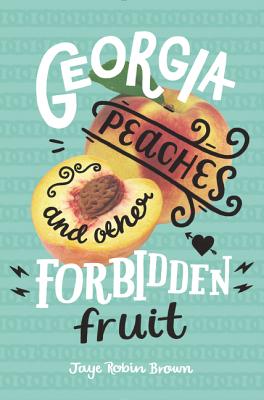
Georgia Peaches and Other Forbidden Fruit by Jaye Robin Brown
Of Fire and Stars by Audrey Coulthurst

Gay
Most Excellent Year by Steve Kluger
I'll Give You The Sun by Jandy Nelson
Aristotle and Dante Discover the Secrets of the Universe by Benjamin Alire Saenz

Bisexual
Far From You by Tess Sharpe
Bi-Normal by M.G Higgins
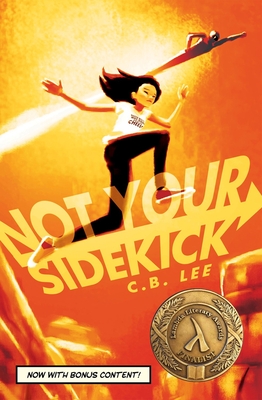
Not Your Sidekick by C.B. Lee

Transgender
I Am J by Cris Beam
If I Was Your Girl by Meredith Russo
Boy Robot Simon Curtis

Queer
Brooklyn Burning by Steve Brezenoff
Girl Mans Up by M-E Girard

Intersex
Double Exposure by Bridget Birdsall
None of The Above by I. W. Gregorio

Asexual
Guardian of The Dead by Karen Healey
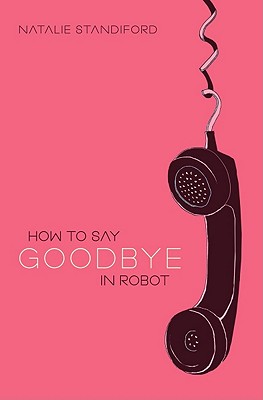
How To Say Goodbye In Robot by Natalie Standiford

Saturday, December 31, 2016

2016 BOOKSELLER TOP TENS!!!!!!!!!!!!!!!!!!!

Here they are! Our Top Ten favorite books of the year, now with bonus Seward Park lists! Remember, I don't limit these lists to books published in 2016, but all books must have been read in 2016.

Usually, when I compile this post, there are some clear favorites. Last year our obvious winner was Between the World and Me, with eight total votes. But this year our highest ranking book was Trevor Noah's Born a Crime, with only four votes. Not to imply that this year's books are only fair to middling, just that we had a lot more books with two and three votes, instead of any landslide victors. So while we couldn't solidly agree on one or two favorites, we sort of loosely settled on a whole slew of champions. And that means more options for you!

In light of our lack of focus, I give you our Fabulous, Fantastic, Fifteen Favorites of 2016!

Check out our individual top ten list below for more of our favorite reads of 2016!
-Erin


Saturday, October 22, 2016

Read This Book : Shirley You Jest Edition

Dean and Halley say, "Read this book:"


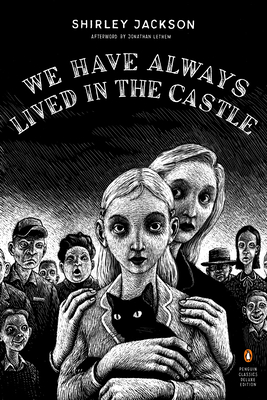
Well, Jackson did it again! This beautiful strange novel leaves quite a distinct and lingering impression. In this tale of mystery and isolation we are met by two sisters cut off from the world. They live alone, happily and ferally in their dilapidated family home in an almost mundanely mystical lifestyle a la Grey Gardens. Delivering and effortless sense of unease, this captivating and understated story will leave you in a satisfying state of unknowingness.
-Dean

Merricat lives with her older sister and uncle after her family is killed due to the mysterious appearance of arsenic in the sugar bowl. After her sister is acquited of the murder, she and Merricat are ostracized by the village. For a time, they are content in their isolation...until a visitor comes to stay. Strange and haunting, this novel stayed with me long after I finished it. Shirley Jackson managed to tell a story without violence, gore, or horror and yet by the end you're left chilled to the bone.
-Halley

***

And speaking of Shirley Jackson, just now is a pretty good time to be an SJ fan (or to become one) as the queen of horror is experiencing a bit of a resurgence. And it's about time too. 

When Shirley Jackson was first introduced by The New Republic, it was as, "Shirley Jackson, the wife of Stanley Hyman... living in New Hampshire and writing a novel." Not as she should have been, "Shirley Jackson the bad*ss writer of truly haunting and creepy short stories is writing a novel and lives in New Hampshire where she has to drive Stanley Hyman (the husband of Ms. Jackson) around because she knows how to drive and he doesn't." Not that not being able to drive is a reason for ridicule.

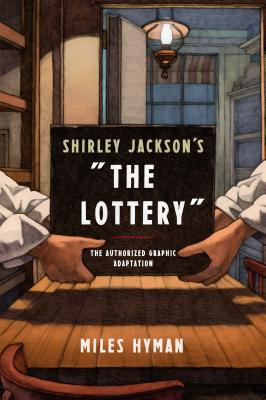
All I'm trying to say is it's time to give this author and licensed driver the appreciation she deserves. And with a new biography, last year's novel based on her life, and a soon to be released graphic novel based on one of her most well-known short stories, we finally are! -Erin


Shirley Jackson's The Lottery continues to thrill and unsettle readers nearly seven decades after it was first published. By turns puzzling and harrowing, it raises troubling questions about conformity, tradition, and the specter of ritualized violence that haunts even the most bucolic, peaceful village. 

This graphic adaptation, published in time for Jackson's centennial, allows readers to experience The Lottery as never before, or discover it anew. The visual artist--and Jackson's grandson--Miles Hyman has crafted an eerie vision of the hamlet where the tale unfolds, its inhabitants, and the unforgettable ritual they set into motion. His four-color, meticulously detailed panels create a noirish atmosphere that adds a new dimension of dread to the original tale. Perfectly timed to the current resurgence of interest in Jackson and her work, Shirley Jackson's The Lottery: The Authorized Graphic Adaptation masterfully reimagines her iconic story with a striking visual narrative.

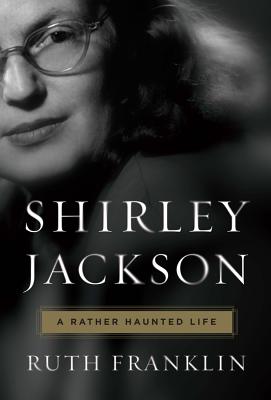
Shirley Jackson : A Rather Haunted Life by Ruth Franklin

Placing Jackson within an American Gothic tradition that stretches back to Hawthorne and Poe, Franklin demonstrates how her unique contribution to this genre came from her focus on "domestic horror." Almost two decades before The Feminine Mystique ignited the women's movement, Jackson stories and nonfiction chronicles were already exploring the exploitation and the desperate isolation of women, particularly married women, in American society.Franklin's portrait of Jackson gives us a way of reading Jackson and her work that threads her into the weave of the world of words, as a writer and as a woman, rather than excludes her as an anomaly (Neil Gaiman).

The increasingly prescient Jackson emerges as a ferociously talented, determined, and prodigiously creative writer in a time when it was unusual for a woman to have both a family and a profession.A mother of four and the wife of the prominentNew Yorkercritic and academic Stanley Edgar Hyman, Jackson lived a seemingly bucolic life in the New England town of North Bennington, Vermont. Yet, much like her stories, which channeled the occult while exploring the claustrophobia of marriage and motherhood, Jackson's creative ascent was haunted by a darker side. As her career progressed, her marriage became more tenuous, her anxiety mounted, and she became addicted to amphetamines and tranquilizers. In sobering detail, Franklin insightfully examines the effects of Jackson's California upbringing, in the shadow of a hypercritical mother, on her relationship with her husband, juxtaposing Hyman's infidelities, domineering behavior, and professional jealousy with his unerring admiration for Jackson's fiction, which he was convinced was among the most brilliant he had ever encountered.

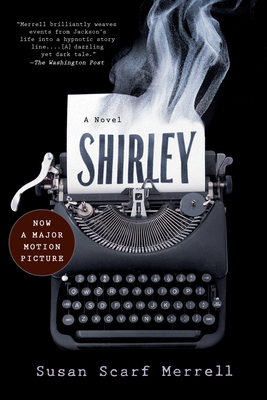
Shirley by Susan Scarf Merrell 

In this darkly captivating novel, Susan Scarf Merrell uses the facts of Jackson's life as a springboard to explore the 1964 disappearance of Paula Weldon, a young Bennington College student. 

Told through the eyes of Rose Nemser the wife of a graduate student working with Jackson's husband, Bennington professor Stanley Edgar Hyman Shirley reimagines the connections between the Hymans volatile marriage and one of the era's great unsolved mysteries.

Wednesday, October 19, 2016

Scary Books!

It's my favorite time of year for reading. Not that I don't read at all other times of the year. It's only that reading October through December is THE BEST time for reading. It's like the sports year, sure, hockey is good all season long, but it's THE BEST during Stanley Cup playoffs.

Nothing is cozier than curling under a blanket, drinking a cup of tea, and reading to the sounds of rain falling and wind scattered leaves. I also like to put my Yule Log on, but you should feel free to light a real fire should you have a fireplace. Admit it, me describing it right now has you contemplating just how many sick days you can get away with.


Since Reading Season Playoffs begin in October, I like to start off with scary books. I've put together a table at the Lake Forest Park Store. Here are a few of the titles on display, come on down and check out the rest...if you dare.


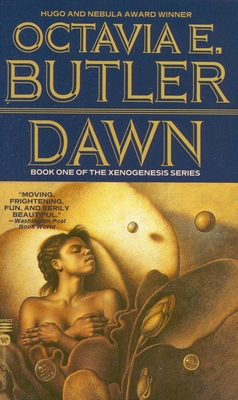
Dawn  by Octavia Butler

Lilith lyapo awoke from a centuries-long sleep to find herself aboard the vast spaceship of the Oankali. Creatures covered in writhing tentacles, the Oankali had saved every surviving human from a dying, ruined Earth. They healed the planet, cured cancer, increased strength, and were now ready to help Lilith lead her people back to Earth--but for a price.


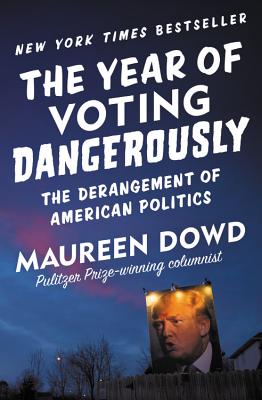
Trapped between two candidates with the highest recorded unfavorables, Americans are plunged into The Year of Voting Dangerously. In this perilous and shocking campaign season, Dowd traces the psychologies and pathologies in one of the nastiest and most significant battles of the sexes ever. If America is on the escalator to hell, then this book is the perfect guide for this surreal, insane ride.


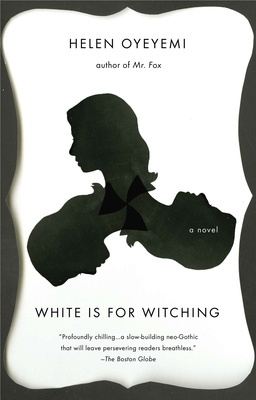
White is for Witching by Helen Oyeyemi

There's something strange about the Silver family house in the closed-off town of Dover, England. Grand and cavernous with hidden passages and buried secrets, it's been home to four generations of Silver women Anna, Jennifer, Lily, and now Miranda, who has lived in the house with her twin brother, Eliot, ever since their father converted it to a bed-and-breakfast. The Silver women have always had a strong connection, a pull over one another that reaches across time and space, and when Lily, Miranda's mother, passes away suddenly while on a trip abroad, Miranda begins suffering strange ailments. An eating disorder starves her. She begins hearing voices. When she brings a friend home, Dover's hostility toward outsiders physically manifests within the four walls of the Silver house, and the lives of everyone inside are irrevocably changed.

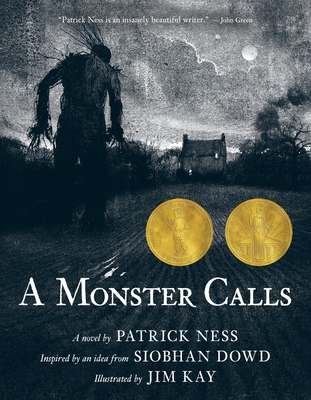
A Monster Calls by Patrick Ness

At seven minutes past midnight, thirteen-year-old Conor wakes to find a monster outside his bedroom window. But it isn't the monster Conor's been expecting-- he's been expecting the one from his nightmare, the nightmare he's had nearly every night since his mother started her treatments. The monster in his backyard is different. It's ancient. And wild. And it wants something from Conor. Something terrible and dangerous. It wants the truth. From the final idea of award-winning author Siobhan Dowd-- whose premature death from cancer prevented her from writing it herself-- Patrick Ness has spun a haunting and darkly funny novel of mischief, loss, and monsters both real and imagined.


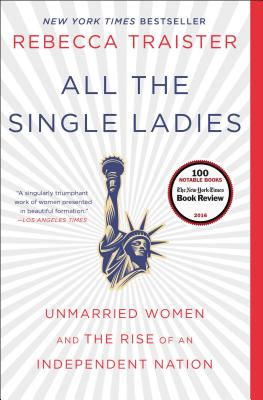
All the Single Ladies Unmarried Women and the Rise of an Independent Nation by Rebecca Traister

In 2009, award-winning journalist Rebecca Traister started All the Single Ladies about the twenty-first century phenomenon of the American single woman. It was the year the proportion of American women who were married dropped below fifty percent; and the median age of first marriages, which had remained between twenty and twenty-two years old for nearly a century (1890 1980), had risen dramatically to twenty-seven. 

But over the course of her vast research and more than a hundred interviews with academics and social scientists and prominent single women, Traister discovered a startling truth: the phenomenon of the single woman in America is not a new one. And historically, when women were given options beyond early heterosexual marriage, the results were massive social change temperance, abolition, secondary education, and more. Today, only twenty percent of Americans are married by age twenty-nine, compared to nearly sixty percent in 1960. 

And my favorite literary/author pun...


Boo!
-Erin

Saturday, October 1, 2016

Reading Fast, and Reading Slow

In 16 years of bookselling, I’ve always been a voracious reader, devouring 2-3 books each week. This spring I hit a reading slump. My personal life turned upside down, and suddenly I couldn’t focus. Reading has always been a refuge, so it was strange to be so distracted that I couldn’t read more than a few pages without losing track of the narrative.

I loved Charles DuHigg’s The Power of Habit, so I snapped up an advance copy of his latest book, Smarter Faster Better. I took notes on the first few chapters and could hardly wait to read the rest, but life got in the way. Ironically, I fell out of the habit of picking up a book whenever I had a spare minute.

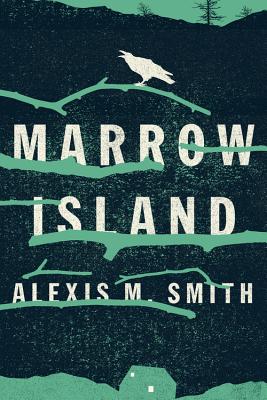
By April 4 I’d managed to finish one book: Marrow Island by Alexis Smith. I adored Smith’s debut gem, Glaciers, and her second effort is the type of novel I’d ordinarily finish in a day or two: literary fiction with an edge of mystery, set primarily in the San Juan Islands.  I spent six weeks reading this wonderfully stitched 256-page story, determined to see it through and return to my usual reading pace.

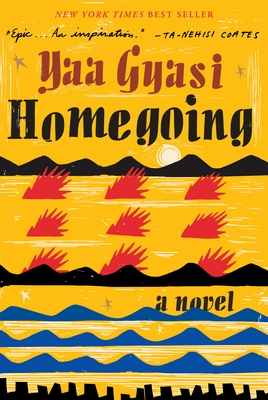
In May I had a few more false starts but only finished one book: Homegoing by Yaa Gyasi, a beautifully wrought portrait of two half-sisters and their descendants, from the Gold Coast of Africa at the peak of the slave trade to 21st century America. The memorable characters each evoke a unique time and place, bringing humanity to history.

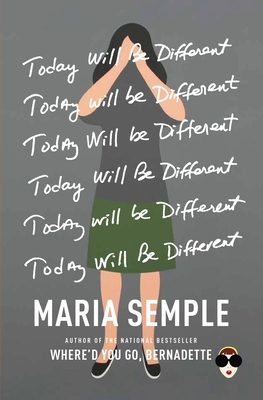
June brought me just what I needed: Maria Semple’s forthcoming romp Today Will Be Different. Funny and smart with a touch of the ridiculous, it follows Eleanor Flood through a single day in which she tries to be a better person, to hilarious effect.

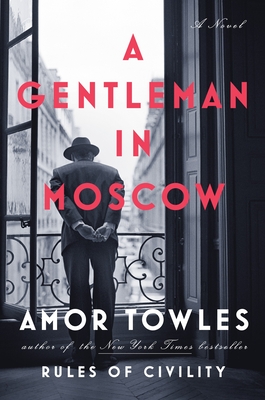
By the end of July I felt accomplished; I'd finished three whole books! I savored my favorite, A Gentleman in Moscow by Amor Towles, over several weeks. Sentenced to live out his days as a Former Person at the Hotel Metropol in 1922, Count Alexander Rostov resolves to make the best of his reduced circumstances. With unparalleled charm, he moves through three decades, befriending staff, guests, and foreign journalists, always the gentleman. Fans of Helen Simonson’s delightful The Summer Before the War will enjoy the count's quick wit and the minutiae of his days.

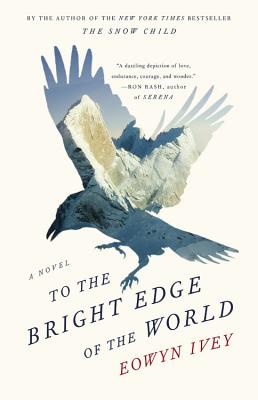
In August I enjoyed a few pages a day of Eowyn Ivey’s second novel, To the Bright Edge of the World. Set in nineteenth century Alaska, this historical novel follows an expedition up the Wolverine River into the unknown, told through the leader’s journal entries and his wife’s letters.

At first I felt horribly guilty neglecting the stacks of unread advance reading copies on my shelves, but over the past few months I’ve let go of the guilt somewhat. I’ve fallen out of the reading habit, but I have faith it will return. Right now I’m spending 6-8 hours each week on my bike, writing loads of letters and postcards, journaling, paddle boarding, camping, and anything else that gets me out in the glorious summer sun.

-Emily

Monday, August 29, 2016

When Nobody Loves the Book You Love

Have you ever watched your child perform really poorly? Like you're at the soccer field and your kid can't even drink his Gatorade without spilling it all down his front, let alone run fast or kick the ball with any sort of accuracy? How about a television show you love being cancelled after one season? Or when they stop making your favorite brand of novelty breakfast cereal (you broke my heart Rice Krispies Treats Cereal)? All of those feelings of sadness, disappointment, abandonment, and unfairness...those are the feelings I feel every day when I walk by the book I love and you haven't bought it yet. 

Only I feel all those feelings times one million.

I bet you didn't think bookselling involved such angst and anguish. Well, it does, and it's mostly your fault. You see, I read this book, this book I really loved. I told people about it. I staff picked it. I put it on Instagram. It featured on one of our monthly theme tables. But you didn't care. You ignored it. It's like I'm shouting to an empty room. Or a room filled with angry people trying to read the books they bought instead of the book I'm suggesting.

So here's my last ditch effort, and if a hastily crafted, marginally edited blog post won't convince you to buy it, I guess I'm not very good at my job. Fair warning, I'm not above some pretty dubious tactics. Like pilfering words from this New York Times Book Review by Leonard Pitts Jr.:
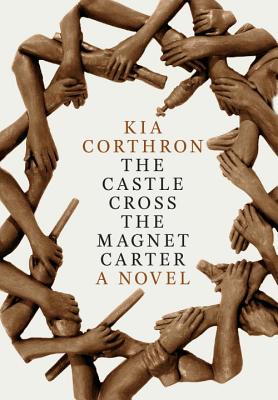
 The Castle Cross the Magnet Carter... a narrative that sweeps forward (and then back) between World War II and the first decade of the new millennium, touching on the civil rights movement, AIDS, deaf culture, lynching, love and sexuality, that emotional terrain remains the book’s bedrock.
...what Corthron does best in this book. She blindsides you. She sneaks up from behind. Sometimes, it is with moments of humor, but more often with moments of raw emotional power — moments whose pathos feels hard-earned and true.
The Castle Cross the Magnet Carter is a big book that has a lot — arguably too much — on its mind. But it succeeds admirably in a novel’s first and most difficult task: It makes you give a damn. It also does well by a novel’s second task: It sends you away pondering what it has to say.
What he said. 

And what's a little plagarism compared to the exploitation of a good friend's emotional health and job stability? Because, I haven't been entirely unable to sell this book, in fact I convinced a friend to read it and she loved it. She loved it so much she had to call in sick while she was reading it. She couldn't wait to finish and refused to read at work because she didn't want to cry in front of coworkers. Those are real emotions people.

I will even do the thing I hate most about bookselling: the comparison. Here goes:
If you loved Hanya Yanagihara's A Little Life, then you will love The Castle Cross the Magnet Carter even more. They are both super long, super big books. 10 pounds each. Serious. Both have these characters your heart will break for. And both will make you weep. Castle Cross just does it WAY better.
And last but not least... I understand the importance of cover design, so I have updated the original cover with everyone's favorite things in an attempt to appeal to a wider audience.


All joking aside. The Castle Cross The Magnet Carter is a beautiful book. A sprawling, messy, sweeping epic. It gives you the chance to burrow in and really connect with the characters. Weirdly, Kia Corthron does a lot of things I usually hate: child narrators, dialects, switching perspectives, jumping through time. But in her hands they become this perfect conduit for a heartbreaking tale of race, sexuality, disability, familial strife, and the power of brotherhood. These pages deal with a lot of hate, sadness, and confusion but there's also a lot of courage and love here too. I wish this book were 800 more pages, and then 800 more after that.

Please read it. Don't let it be the book on the sidelines with Gatorade all down its front.

-Erin

Saturday, July 30, 2016

I Think You Forgot Something : Macdonald Harris

A dik-dik, to save you from googling 
I once worked with a young Harvard graduate, summa cum laude, the whole bit. On paper, she looked like the ideal person with whom to discuss literature: well-educated, great taste, interests best described as widely flung. But in reality, you could have more stimulating conversations about books with a drug-addled dik-dik. The most elaborate praise available from her was “it was good,” or “I liked it.” Sometimes, that little nudge can be enough to sway me; maybe I’m curious about a book or an author but for whatever reason don’t trust myself and the plaudits of another, no matter how mild, can bring my wallet into the light. But not often.

Most booksellers spend forty odd hours on the clock surrounded by unread and unfamiliar books and another 128 off the clock also surrounded by more unread and only slightly more familiar tomes. In our reading, it is the bookseller's curse that we are reading either six months ahead or ten years behind everyone else. Most booksellers find the traditional nightstand replaced by stacks of books, both the old and forgotten as well as the coveted not-yet-released. Over time, it can become difficult to entertain suggestions because those stacks, that daunting, swollen mass just cannot possibly bear another ounce.

Years ago, however, a novel came to my attention through a librarian pal whose recommendation was so fulsome, so bombastically positive, I had no choice but to heed it. Both title and author were unknown to me and the journey to reading it proved to be quite the undertaking. Published in 1964, Mortal Leap by Macdonald Harris went out of print almost immediately and it is impossible to find a decent copy for less than a cool six hundred dollars. It became my personal holy grail, the damn thing’s elusiveness creating an almost feral desire. I suggested it to the New York Review of Books for reprint multiple times, even creating an alias to submit multiple suggestions. I checked used book sites daily for a decent copy under three hundred dollars, the most I can conceive of paying for anything that doesn’t come with a roof or a motor.

Eventually I disavowed myself of the notion I could own a copy and, with a five dollar bill and the willingness of the good librarians of Issaquah, settled in with a brittle, near ruined copy of the book that had felt like nothing but pure myth for years. Lo and behold, it was worth every moment of the hunt, every failed footstep of the pursuit forgotten. Mortal Leap is a book so far beyond “good” that its greatness can only be experienced.


This is fiction writing at its finest: a story in the classical mode, lushly wrought with details that immediately establish a fully realized character and landscape. Harris reawakens a childlike sense of wonder and fascination, a passion for the possible that transports the reader fully. His gift is truly a marvel, an ability to craft stories that are so fantastic and immersive it borders on the terrifying. The relationship between the reader and the physical object is marvelously indescribable and only a true, ethereal talent can to make a pound of paper feel alive in your hands.

If you peruse the synopses of Harris’s other work, you can immediately see no two are alike. It is a motley collection of novels and is only unified by, other than its greatness, man’s elusive inability to know himself. If you’ve read five novels by white men, at least four addressed this moral mission. Yawn, yawn, yawn, right? Not here.

Mortal Leap is a quintessential, exemplary model of what fiction can and should do. In the most reductive terms, it is an adult's adventure tale, a la Jack London: affect-less Mormon boy, disinterested in the life laid out before him, follows his existential malaise to sea. There is a plot outside of little boy lost, but the book is so beautifully written and such a singular experience, I would be doing it an enormous disservice dressing it in the rags of my fumbling fanboydom. But if you need convincing, the book speaks for itself beautifully:
It was a part of myself that was my enemy; I still had a childish illusion that the flesh on my own bones was somehow unique and precious to the universe, in some obscure corner of my mind I wanted the others to love me and make exceptions for me simply because I felt heat and cold, pain and loneliness as they did. Now this was gone once and for all, and I understood there were no exceptions and on one was invulnerable, we all had to share the same conditions and in the end this was simply mortality, the mortality of things as well as ourselves. After that I didn't expect anybody to love me...
And a passage that should make any reader weak-kneed:
 The books were a private part of me that I carried inside and guarded and didn't talk to anybody about; as long as I had the books I could convince myself I was different from the others and my life wasn't quite as stupid and pointless.

Harris's is a body of work I only become more passionate about, both as I explore titles I haven’t read or mull over the handful that I have. Looking at the novels on the whole, comparisons are most easily made to the work of Paul Auster. Harris’s novels carry the same ruminative tone and irreverent sense of adventure and both boldly wear an ambition to stretch their craft and sense of reality. Also like Auster, there’s no impression Harris was hankering for clout or accolades but simply a love of a pure, simple form of storytelling.

None of this is as succinct a recommendation as “it’s good,” I know. But so remarkable is Macdonald Harris, so deserving of full-volume, roof-shaking praise, his work could turn even my plaintively praising former colleague into an ivory tower of babble.

-Wes