Welcome to the official blog of Third Place Books
Showing posts with label scary stories. Show all posts

Saturday, October 22, 2016

Read This Book : Shirley You Jest Edition

Dean and Halley say, "Read this book:"
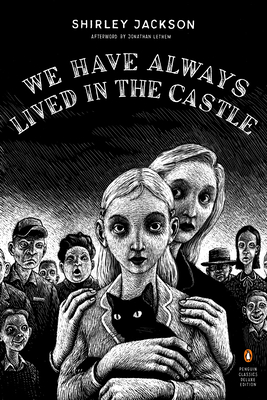

Well, Jackson did it again! This beautiful strange novel leaves quite a distinct and lingering impression. In this tale of mystery and isolation we are met by two sisters cut off from the world. They live alone, happily and ferally in their dilapidated family home in an almost mundanely mystical lifestyle a la Grey Gardens. Delivering and effortless sense of unease, this captivating and understated story will leave you in a satisfying state of unknowingness.
-Dean

Merricat lives with her older sister and uncle after her family is killed due to the mysterious appearance of arsenic in the sugar bowl. After her sister is acquited of the murder, she and Merricat are ostracized by the village. For a time, they are content in their isolation...until a visitor comes to stay. Strange and haunting, this novel stayed with me long after I finished it. Shirley Jackson managed to tell a story without violence, gore, or horror and yet by the end you're left chilled to the bone.
-Halley

***

And speaking of Shirley Jackson, just now is a pretty good time to be an SJ fan (or to become one) as the queen of horror is experiencing a bit of a resurgence. And it's about time too. 

When Shirley Jackson was first introduced by The New Republic, it was as, "Shirley Jackson, the wife of Stanley Hyman... living in New Hampshire and writing a novel." Not as she should have been, "Shirley Jackson the bad*ss writer of truly haunting and creepy short stories is writing a novel and lives in New Hampshire where she has to drive Stanley Hyman (the husband of Ms. Jackson) around because she knows how to drive and he doesn't." Not that not being able to drive is a reason for ridicule.

All I'm trying to say is it's time to give this author and licensed driver the appreciation she deserves. And with a new biography, last year's novel based on her life, and a soon to be released graphic novel based on one of her most well-known short stories, we finally are! -Erin
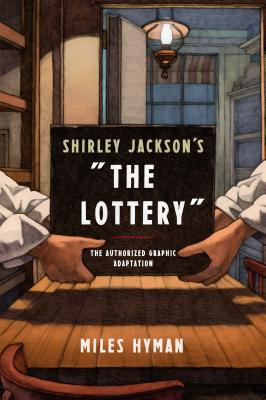

Shirley Jackson's The Lottery continues to thrill and unsettle readers nearly seven decades after it was first published. By turns puzzling and harrowing, it raises troubling questions about conformity, tradition, and the specter of ritualized violence that haunts even the most bucolic, peaceful village. 

This graphic adaptation, published in time for Jackson's centennial, allows readers to experience The Lottery as never before, or discover it anew. The visual artist--and Jackson's grandson--Miles Hyman has crafted an eerie vision of the hamlet where the tale unfolds, its inhabitants, and the unforgettable ritual they set into motion. His four-color, meticulously detailed panels create a noirish atmosphere that adds a new dimension of dread to the original tale. Perfectly timed to the current resurgence of interest in Jackson and her work, Shirley Jackson's The Lottery: The Authorized Graphic Adaptation masterfully reimagines her iconic story with a striking visual narrative.

Shirley Jackson : A Rather Haunted Life by Ruth Franklin
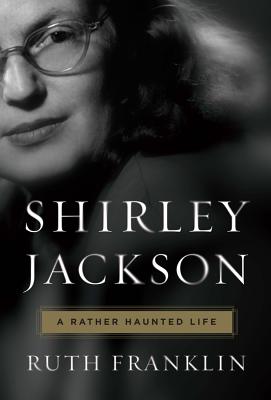
Placing Jackson within an American Gothic tradition that stretches back to Hawthorne and Poe, Franklin demonstrates how her unique contribution to this genre came from her focus on "domestic horror." Almost two decades before The Feminine Mystique ignited the women's movement, Jackson stories and nonfiction chronicles were already exploring the exploitation and the desperate isolation of women, particularly married women, in American society.Franklin's portrait of Jackson gives us a way of reading Jackson and her work that threads her into the weave of the world of words, as a writer and as a woman, rather than excludes her as an anomaly (Neil Gaiman).

The increasingly prescient Jackson emerges as a ferociously talented, determined, and prodigiously creative writer in a time when it was unusual for a woman to have both a family and a profession.A mother of four and the wife of the prominentNew Yorkercritic and academic Stanley Edgar Hyman, Jackson lived a seemingly bucolic life in the New England town of North Bennington, Vermont. Yet, much like her stories, which channeled the occult while exploring the claustrophobia of marriage and motherhood, Jackson's creative ascent was haunted by a darker side. As her career progressed, her marriage became more tenuous, her anxiety mounted, and she became addicted to amphetamines and tranquilizers. In sobering detail, Franklin insightfully examines the effects of Jackson's California upbringing, in the shadow of a hypercritical mother, on her relationship with her husband, juxtaposing Hyman's infidelities, domineering behavior, and professional jealousy with his unerring admiration for Jackson's fiction, which he was convinced was among the most brilliant he had ever encountered.
Shirley by Susan Scarf Merrell 

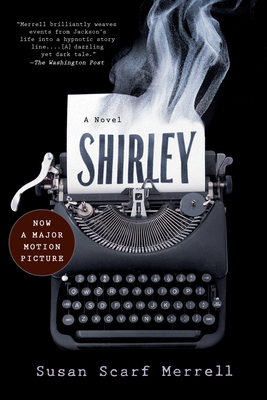
In this darkly captivating novel, Susan Scarf Merrell uses the facts of Jackson's life as a springboard to explore the 1964 disappearance of Paula Weldon, a young Bennington College student. 

Told through the eyes of Rose Nemser the wife of a graduate student working with Jackson's husband, Bennington professor Stanley Edgar Hyman Shirley reimagines the connections between the Hymans volatile marriage and one of the era's great unsolved mysteries.

Wednesday, October 19, 2016

Scary Books!

It's my favorite time of year for reading. Not that I don't read at all other times of the year. It's only that reading October through December is THE BEST time for reading. It's like the sports year, sure, hockey is good all season long, but it's THE BEST during Stanley Cup playoffs.

Nothing is cozier than curling under a blanket, drinking a cup of tea, and reading to the sounds of rain falling and wind scattered leaves. I also like to put my Yule Log on, but you should feel free to light a real fire should you have a fireplace. Admit it, me describing it right now has you contemplating just how many sick days you can get away with.


Since Reading Season Playoffs begin in October, I like to start off with scary books. I've put together a table at the Lake Forest Park Store. Here are a few of the titles on display, come on down and check out the rest...if you dare.


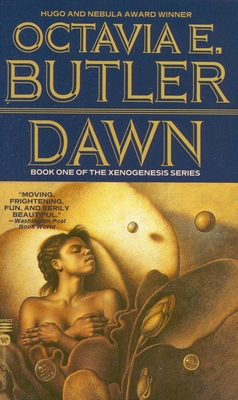
Dawn  by Octavia Butler

Lilith lyapo awoke from a centuries-long sleep to find herself aboard the vast spaceship of the Oankali. Creatures covered in writhing tentacles, the Oankali had saved every surviving human from a dying, ruined Earth. They healed the planet, cured cancer, increased strength, and were now ready to help Lilith lead her people back to Earth--but for a price.


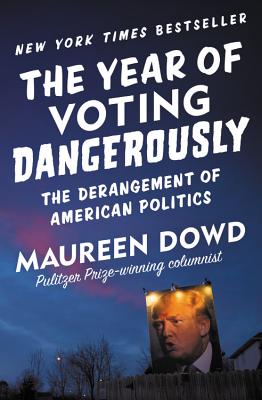
Trapped between two candidates with the highest recorded unfavorables, Americans are plunged into The Year of Voting Dangerously. In this perilous and shocking campaign season, Dowd traces the psychologies and pathologies in one of the nastiest and most significant battles of the sexes ever. If America is on the escalator to hell, then this book is the perfect guide for this surreal, insane ride.


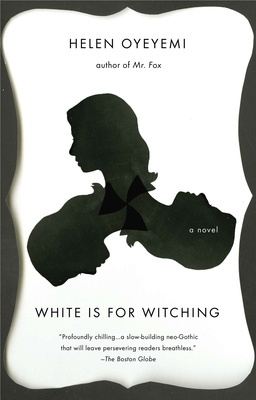
White is for Witching by Helen Oyeyemi

There's something strange about the Silver family house in the closed-off town of Dover, England. Grand and cavernous with hidden passages and buried secrets, it's been home to four generations of Silver women Anna, Jennifer, Lily, and now Miranda, who has lived in the house with her twin brother, Eliot, ever since their father converted it to a bed-and-breakfast. The Silver women have always had a strong connection, a pull over one another that reaches across time and space, and when Lily, Miranda's mother, passes away suddenly while on a trip abroad, Miranda begins suffering strange ailments. An eating disorder starves her. She begins hearing voices. When she brings a friend home, Dover's hostility toward outsiders physically manifests within the four walls of the Silver house, and the lives of everyone inside are irrevocably changed.

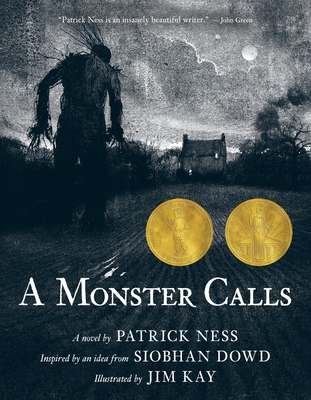
A Monster Calls by Patrick Ness

At seven minutes past midnight, thirteen-year-old Conor wakes to find a monster outside his bedroom window. But it isn't the monster Conor's been expecting-- he's been expecting the one from his nightmare, the nightmare he's had nearly every night since his mother started her treatments. The monster in his backyard is different. It's ancient. And wild. And it wants something from Conor. Something terrible and dangerous. It wants the truth. From the final idea of award-winning author Siobhan Dowd-- whose premature death from cancer prevented her from writing it herself-- Patrick Ness has spun a haunting and darkly funny novel of mischief, loss, and monsters both real and imagined.


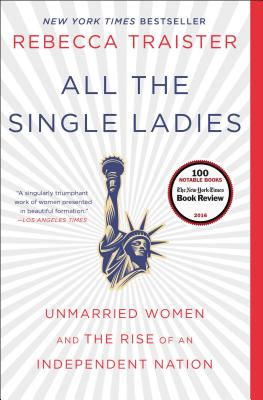
All the Single Ladies Unmarried Women and the Rise of an Independent Nation by Rebecca Traister

In 2009, award-winning journalist Rebecca Traister started All the Single Ladies about the twenty-first century phenomenon of the American single woman. It was the year the proportion of American women who were married dropped below fifty percent; and the median age of first marriages, which had remained between twenty and twenty-two years old for nearly a century (1890 1980), had risen dramatically to twenty-seven. 

But over the course of her vast research and more than a hundred interviews with academics and social scientists and prominent single women, Traister discovered a startling truth: the phenomenon of the single woman in America is not a new one. And historically, when women were given options beyond early heterosexual marriage, the results were massive social change temperance, abolition, secondary education, and more. Today, only twenty percent of Americans are married by age twenty-nine, compared to nearly sixty percent in 1960. 

And my favorite literary/author pun...


Boo!
-Erin

Sunday, October 26, 2014

Scary Book Time!

I feel like I just wrote a this post for last year's scary reads. Has this year flown by, or what? But it really is that time again, my favorite time, actually. Time for some SPOOKY books for your Halloween needs!
***
Here's an oldie but a goodie. Everyone always says The Shining is where it's at, by I find something profoundly terrifying about The Stand. I'm sure it's related to the whole plague-ridden, end-of-days thing.

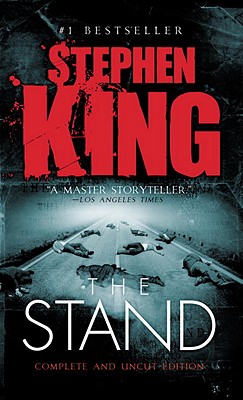
The Stand by Stephen King
When a man escapes from a biological testing facility, he sets in motion a deadly domino effect, spreading a mutated strain of the flu that will wipe out 99 percent of humanity within a few weeks. The survivors who remain are scared, bewildered, and in need of a leader. Two emerge--Mother Abagail, the benevolent 108-year-old woman who urges them to build a community in Boulder, Colorado; and Randall Flagg, the nefarious "Dark Man," who delights in chaos and violence.
***
I really love Shirley Jackson. And when most people think about her, they think The Haunting of Hill House and my personal favorite, We Have Always Lived in the Castle. But sometimes real life can be more frightening than a spooky book. So check out Life Among the Savages, Jackson's hilarious memoir about raising small children, learning to drive, and trying to maintain her sanity in rural Vermont.

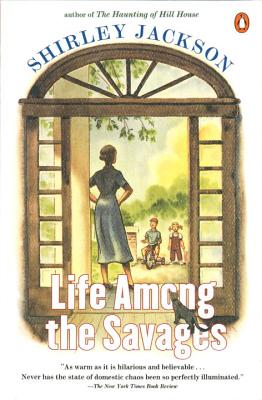
Life Among the Savages by Shirley Jackson
"Our house," writes Jackson, "is old, noisy, and full. When we moved into it we had two children and about five thousand books; I expect that when we finally overflow and move out again we will have perhaps twenty children and easily half a million books." 

Jackson's literary talents are in evidence everywhere, as is her trenchant, unsentimental wit. Yet there is no mistaking the happiness and love in these pages, which are crowded with the raucous voices of an extraordinary family living a wonderfully ordinary life.
***
Mark B. would kill me if I didn't include this one in my list of scary tales.

Smoke Gets in Your Eyes: And Other Lessons from the Crematory by Caitlin Doughty
Most people want to avoid thinking about death, but Caitlin Doughty a twenty-something with a degree in medieval history and a flair for the macabre took a job at a crematory, turning morbid curiosity into her life s work. With an original voice that combines fearless curiosity and mordant wit, Caitlin tells an unusual coming-of-age story full of bizarre encounters, gallows humor, and vivid characters (both living and very dead). Describing how she swept ashes from the machines (and sometimes onto her clothes), and cared for bodies of all shapes and sizes, Caitlin becomes an intrepid explorer in the world of the deceased. Her eye-opening memoir shows how our fear of dying warps our culture and society, and she calls for better ways of dealing with death (and our dead). In the spirit of her popular Web series, Ask a Mortician, Caitlin s engaging narrative style makes this otherwise scary topic both approachable and profound."
***
And along the same vein...

The American Way of Death Revisited by Jessica Mitford
Only the scathing wit and searching intelligence of Jessica Mitford could turn an exposé of the American funeral industry into a book that is at once deadly serious and side-splittingly funny. When first published in 1963 this landmark of investigative journalism became a runaway bestseller and resulted in legislation to protect grieving families from the unscrupulous sales practices of those in "the dismal trade." 

Just before her death in 1996, Mitford thoroughly revised and updated her classic study. The American Way of Death Revisited confronts new trends, including the success of the profession's lobbyists in Washington, inflated cremation costs, the telemarketing of pay-in-advance graves, and the effects of monopolies in a death-care industry now dominated by multinational  corporations.
***
And now for something truly bone-chilling...and, it's newly revised!

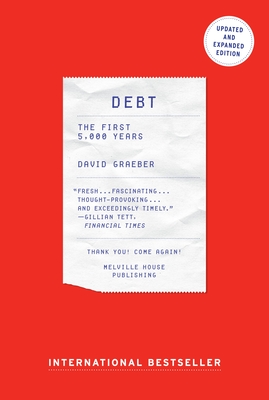
Debt: The First 5,000 Years by David Graeber
Every economics textbook says the same thing: Money was invented to replace onerous and complicated barter systems—to relieve ancient people from having to haul their goods to market. The problem with this version of history? There’s not a shred of evidence to support it. 

Here anthropologist David Graeber presents a stunning reversal of conventional wisdom. He shows that for more than 5,000 years, since the beginnings of the first agrarian empires, humans have used elaborate credit systems to buy and sell goods—that is, long before the invention of coins or cash. It is in this era, Graeber argues, that we also first encounter a society divided into debtors and creditors. 

Graeber shows that arguments about debt and debt forgiveness have been at the center of political debates from Italy to China, as well as sparking innumerable insurrections. He also brilliantly demonstrates that the language of the ancient works of law and religion (words like “guilt,” “sin,” and “redemption”) derive in large part from ancient debates about debt, and shape even our most basic ideas of right and wrong. We are still fighting these battles today without knowing it.
***
I've saved the most ghastly, most gruesome, most horrible for last...get it? Scarry? Get it?!!?!!?

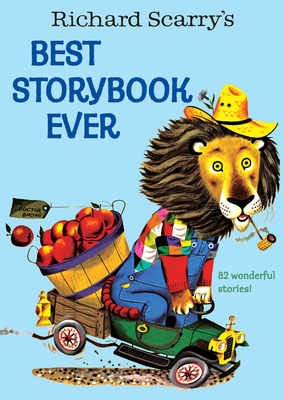
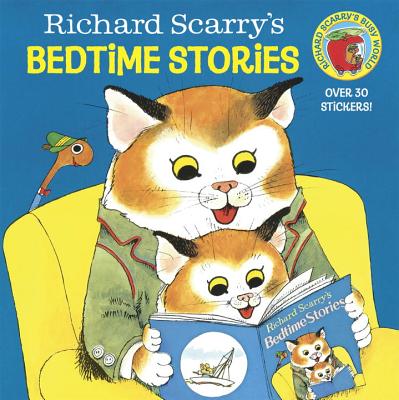
Richard Scarry's Bedtime Stories by Richard Scarry
Five funny tales featuring Lowly Worm, Huckle Cat, Bananas Gorilla, and the rest of Scarry's memorable menagerie are collected in a sleepytime anthology.

I'm not even sorry about that pun. Happy Halloween, everybody!

Sunday, October 6, 2013

Spooky Suggestions

Fall is my favorite season; October, my favorite month; and Halloween, my favorite excuse to eat candy. It's also my favorite time of year to read. It's blustery and gloomy, and the days are growing shorter. There's nothing like curling up under a blanket on a chilly autumn night to read a book. Here is a short list of some of my favorite fall reads

We Have Always Lived in the Castle by Shirley Jackson

Taking readers deep into a labyrinth of dark neurosis, We Have Always Lived in the Castle is a deliciously unsettling novel about a perverse, isolated, and possibly murderous family and the struggle that ensues when a cousin arrives at their estate. This edition features a new introduction by Jonathan Lethem.

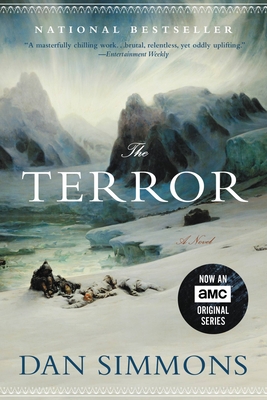
The Terror by Dan Simmons

 The men on board HMS Terror have every expectation of finding the Northwest Passage. When the expedition's leader, Sir John Franklin, meets a terrible death, Captain Francis Crozier takes command and leads his surviving crewmen on a last, desperate attempt to flee south across the ice. But as another winter approaches, as scurvy and starvation grow more terrible, and as the Terror on the ice stalks them southward, Crozier and his men begin to fear there is no escape. A haunting, gripping story based on actual historical events, The Terror is a novel that will chill you to your core.

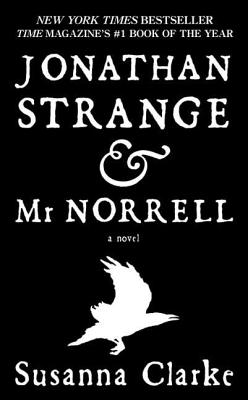
 Jonathan Strange and Mr. Norrell by Susanna Clarke

At the dawn of the nineteenth century, two very different magicians emerge to change England's history. In the year 1806, with the Napoleonic Wars raging on land and sea, most people believe magic to be long dead in England--until the reclusive Mr Norrell reveals his powers, and becomes a celebrity overnight.

Soon, another practicing magician comes forth: the young, handsome, and daring Jonathan Strange. He becomes Norrell's student, and they join forces in the war against France. But Strange is increasingly drawn to the wildest, most perilous forms of magic, straining his partnership with Norrell, and putting at risk everything else he holds dear.

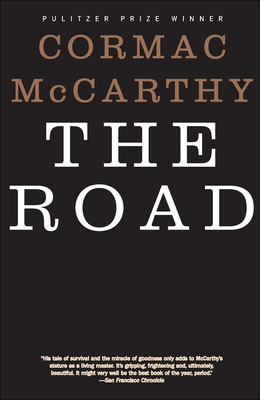
The Road by Cormac McCarthy

The searing, postapocalyptic novel destined to become Cormac McCarthy's masterpiece. A father and his son walk alone through burned America. Nothing moves in the ravaged landscape save the ash on the wind. It is cold enough to crack stones, and when the snow falls it is gray. The sky is dark. Their destination is the coast, although they don't know what, if anything, awaits them there. They have nothing; just a pistol to defend themselves against the lawless bands that stalk the road, the clothes they are wearing, a cart of scavenged food—and each other.

The Road is the profoundly moving story of a journey. It boldly imagines a future in which no hope remains, but in which the father and his son, "each the other's world entire," are sustained by love. Awesome in the totality of its vision, it is an unflinching meditation on the worst and the best that we are capable of: ultimate destructiveness, desperate tenacity, and the tenderness that keeps two people alive in the face of total devastation.

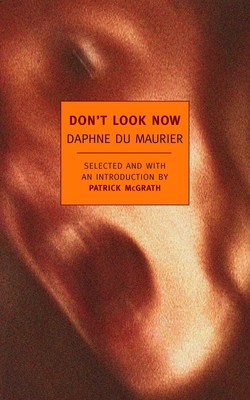
Don't Look Now by Daphne du Maurier

Daphne du Maurier wrote some of the most compelling and creepy novels of the twentieth century. In books like Rebecca, My Cousin Rachel, and Jamaica Inn she transformed the small dramas of everyday life—love, grief, jealousy—into the stuff of nightmares. Less known, though no less powerful, are her short stories, in which she gave free rein to her imagination in narratives of unflagging suspense.

Patrick McGrath’s revelatory new selection of du Maurier’s stories shows her at her most chilling and most psychologically astute: a dead child reappears in the alleyways of Venice; routine eye surgery reveals the beast within to a meek housewife; nature revolts against man’s abuse by turning a benign species into an annihilating force; a dalliance with a beautiful stranger offers something more dangerous than a broken heart. McGrath draws on the whole of du Maurier’s long career and includes surprising discoveries together with famous stories like “The Birds.” Don’t Look Now is a perfect introduction to a peerless storyteller.

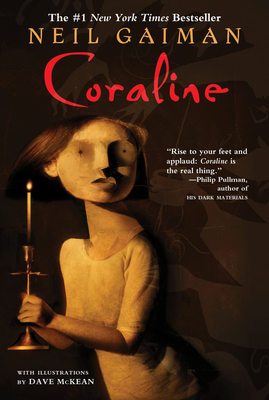
Coraline by Neil Gaiman

When Coraline steps through a door to find another house strangely similar to her own (only better), things seem marvelous. But there's another mother there, and another father, and they want her to stay and be their little girl. They want to change her and never let her go. Coraline will have to fight with all her wits and courage if she is to save herself and return to her ordinary life.

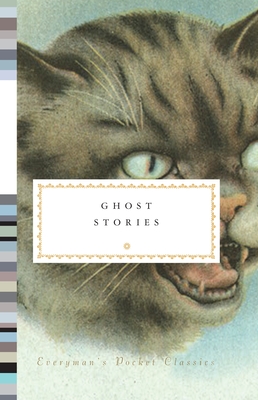
Ghost Stories edited by Peter Washington

The chilling classic stories gathered here offer a remarkable variety of approaches to the theme of haunting. Revenge comes from beyond the grave in Robert Louis Stevenson’s “The Body-Snatcher,” while visions of the dead come between the living in Henry James’s “The Friends of the Friends.” P. G. Wodehouse gives us a farcical take on the haunted house in “Honeysuckle Cottage,” and in L. P. Hartley’s “W.S.,” a writer is fatally stalked by his own aggrieved creation.

Here are ghosts of every stripe and intent in stories from writers as varied as Elizabeth Bowen and Jorge Luis Borges, Eudora Welty and Vladimir Nabokov, Ray Bradbury and Edith Wharton, among others. In the hands of these masters, the ghost story ranges far beyond mere horror to encompass comedy and tragedy, pathos and drama, and even a touch of poetry.