Welcome to the official blog of Third Place Books
Showing posts with label I Think You Forgot Something. Show all posts

Monday, July 24, 2017

I Think You Forgot Something : William Giraldi

In 2012 the New York Times Sunday Book Review published a very negative (and very hilarious) front-page evisceration of two works by a young, largely unknown fiction writer. The review sparked much debate and launched a thousand tweets about what a book review can or should do. Condemned for being "mean", a descriptor that I personally feel criticism should never pay heed nor extend an ounce of patience, William Giraldi's scathing summation of a novel and collection of stories by Alix Ohlin ruffled many feathers, albeit almost entirely of the twee, "lives in Brooklyn" variety.


Whether you agree with the review or not, it is inarguably the epitome of modern criticism: it entertains, it informs, and it ultimately saves the savvy reader time, effort, and money. In lambasting Ohlin with dazzling verbosity and originality, he accidentally adds insult to injury with prose that upstages his subject's. In just a handful of columns, he manages to wield his own talents in a way that destroys Ohlin's chances of enduring while cementing his own.

What is most powerful in the review is the obvious chasm in capabilities between reviewer and reviewed - when passages of the examined works are framed by Giraldi's crackling and lacerating wit, they become all the more washed out and painfully flat.  
Ohlin:
“Nobody could look their best when lying in a hospital bed after a car accident.”
Giraldi:
"When self pity colludes with self-loathing and solipsism backfires into idealism, the only outcome is insufferable schmaltz."
Nice? Not really. More accomplished? Clearly. What bothered me most about the ensuing debate was not the lack of authenticity from the angry villagers demand for artificial, folded-hands pleasantry in a book review (which certainly rankles) but, selfish bookseller that I am, that the backlash overshadowed Giraldi's utterly brilliant debut novel, published in hardcover the year prior.
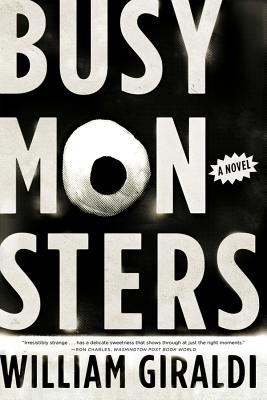
The kind of first novel both reader and writer dream about, Busy Monsters is an intelligent, entertaining yarn whose premise nods to the familiar mythologies of fiction we know, love and yearn to experience again. It is a hero's journey narrated by a broken-hearted narcissist in search of the giant squid that is the heart's desire of his heart's desire.  With a protagonist that reads like an Odysseus raised on Mad Magazine and Gawker, it is a novel that proudly recognizes it is slapstick while achieving what high comedy rarely does in in fiction: generates chuckles without feeling broad or dopey. Even when Bigfoot makes a cameo.
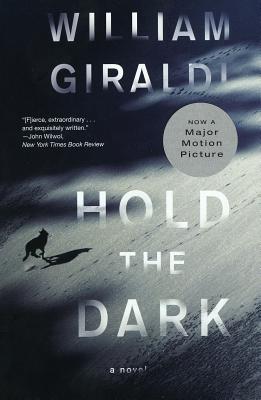

With seemingly no interest in the theory of lightning striking twice, his sophomore effort, Hold the Dark, is as enormous a departure as Giraldi could take. The ribaldry and humor of Busy Monsters is replaced by a violent moodiness and sense of dread more in line with Cormac McCarthy than A Confederacy of Dunces. Murder, revenge and a feral landscape all feature prominently but never bog the book down into any genre tropes. In an interview around the time of Hold the Dark's publication, Giraldi said that all worthwhile literature strives to be religion, that it intends to outlive its creator and endure all trends and fads that rear their heads in its wake and it was that soundbite that informed my reading of Hold the Dark. I felt beholden to the book and its holy trinity of atmosphere, plot and tone, each so engrossing I was held in what can only be described as reverence. 
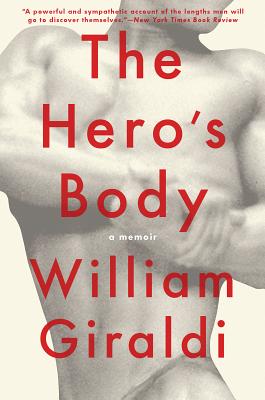

Giraldi's third book, published this past year by W.W. Norton, sees him reaching even further. On paper, a coming-of-age memoir about bodybuilding and motorcycles interests me only slightly more than a 200-page history of the socks you're wearing. Knowing Giraldi and his otherworldly rapturous prose, though, there was really no choice but to give The Hero's Body at least ninety pages of my time. Lo and behold, while the muscle and motor are the narrative's tent poles it is far more than this: it is a moving examination of a soul's evolution, one that searches for a balance and reason. Not just in a flat, presumptuous summary of gender division but by subjectively exploring the fallacies and many stripes of masculinity outside textbook definition:
The psychodynamics are not hard to untie: the vauntingly masculine and competitive are always trying to silence that inner whisper saying You're not man enough. It didn't occur to them, as it never occurred to my adolescent self, that a ranting masculinity is often the inverse of what it purports to be... The male bodybuilder and the female anorexic are equal through opposite manifestations of steady social arm-twisting. Women will be thin, men will be muscular, or both will be nobody.
What I find most striking is his ability to take such a seemingly surreal, typically caricatural world and translate it into one of pragmatic contemplation. 

Much of my life I have been (all in good jest, I'm sure) given a hard time for my concentration on art that concerns itself with the interior lives of women; rarely finding myself drawn to work that focuses on the traditional male perspective. Plots or writers that emphasize overt boyishness or even remotely imply machismo tend to make me roll my eyes so hard my mother's voice rings in my ears: "One day they're going to get stuck like that." 


My matronly tastes is in direct opposition of all this bombastic masculinity Giraldi's jacket copy implies and what, quite honestly, on paper looks like plain old white maleness more synonymous with Kurt Vonnegut or Tom Robbins than I can usually stomach. But maybe it is just that: Giraldi's prose, an award-worthy mixture of punch and good old-fashioned lyricism, illuminates some strange corner of my psyche that when lit, like the protagonist of Busy Monsters, I find myself attracted to something that repulses me and discover it actually provides comfort in a surprising, unexpected way. 

The books vacillate wildly in tone and provide that comfort I seek in a book. Boiled down to the simplest of meanings, they are each about the things for which we all search: love, justice, meaning itself. And great literature.

-Wes

Saturday, July 30, 2016

I Think You Forgot Something : Macdonald Harris

A dik-dik, to save you from googling 
I once worked with a young Harvard graduate, summa cum laude, the whole bit. On paper, she looked like the ideal person with whom to discuss literature: well-educated, great taste, interests best described as widely flung. But in reality, you could have more stimulating conversations about books with a drug-addled dik-dik. The most elaborate praise available from her was “it was good,” or “I liked it.” Sometimes, that little nudge can be enough to sway me; maybe I’m curious about a book or an author but for whatever reason don’t trust myself and the plaudits of another, no matter how mild, can bring my wallet into the light. But not often.

Most booksellers spend forty odd hours on the clock surrounded by unread and unfamiliar books and another 128 off the clock also surrounded by more unread and only slightly more familiar tomes. In our reading, it is the bookseller's curse that we are reading either six months ahead or ten years behind everyone else. Most booksellers find the traditional nightstand replaced by stacks of books, both the old and forgotten as well as the coveted not-yet-released. Over time, it can become difficult to entertain suggestions because those stacks, that daunting, swollen mass just cannot possibly bear another ounce.

Years ago, however, a novel came to my attention through a librarian pal whose recommendation was so fulsome, so bombastically positive, I had no choice but to heed it. Both title and author were unknown to me and the journey to reading it proved to be quite the undertaking. Published in 1964, Mortal Leap by Macdonald Harris went out of print almost immediately and it is impossible to find a decent copy for less than a cool six hundred dollars. It became my personal holy grail, the damn thing’s elusiveness creating an almost feral desire. I suggested it to the New York Review of Books for reprint multiple times, even creating an alias to submit multiple suggestions. I checked used book sites daily for a decent copy under three hundred dollars, the most I can conceive of paying for anything that doesn’t come with a roof or a motor.

Eventually I disavowed myself of the notion I could own a copy and, with a five dollar bill and the willingness of the good librarians of Issaquah, settled in with a brittle, near ruined copy of the book that had felt like nothing but pure myth for years. Lo and behold, it was worth every moment of the hunt, every failed footstep of the pursuit forgotten. Mortal Leap is a book so far beyond “good” that its greatness can only be experienced.


This is fiction writing at its finest: a story in the classical mode, lushly wrought with details that immediately establish a fully realized character and landscape. Harris reawakens a childlike sense of wonder and fascination, a passion for the possible that transports the reader fully. His gift is truly a marvel, an ability to craft stories that are so fantastic and immersive it borders on the terrifying. The relationship between the reader and the physical object is marvelously indescribable and only a true, ethereal talent can to make a pound of paper feel alive in your hands.

If you peruse the synopses of Harris’s other work, you can immediately see no two are alike. It is a motley collection of novels and is only unified by, other than its greatness, man’s elusive inability to know himself. If you’ve read five novels by white men, at least four addressed this moral mission. Yawn, yawn, yawn, right? Not here.

Mortal Leap is a quintessential, exemplary model of what fiction can and should do. In the most reductive terms, it is an adult's adventure tale, a la Jack London: affect-less Mormon boy, disinterested in the life laid out before him, follows his existential malaise to sea. There is a plot outside of little boy lost, but the book is so beautifully written and such a singular experience, I would be doing it an enormous disservice dressing it in the rags of my fumbling fanboydom. But if you need convincing, the book speaks for itself beautifully:
It was a part of myself that was my enemy; I still had a childish illusion that the flesh on my own bones was somehow unique and precious to the universe, in some obscure corner of my mind I wanted the others to love me and make exceptions for me simply because I felt heat and cold, pain and loneliness as they did. Now this was gone once and for all, and I understood there were no exceptions and on one was invulnerable, we all had to share the same conditions and in the end this was simply mortality, the mortality of things as well as ourselves. After that I didn't expect anybody to love me...
And a passage that should make any reader weak-kneed:
 The books were a private part of me that I carried inside and guarded and didn't talk to anybody about; as long as I had the books I could convince myself I was different from the others and my life wasn't quite as stupid and pointless.

Harris's is a body of work I only become more passionate about, both as I explore titles I haven’t read or mull over the handful that I have. Looking at the novels on the whole, comparisons are most easily made to the work of Paul Auster. Harris’s novels carry the same ruminative tone and irreverent sense of adventure and both boldly wear an ambition to stretch their craft and sense of reality. Also like Auster, there’s no impression Harris was hankering for clout or accolades but simply a love of a pure, simple form of storytelling.

None of this is as succinct a recommendation as “it’s good,” I know. But so remarkable is Macdonald Harris, so deserving of full-volume, roof-shaking praise, his work could turn even my plaintively praising former colleague into an ivory tower of babble.

-Wes

Sunday, March 27, 2016

I Think You Forgot Something : Barbara Gowdy

Erin and I recently found ourselves in a high-pitched conversation around our shared love of Canadian television and resultant frustration of its categorical dismissal in the American cultural colloquy, if it's considered at all. It was a conversation so animated it scared other booksellers into hiding, which is a shame because Canadian television is worth a little shouting and you guys missed some great recommendations.

Namely it was our shared love of Don McKellar that brought us to a tremulous fervor, most specifically my bark bark barking about his most recent series, Sensitive Skin. McKellar plays Al Jackson, a newspaper columnist who writes light, humorous cultural criticism and is invited to sit on a literary award's panel. In his typical fashion, Al overanalyzes his responsibilities and presents full-blown dissertations on each nominated book, only to be mortified upon realizing the other, more esteemed panel members dismiss each submission with a single repudiation of "garbage," "terrible," etc.

Adding to my already immeasurable delight that a sitcom would incorporate a literary award was the brief cameo of author Barbara Gowdy as a panel member. It was a two second appearance that sent me reeling into a two month rediscovery of a staggeringly talented and original writer.

Gowdy in Sensitive Skin

***

Enormously esteemed in Canada (and Germany, apparently?), Gowdy is widely read and critically hailed for her luxuriant prose that nestles against tales revolving around the darker human impulses. Our neighbors to the North celebrate her work as most American literary institutions praise Eggers, Egan, etc. So why, in almost twenty years as a bookseller, have I only encountered a total of four other readers who know who the hell she is? That boils down to one every five years and, especially after rereading the majority of her work for the blog, the obtuseness of her work and reputation became increasingly lamentable with each passing sentence.

Barbara Gowdy became known to American readers with her fifth book, The White Bone, which has remained a fairly popular book club selection since its release almost twenty years ago but it is her story collection, We So Seldom Look on Love, that is the most fitting entry point to what she does best. A collection full of tales that seamlessly shift between the lyrical and the macabre, it is also her most exaggerated; each narrative carrying the haunting, ominous air of an Ennio Morricone score. An uncompromising otherness inhabits each story, a situation or description that feels abrasive and utterly foreign, almost pornographically close, yet undeniably attractive.

There is something shocking in the sheer beauty with which Gowdy translates her supremely discomfiting material: the awkward, almost grotesquely detailed physicality of a truly unlikable behaviorally disabled foster child; a necrophile's desires stripped of their brutal implications by the author's intoxicating ability to seduce the reader; the humiliating rebellion of every young person's body is taken to a narrative nightmare alley of extremes by the presence of a pair of small, extremely delicate extra legs growing out of the young protagonist's torso in "Sylvie". What makes these stories, and all of Gowdy's work, so remarkable is her very singular ability to make us question and examine just how far it is a person has to travel before repugnance gives way to attraction. And, occasionally, how terrifyingly short that trip is.

***

In all of her work, the beautifully undulating atmosphere and refined tone is Gowdy's greatest strength and she is working at the height of her powers when she relaxes and focuses not on our physical oddities but our emotional deformities, The Romantic being the best example. Nominated for the Man Booker, it is a coming-of-age novel whose foundation is built on an ominous, broiling darkness brightened only by the protagonist's persistent grasp on pragmatism and emotional compartmentalization, the book finding its heartbeat in that juxtaposition.

Shortly after her mother abandons Louise and her father, Louise becomes infatuated with her new neighbors, the Richters. Her initial fascination belongs to Mrs. Richter; Louise's desire to fill the empty spaces left by her mother's disappearance convincing Louise that Mrs. Richter is her first true love. But it is Abel, the adopted and only child of the family, who will take hold of Louise's affections for more than a decade. As children, he inadvertently provides Louise with a much-needed lesson in developing her inner strength and certitude while much later acquainting Louise with the rapturous nature of passion and its much less friendly cousin obsession. The tone of their relationship and it's duality between light and dark is foretold exquisitely in an early chapter where, in the wooded outskirts of their suburb, Abel exposes one of nature's small fascinations in the eyes of a frog:
I am rudely startled. That something so glamorous could be contained in something so loathsome offends both my sense of fair play and my nervous grasp of cause and effect.
As in her more unconventional work, there is also a wonderfully unexpected sense of play at work in the novel's underpinnings. The character of Aunt Verna, the sister of Louise's father, who arrives to relieve some of the familial tension brought on by the mother's fleeing infuses the novel with a little humor, broadening its emotional scope. A loud, brash, intensely demonstrative woman, Verna is a former private investigator whose crowning achievement was solving a case for the actress Sophie Tucker, "whose kidnapped Siamese cat [she] single-handedly located, bound and gagged but alive, in a hotel laundry hamper."

While willing to shine some light here and there, for Gowdy it is the devil in the details that is most enticing. She seems to have an endless wealth of eloquent but gruesome vividity at her disposal. Most often, Gowdy's touch is a finer, sneakier thing. Hints of darker things to come, a nascent sense of dread, is illustrated in the every day: after Louise's mother intentionally fails to provide enough chairs for dinner guests and enjoys the ensuing awkwardness, it feels symbolic of the growing discord in the family, a warning shot. Other times the imagery is overt, like Louise's deflowering, a sensation "like a hundred tiny bones snapping" (those same broken bones are conjured again soon after in the depiction of the resultant fetus and its "bones brewing" inside her).

Abel continually exposes tiny freedoms and unexpected beauty to Louise, making it difficult for her and the reader to decide if it is Abel himself that is so addicting to her childhood self and shackles her to a lifetime of unflagging devotion, or if she is simply looking to sustain that adolescent sense of wonder.

But conscious or not, Louise's driving force is undeniably her faith in Abel, though he seems to desire nothing but absolute self-obliteration. They both romanticize the void, the vacuum created by the oneness of their impulses and insatiable appetites for their respective objects of desire. I found myself wholly immersed and devoted to both characters, oscillating wildly in my opinion of whose addiction is costlier and, as a result, struggled to recalibrate to my physical surrounding when setting the tale aside.

And therein lies Gowdy's magnificence - her characters, no matter how familiar or difficult to translate they may seem, are woven into the reader's everyday tapestry with the most exquisite subtlety. Such effortless grace and depth are a gift to any reader and to plate darker, subversive tales and sticky morality plays on fine bone china would expose most writers as barbarians. Gowdy, though? Her murkiness is dressed in a deceptive prettiness, a loveliness that draws the reader in only to leave them abandoned on the side of a dark, unfamiliar road with no idea how such a lovely Sunday drive could end so unpleasantly.

That ability to manipulate her audience, to infiltrate their subconscious and rewire their perceptions and expectations of how a plot should unfold or what a story's hero should be makes it easy to draw comparisons to Canada's most famous literary export, Margaret Atwood. But Gowdy is Atwood's cooler but possibly emotionally unstable step-sister: full of sharp edges, intimidatingly unpredictable, occasionally cagey in morality  but ultimately an elegant, beguiling mystery.

-Wes

Saturday, January 16, 2016

I Think You Forgot Something: L.J. Davis

In an interview on KCRW's Bookworm, Lydia Millet says "humor is about objectification…I have to have the freedom to objectify because of the distancing that always happens when you objectify something. Distance is created that then can be brought back and telescoped into the too-closeness of communion. The idea that we can step out of ourselves and be with others in some fundamental way, the impossibility of that is also present." It's a balancing act few pull off well because, as Millet later goes on to say, "that kind of humor only works when the humorist loves the thing he/she objectifies, that if not handled lovingly, it is simply cruelty." In her inimitable style, Millet perfectly expresses what is so appealing to me in satire or subversive humor.       

This idea and the high-wire act it demands is present in all of L.J. Davis's fiction. The author of four novels first published between 1968 and 1974 (all but one of which, preposterously, is out of print), he was seemingly fascinated by the threat gentrification can pose to the working-class. Tossing well-intentioned, if somewhat self-indulgent, social misfits into the lion's den of  capitalism and alcoholism (synonymous conditions in his work), as well as grimace-inducing look at misogyny and perceptions of race. Davis's characters are men who drowsily saunter after the American dream, hellbent on the simplest of things: a nice place to hang their hat and an occasionally nice girl on whom to hang it. If this description paints the characters as a touch hypocritical, it's not by accident. Blithe can be charming but it is navel-gazing as well. Davis's characters tend to be overly sensitive but defensive men; they are victims but oftentimes that victimhood is borne of their own solipsistic demands. Lena Dunham with a John Wayne complex, perhaps.


Lowell Lake, the protagonist of A Meaningful Life (the one work still in
print), evaluating his marriage:
The old dim pleasantness had departed from their dealings as completely as if there'd never been any to begin with, but a peculiar side effect of this development was that Lowell found himself interested in his wife's personality. He couldn't remember a time when he'd been so interested in it, not even in college, when what had principally interested him had been her ass, if the truth be told, although he had also concerned himself with her personality at least to the extent of finding out whether she had a good one or a bad one. He'd decided she had a good one. Since then he'd thought about it very little except on the infrequent occasions when something seemed to go awry with it, but it always seemed to get fixed pretty quickly, and then it was all okay again, like a table whose wobble had been repaired. The rest of the time it just sort of stood there, a good and serviceable object whose height, width, length, shape color, and approximate density were assumed to be known. You could always count on it; it was exactly the same when you returned as when you left, never mind those phone calls to her mother and the midnight crying fits in the bathroom. It was a good little piece of furniture. For nine years Lowell had been married to a table.
His protagonists move through the novels with absolutely no impulse control, sometimes (mis)guided by a sense of do-goodery, their actions always to the detriment of everyone involved. They are little id-fueled narcissists who "disliked merry people and always suspected there was something wrong with their heads." This past reading of A Meaningful Life, my third, I found myself downright mortified twice but lost count of how many times I laughed out loud. I also found myself squirming through some of his startlingly dry social critique.

Not for everyone, to be sure. But as we move into a new year, the sleepiest time of year for new book releases, and Seattle's weather inflicts its worst on our collective Seasonal Affective Disorder, exploring Davis or one of his contemporaries (Percival Everett's novels, Joy Williams's stories, Michael Robbins's poetry)  could very well be your saving sardonic grace.


-Wesley

Sunday, November 8, 2015

I Think You Forgot Something: Julie Hecht

More than any other area, my reading life is a hapless landscape. I'm a terribly fickle reader: a tyrannical toddler, really. I finish maybe one in five books I begin and, what's worse, enjoy one in twenty that I finish. Not a great track record for someone who relies on their love of books to pay the bills. And when you factor in that a good half of the books I truly love are out-of-print or are one bad sales week from being snubbed by the publisher for all eternity, I feel justified in calling my reading life rather jinxed.

Over fifteen years of bookselling, the overlooked and almost forgotten have become a passion of mine. Harry Potter doesn't need me. Donna Tartt, wonderful as she is, doesn't need me. The community cultivated by a book when it strikes a nerve is a beautiful thing, but witnessing it always leaves me wondering, "Where is my tribe?" Or, at the very least, why aren't creative writing students studying Gary Lutz? Why aren't Confederacy of Dunces devotees devouring LJ Davis?

Oh. Right. That's my job. Customers don't ask for recommendations to have their opinions validated, they solicit a bookseller's opinion because they want to discover something new and possibly around the way. And to turn someone on to a body of work that is unknown to them, knowing the enjoyment that lies ahead of them is a feeling to revel in. So I have bullied Erin into letting me stomp the old soapbox every so often and shine a little light on some titles and authors that are shamefully overlooked. Third Place's little shadow society modern library, if you will.

-Wes
***

In 2013 I had been entertaining a deep funk for months when all despondency (and wind) was knocked out of me by an Eileen Fisher wearing, governess-y Nantucket wife in an issue of Harper's. I was processing the most difficult break-up I have ever known, and after spending months looking for something, anything, to make me feel better, there it was in a periodical most Americans synonymize with Ambien.

A title so primly worded but blindly intrusive, its humor subtle but tailor-made for my love of anything that implies accidental illicitness: "May I Touch Your Hair?"

And that name! Her! Julie Hecht, a writer whose polite but scathing wit and playful self disparagement soothe my nerves much the same way tingsha bells calm a Tibetan monk.

Hecht is an elusive figure in contemporary fiction, building a body of work that feels rigidly focused but somehow effortless as well. Her fiction output is succinct: two short story collections and a novel over the course of ten years, all concerning the same nameless protagonist: a somewhat listless photographer who wrings her hands over the loss of a well-mannered culture. Highly intellectual but constantly struck dumb by the boorish behavior she encounters, our hero (and she is my hero) is all too easily assumed to be an autobiographical sketch of her creator. But this assumption undermines the genius and beauty of Hecht's work. The character is the kind of woman who cleans the house before the cleaning lady comes but can also find herself seeking solace in a wry, troubling (yet somehow heartwarming) series of phone conversations with a portrait subject's drug-addicted son. A high-strung but somehow affable presence, this woman is infuriating in her exactitude and chasteness but a beguiling enigma.

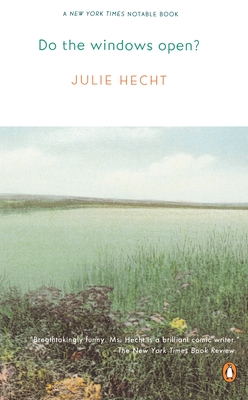
http://www.thirdplacebooks.com/book/9780140271454Such measure and precision is virtually unheard of in a literary arena that seems to value volume over merit. As most of contemporary fiction's lions' careers begin to resemble those of other mediums' artist-cum-commodity (a mash-up of posthumously released Tupac albums and BolaƱo translations would make an absorbing rainy day project), where do thoughtful, careful writers like Hecht fit, and how do they build an audience? Is it their desire to allow oceans of time to pass between published works? Is any of this my business? Maybe it's dangerous for me (and the store's blog) to dwell on such things.

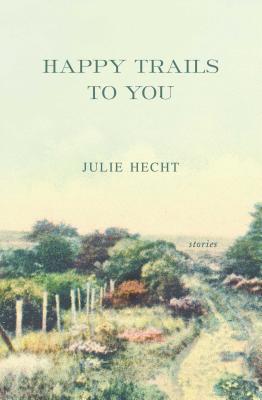
http://www.thirdplacebooks.com/book/9781416564263Don't get the wrong idea: Hecht's material is accessible. And maintaining a readership through creative writing courses and the odd mention, such as Miranda July's in the New York Times earlier this year, Hecht's reputation is a notable one. Such clout and respect are surely worthy achievements to be placed on any author's mantle and an in-print status of one-foot-in-the grave ain't dead yet - I'll take solace in that - but I'm plagued by the question: that muggy summer afternoon, on exactly the kind of New York street corner that Hecht's anxiety-addled photographer loathes, where I discovered the Loch Ness Monster of short stories, where were her other weak-kneed readers? If the Scientologists and Unarians are still running around and recruiting, where are the Hecht acolytes (Hechtolytes?)? And most importantly, when will she return to remind us all what is acceptable decorum?