Welcome to the official blog of Third Place Books
Showing posts with label booksellers. Show all posts

Saturday, October 1, 2016

Reading Fast, and Reading Slow

In 16 years of bookselling, I’ve always been a voracious reader, devouring 2-3 books each week. This spring I hit a reading slump. My personal life turned upside down, and suddenly I couldn’t focus. Reading has always been a refuge, so it was strange to be so distracted that I couldn’t read more than a few pages without losing track of the narrative.

I loved Charles DuHigg’s The Power of Habit, so I snapped up an advance copy of his latest book, Smarter Faster Better. I took notes on the first few chapters and could hardly wait to read the rest, but life got in the way. Ironically, I fell out of the habit of picking up a book whenever I had a spare minute.
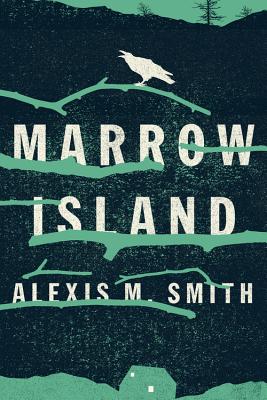
By April 4 I’d managed to finish one book: Marrow Island by Alexis Smith. I adored Smith’s debut gem, Glaciers, and her second effort is the type of novel I’d ordinarily finish in a day or two: literary fiction with an edge of mystery, set primarily in the San Juan Islands.  I spent six weeks reading this wonderfully stitched 256-page story, determined to see it through and return to my usual reading pace.

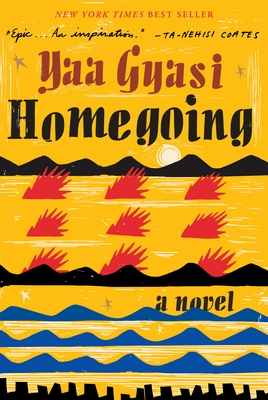
In May I had a few more false starts but only finished one book: Homegoing by Yaa Gyasi, a beautifully wrought portrait of two half-sisters and their descendants, from the Gold Coast of Africa at the peak of the slave trade to 21st century America. The memorable characters each evoke a unique time and place, bringing humanity to history.
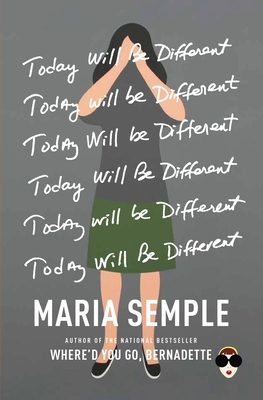
June brought me just what I needed: Maria Semple’s forthcoming romp Today Will Be Different. Funny and smart with a touch of the ridiculous, it follows Eleanor Flood through a single day in which she tries to be a better person, to hilarious effect.

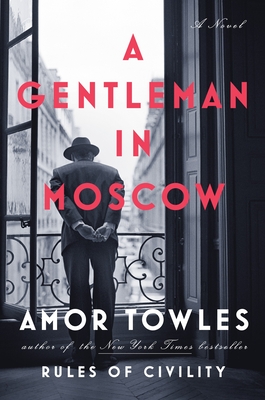
By the end of July I felt accomplished; I'd finished three whole books! I savored my favorite, A Gentleman in Moscow by Amor Towles, over several weeks. Sentenced to live out his days as a Former Person at the Hotel Metropol in 1922, Count Alexander Rostov resolves to make the best of his reduced circumstances. With unparalleled charm, he moves through three decades, befriending staff, guests, and foreign journalists, always the gentleman. Fans of Helen Simonson’s delightful The Summer Before the War will enjoy the count's quick wit and the minutiae of his days.
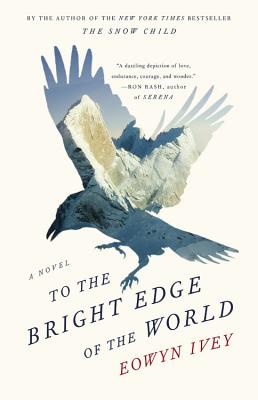
In August I enjoyed a few pages a day of Eowyn Ivey’s second novel, To the Bright Edge of the World. Set in nineteenth century Alaska, this historical novel follows an expedition up the Wolverine River into the unknown, told through the leader’s journal entries and his wife’s letters.

At first I felt horribly guilty neglecting the stacks of unread advance reading copies on my shelves, but over the past few months I’ve let go of the guilt somewhat. I’ve fallen out of the reading habit, but I have faith it will return. Right now I’m spending 6-8 hours each week on my bike, writing loads of letters and postcards, journaling, paddle boarding, camping, and anything else that gets me out in the glorious summer sun.

-Emily

Monday, December 28, 2015

Why I read Old Books


I rarely read new books. Two or three a year might make the cut if they sound too good to miss (please keep writing, Marilynne Robinson), but the vast majority of my diet is drawn from the books of the dead. In part there is a simple reason for this, rooted in my unusually high capacity for both pickiness and laziness. Most of the worst old books have been weeded out by the passage of time, leaving a well-tended garden of excellent reading. New books, on the other hand, can be a thankless slog through mediocrity. I'll never get back the time I spent reading White Teeth. And all that Ian McEwan! It was like the literary equivalent of white noise. 

But there's another reason I love old books that extends even to the ones that aren't that good. Novelistic clichés can be found in any era, but it's the ones from the present time that bother me the most: upper-middle class academics having affairs; young people making pop-culture references, anything described as 'off-beat'... I once began a book in which the protagonist was an artist living in New York with a sister who was a writer in London. I threw it against the wall after three pages. 

But by a magical process similar to the beneficent aging of wine and cheese, the same kind of offhand, thoughtless writing in an old book is transformed into fascinating cultural detail. Here is a real, sincerely-delivered line of dialogue from John Buchan's The Three Hostages (1924): "He's a first-class sportsman and said to be the best shot in England after His Majesty." What a great line. If that book had been written today, I'd have to say the author was a satirical genius. It's like reading an adventure story written by Bertie Wooster. 

There's a short story by Jorge Borges called "Pierre Menard, Author of the Quixote," in which the narrator reviews an entirely faithful recreation, by a contemporary French writer, of Cervantes' Don Quixote. "Cervantes’ text and Menard’s are verbally identical," writes the critic, "but the second is almost infinitely richer." It's a conceit that plays on the fact that any book is enriched in complexity and subtlety merely by the passage of time. Reading old books, we all become Pierre Menards, recreating them in the light of our own times. Even the best historical fiction can only emulate the way people thought in another time and place; only actual historical books can offer the real thing.

Borges

What often stand out are outdated prejudices. Jules Verne's Around the World in Eighty Days (1889) portrays a world in which all English people are emotionless robots and no American bats an eye at dueling on a moving train. Comparing H. Rider Haggard's King Solomon's Mines (1885) with John Buchan's 1910 African-adventure novel Prester John (which reads like a colonial Mein Kampf) is to witness the invention of the racist logic of Apartheid before your eyes.

But you can gain insights, too, that are difficult to find anywhere else. In Cause for Alarm (1937) and his other pre-war thrillers, Eric Ambler dramatized his anxiety about the spread of fascism. The Weimar-era stories of Christopher Isherwood mention very little about fascism, but they offer a window on a society that was all too short-lived. 

So go buy an old book! They're cheaper, too.

-Stephen

Saturday, December 26, 2015

New Author Crushin'

There are many joys that come with bookselling, naturally other booksellers being top of the list. Besides their wit, kindness, humor, and general all-around goodness, they're also readers. And as a reader, I often turn to these other, more well-read readers for ideas on what I should read next.

Wes!
So when I was hoping to find some books or essays on obsession, I knew just who to go to. Wes is invariably the guy you want to talk to if what you're searching for is just a little bit unsavory, just a little outside the mainstream, just a little cringe-inducing, but hugely fascinating. What's great about Wes is his ability to offer books that target just what you need but also suggestions so weird they couldn't possibly work and then turn out to be exactly what you're looking for. So in my search for obsession, Wes offered up a book about stalking, and one about drinking, and also one about a diary.

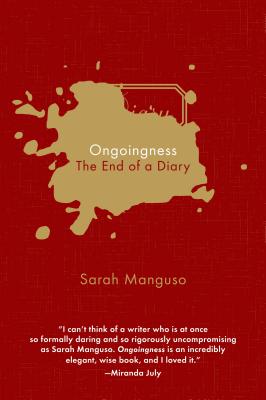
Well, more precisely, it's about a woman keeping a diary, and then not keeping that diary. The book is Ongoingness: The End of a Diary, and the author is Sarah Manguso. Wes had figured that Manguso's obsession with recording her life, (her diary had stretched to 800,000 words-- for a frame of reference, War and Peace is just a little shy of 600,000,) was exactly the kind of obsession I was looking for. He was right.

Ongoingness is one of the best books I've read this year, perhaps my favorite. Instead of a memoir, it's more of a commentary on the keeping of her diary. What it meant to her, what she wanted it to be, how it failed. It seems no coincidence that Manguso's manifesto comes in this slim little volume; miles away from 800,000 words.

Of the diary, she says, "I wrote so I could say I was truly paying attention. Experience in itself wasn’t enough. The diary was my defense against waking up at the end of my life and realizing I’d missed it."

Illustration by Montse Bernal/Reference:
Andy Ryan; From the New Yorker
Ongoingness feels like a study of thinking and overthinking. It's spare and  precise; brilliant. And eerie in it's universality. She explores motherhood, mortality, purpose, but mostly her compulsion to record evidence of her own existence. Manguso reads my mind and writes about my exact worries, yet she says it with an elegance and economy that is startling. So many times I stopped, and reread, and opened my journal to record her words and my own meager thoughts about those words. There is no way to read this brilliant woman and not feel like a dullard in comparison, but the kind of dullard who may just be on the right track

After Ongoingness, I inhaled more of her work. The Guardians, an elegy on the loss of her friend, his madness, and her fear of her own. And The Two Kinds of Decay a study of the rare disease Manguso battled in her twenties and the depression and havoc it lead her to. All of her books are beautiful; all of her thoughts, wise. She is the writer I wish I was, the thinker I aspire to be.

Read her.

-Erin