Welcome to the official blog of Third Place Books

Sunday, May 26, 2013

Fresh Gift Ideas for Your Graduate

Have a graduate in your life?  Not sure what to get them?  Worried that they'll get seven copies of Oh the Places You'll Go?  Or is your grad just little bit different, a little bit special, a little more deserving of a really interesting book.  Here are a few unusual and engaging suggestions for grads going in all different directions...and there's no Dr. Seuss...

For the College-Bound:

The Secret History, by Donna Tartt

Make sure your graduate knows who they should and shouldn't get to know their first year on campus.

Truly deserving of the accolade a modern classic, Donna Tartt’s novel is a remarkable achievement—both compelling and elegant, dramatic and playful.

Under the influence of their charismatic classics professor, a group of clever, eccentric misfits at an elite New England college discover a way of thinking and living that is a world away from the humdrum existence of their contemporaries. But when they go beyond the boundaries of normal morality their lives are changed profoundly and forever, and they discover how hard it can be to truly live and how easy it is to kill.

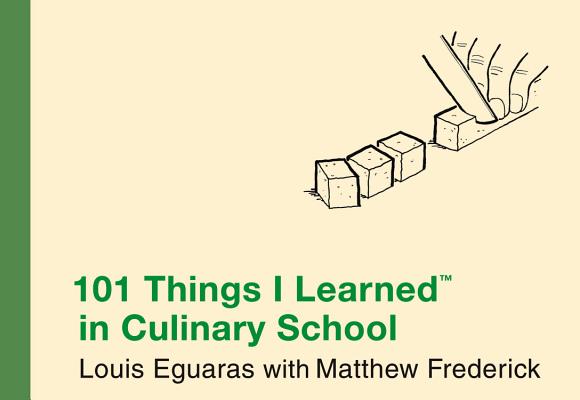
101 Things I Learned...series

Save your grad a ton on tuition!  The books in this series are pretty much as good as going to school.  Okay, maybe not, but they do pack an informative punch in a very petite package.


For the Out-on-Their-Own:

The Chairs Are Where the People Go by Misha Glouberman with Sheila Heti
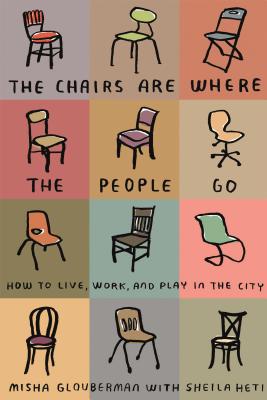
Should neighborhoods change? Is wearing a suit a good way to quit smoking? Why do people think that if you do one thing, you’re against something else? Is monogamy a trick? Why isn’t making the city more fun for you and your friends a super-noble political goal? Why does a computer last only three years? How often should you see your parents? How should we behave at parties? Is marriage getting easier? What can spam tell us about the world?

Misha Glouberman’s friend and collaborator, Sheila Heti, wanted her next book to be a compilation of everything Misha knew. Together, they made a list of subjects. As Misha talked, Sheila typed. He talked about games, relationships, cities, negotiation, improvisation, Casablanca, conferences, and making friends. His subjects ranged from the sublime to the ridiculous. But sometimes what had seemed trivial began to seem important—and what had seemed important began to seem less so.

The Chairs Are Where the People Go is refreshing, appealing, and kind of profound. It’s a self-help book for people who don’t feel they need help, and a how-to book that urges you to do things you don’t really need to do.
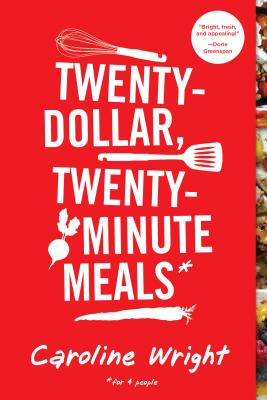
Twenty-Dollar, Twenty-Minute Meals by Caroline Wright

Quick and easy with a creative twist, here are more than 90 recipes (serving 4) that use simple techniques, fresh produce, and ready ingredients that don't sacrifice flavor or healthfulness for budget or time.  It's a whole new way to think about dinner: some nights meat and veggies; some nights a pureed soup, colorful salad, or cheesy tart.  Some nights the comfort of a perfect plate of pasta.  And every night. delicious.

For the Socially-Conscious-Activist:

Rules for Radicals by Saul Alinsky

First published in 1971, Rules for Radicals is Saul Alinsky's impassioned counsel to young radicals on how to effect constructive social change and know “the difference between being a realistic radical and being a rhetorical one.” Written in the midst of radical political developments whose direction Alinsky was one of the first to question, this volume exhibits his style at its best. Like Thomas Paine before him, Alinsky was able to combine, both in his person and his writing, the intensity of political engagement with an absolute insistence on rational political discourse and adherence to the American democratic tradition.
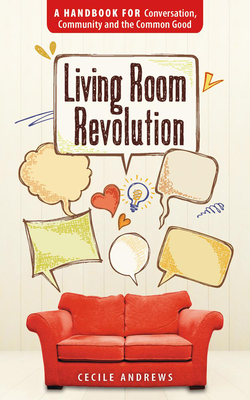
Living Room Revolution: A Handbook for Conversation. Community, and the Common Good  by Cecile Andrews

Living Room Revolution refutes the notion that selfishness is at the root of human nature. Research shows that people--given the right circumstances--can be caring, nurturing and collaborative. Presented with the opportunity, they gravitate toward actions and policies embodying empathy, fairness, and trust instead of competition, fear, and greed. The regeneration of social ties and the sense of caring and purpose that comes from creating community drive this essential transformation. At the heart of this movement is the ancient art of conversation. This book provides a practical toolkit of concrete strategies to facilitate personal and social change by bringing people together in community and conversation.  At the heart of happiness is joining with others in good talk and laughter. Each person can make a difference, and it can all start in your own living room!

For the World-Traveler:


Leaving the Atocha Station by Ben Lerner

Adam Gordon is a brilliant, if highly unreliable, young American poet on a prestigious fellowship in Madrid, struggling to establish his sense of self and his relationship to art. What is actual when our experiences are mediated by language, technology, medication, and the arts? Is poetry an essential art form, or merely a screen for the reader's projections? Instead of following the dictates of his fellowship, Adam’s “research” becomes a meditation on the possibility of the genuine in the arts and beyond: are his relationships with the people he meets in Spain as fraudulent as he fears his poems are? A witness to the 2004 Madrid train bombings and their aftermath, does he participate in historic events or merely watch them pass him by?

In prose that veers between the comic and tragic, the self-contemptuous and the inspired, Leaving the Atocha Station is a portrait of the artist as a young man in an age of Google searches, pharmaceuticals, and spectacle.
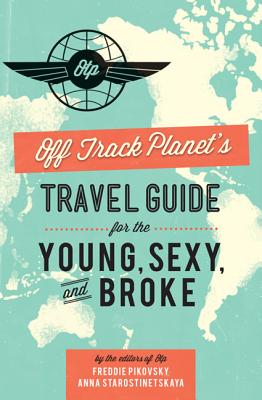
Off Track Planet's Travel Guide of the Young, Sexy, and Broke by Freddie Pikovsky and Anna
Starostinetskaya

This all-encompassing travel guide features approximately 100 exciting destinations like Buenos Aires, Brazil, Columbia, Greece, and Thailand, and everything college students, grads, and those in their twenties and thirties want to know about them, including: the cities with the craziest sex shops; the best places to get a tattoo; where to check out some amazing street art; why you should try fried bugs; the best clubs to party until dawn; and much more. Broken into three parts, the first section focuses on what to do and where: food, fashion, music, sports, sex and partying, and more. The second half of the book dives into practical tips and advice on budgeting, hostels, and transportation, and the third section offers great ideas about extending your stay. Entertaining and informative, this lively guide also includes fun charts and graphs and 100 to 150 full-color photos throughout.

Wednesday, May 22, 2013

Read This Book

Adam says, "Read this book"...

See Now Then by Jamaica Kincaid

In this brilliant and evocative new novel from Jamaica Kincaid—her first in ten years—a marriage is revealed in all its joys and agonies. This piercing examination of the manifold ways in which the passing of time operates on the human consciousness unfolds gracefully, and Kincaid inhabits each of her characters—a mother, a father, and their two children, living in a small village in New England—as they move, in their own minds, between the present, the past, and the future.

Here's what Adam has to say:

This is less a novel than an exercise in poetic monologue, in Voice and Character--a darkly playful dirge-for-marriage shot through with surprising laugh-aloud gallows humor; an engine burning the dense and dangerous fuel of bitterness; a book only for the very brave and the unhurried, for those willing to take a careful Orphic expedition through an unsettling landscape where, perhaps, nothing at all may be rescued.

In short, a middle-aged Jewish couple and their daughter and son find the family dissolving, the marriage ending, and we see it all through the eyes of the Caribbean, immigrant, writer-wife, in her abandonment.  In one sense, the novel's theme is marriage as culture shock. In another sense, as the title suggests, Kincaid's story centers around the way in which perception may become an exhausting contest between memory, the past, and the-moment-now (and woe to those who lose the battle, those who are punished with ego-incarceration, with the hell of self-torment).

With its fetish for voice, its complete rejection of plot in favor of rarefied stream-of-consciousness or phenomenological narrative, this is the sort of post-modern novel that makes you a little worried serious literature really is going the way of much contemporary poetry, very elite-minded and marginally accessible--yes, and yet it's also such a damned good read, if you have the patience, if you will not (as I was tempted to) overreact and shout: pretension! Be warned, this isn't a book you can read through with good speed, at your normal clip; the book demands that you allow it alone to call all the shots.

Kincaid has produced, here, exactly the kind of novel other writers fear to read, one with so strong a voice that it threatens to influence one's own style in an un-asked-for manner.

In the end, what is it that “See Now Then” leaves us with? Maybe just this. There are many literary references to Greek mythology, and the narrator's abandonment--as it hits home in the final section, left physically by her husband, left emotionally by her children--conveys just how awful a thing it is to be a god in whom no one any longer has faith, a deity who has lost all her worshipers. On a final, practical note: I recommend springing the extra six bucks and buying the audio book on CD, which gives you the unforgettable experience of hearing Kincaid read this work.

Wednesday, May 15, 2013

Join Third Place Books on Bike to Work Day

Third Place Books, along with some Lake Forest Park residents and business owners, will be hosting a Bike to Work Commute Station on the Burke Gilman Trail on Friday May 17 from 6am -9pm.

Here's what's happening at our station :

Third Place Books will be giving away free Third Place Books reflectors (good for bikes, backpacks or jacket zippers).


Third Place Books will be doing drawings for over 30 cycling books and posters.


Honey Bear Bakery will be providing free coffee and snacks. 


Muscle Milk will be giving out free samples.


Bring the kids on the way to school and enter to win a copy of Everyone Can Learn to Ride a Bicycle


Drop by for some swag or just to get a high five 
(everyone can use a high five).

Our crew from last year

Wednesday, May 8, 2013

What to Read after you Reread The Great Gatsby

With Baz Luhrman's The Great Gatsby coming to theaters this Friday, we've noticed  many customers rereading F Scott Fitzgerald or perhaps even discovering him for the first time. Jessica H recommends Delmore Schwartz's In Dreams Begin Responsibilities as a chaser to your Jazz Age indulgences. With gentle self mockery and delectable prose, Schwartz describes what it was to arrive at adulthood in the Great Depression having been raised on the decadent artistry of the 1920s. Though very much of the age in which it was written, the potent story of a generation's disillusionment and difficulties transitioning into adulthood is universal and timely. Just reissued with a gorgeous new cover from New Directions Press with a preface by Schwartz's pupil, Lou Reed, it's the perfect complement and logical next step to witnessing Gatsby's fall. Read it while floating in the pool this summer.

Saturday, May 4, 2013

A "Better" Beach Read

Looking for a beach read for the sunny days ahead?  As I was shelving today, I came across this book.  Poisoned: The True Story of the Deadly E. Coli Outbreak That Changed the Way Americans Eat.  It's new in paperback, and really interesting, with a Seattle connection, and compelling story that keeps you reading.  And while I thought it was a great book, The New York Times thinks it should be your next beach read.  Here's the beginning of their blurb on the front cover...Your perfect beach book has arrived.  I guess I never thought of e. coli as beach book material.  To be honest, I've never thought of non-fiction as beach book material.

But why not?  Why can't non-fiction be a beach read?  So, here are a few more ideas for beach reads with a little more substance.

Pharmacy on a Bicycle: Innovative Solutions for Global Health and Poverty by Eric G. Bing and Marc J. Epstein

Every four minutes, over 50 children under the age of five die. In the same four minutes, 2 mothers lose their lives in childbirth. Every year, malaria kills nearly 1.2 million people, despite the fact that it can be prevented with a mosquito net and treated for less than $1.50.

In this profoundly important book, Eric G. Bing and Marc J. Epstein lay out a solution: a new kind of bottom-up health care that is delivered at the source. We need microclinics, micropharmacies, and microentrepreneurs located in the remote, hard-to-reach communities they serve. By building a new model that “scales down” to train and incentivize all kinds of health-care providers in their own villages and towns, we can create an army of on-site professionals who can prevent tragedy at a fraction of the cost of top-down bureaucratic programs.

Bing and Epstein have seen the model work, and they provide example after example of the extraordinary results it has achieved in Africa, Asia, and Latin America. This is a book about taking health care the last mile—sometimes literally—to prevent widespread, unnecessary, and easily avoided death and suffering. Pharmacy on a Bicycle shows how the same forces of innovation and entrepreneurship that work in first-world business cultures can be unleashed to save the lives of millions.

Bunker Hill: A City, a Siege, a Revolution by Nathaniel Philbrick

Boston in 1775 is an island city occupied by British troops after a series of incendiary incidents by patriots who range from sober citizens to thuggish vigilantes. After the Boston Tea Party, British and American soldiers and Massachusetts residents have warily maneuvered around each other until April 19, when violence finally erupts at Lexington and Concord. In June, however, with the city cut off from supplies by a British blockade and Patriot militia poised in siege, skirmishes give way to outright war in the Battle of Bunker Hill. It would be the bloodiest battle of the Revolution to come, and the point of no return for the rebellious colonists.

Philbrick brings a fresh perspective to every aspect of the story. He finds new characters, and new facets to familiar ones. The real work of choreographing rebellion falls to a thirty-three year old physician named Joseph Warren who emerges as the on-the-ground leader of the Patriot cause and is fated to die at Bunker Hill. Others in the cast include Paul Revere, Warren’s fiancé the poet Mercy Scollay, a newly recruited George Washington, the reluctant British combatant General Thomas Gage and his more bellicose successor William Howe, who leads the three charges at Bunker Hill and presides over the claustrophobic cauldron of a city under siege as both sides play a nervy game of brinkmanship for control.

Everyone Loves a Good Train Wreck: Why We Can't Look Away by Eric G. Wilson

Whether we admit it or not, we’re fascinated by evil. Dark fantasies, morbid curiosities, Schadenfreude: as conventional wisdom has it, these are the symptoms of our wicked side, and we succumb to them at our own peril. But we’re still compelled to look whenever we pass a grisly accident on the highway, and there’s no slaking our thirst for gory entertainments like horror movies and police procedurals. What makes these spectacles so irresistible?

In Everyone Loves a Good Train Wreck, the scholar Eric G. Wilson sets out to discover the source of our attraction to the gruesome, drawing on the findings of biologists, sociologists, psychologists, anthropologists, philosophers, theologians, and artists. A professor of English literature and a lifelong student of the macabre, Wilson believes there’s something nourishing in darkness. “To repress death is to lose the feeling of life,” he writes. “A closeness to death discloses our most fertile energies.”

His examples are legion and startling in their diversity. Citing everything from elephant graveyards and Susan Sontag’s On Photography to the Tiger Woods sex scandal and Steel Magnolias, Wilson finds heartening truths wherever he confronts death. In Everyone Loves a Good Train Wreck, the perverse is never far from the sublime. The result is a powerful and delightfully provocative defense of what it means to be human—for better and for worse.

Tuesday, April 16, 2013

Bookshelves of Desire

It's been awhile since we've posted some book porn...you know, drool worthy photos of the library you might one day have, the reading nooks you can only imagine in your mind.  Let me tell you a little something about the internet...it will waste your time.  One of the best places to waste that time is on Pinterest.  Don't know what Pinterest is...don't worry.  You're better off to just pretend you've never heard of it and hold on to those 3 hours per day that will be sucked into the vortex that is Pinterest.  If it's already too late for you, have you tried a Pinterest search of bookshelves?  Well, go do it right now...better yet, I'll do it for you...there.  Beautiful, aren't they?


Sigh...

And don't even get me started on book nooks.


Monday, April 15, 2013

2013 Pulitzer Prize Winners

Just announced...here are the 2013 Pulitzer Prize winners

FICTION - The Orphan Master's Son by Adam Johnson 

DRAMA - Disgraced by Ayad Akhtar 


POETRY - Stag's Leap by Sharon Olds 


Head here for more information including the journalism winners, and finalists for all categories.  I'm really happy to see Eowyn Ivey's Snow Child as a fiction finalist.  Congratulations to all!

Friday, April 12, 2013

Getting to Know...Doug TenNapel


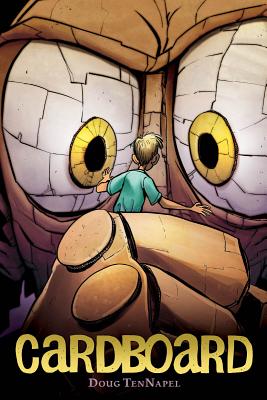
Until recently, if you stumbled into one of Doug TenNapel’s quirky fantasy worlds there’s a good chance that it was through the video game Earthworm Jim or Nickelodeon’s Catscratch. But TenNapel has also worked away valiantly in the graphic novel format for the past 15 years and now seems to have hit the pop culture jackpot with his Cardboard, instantly beloved by librarians and elementary school teachers around the country (nominating it for all sorts of 2012 “best-of” lists). It has also been optioned as a Toby “Spider-Man” Maguire film by the folks behind Ice Age. The fantasy device at the heart of this TenNapel story may feel very familiar, fairytale-familiar in fact: a boy is given a seemingly ordinary object which quickly displays astonishing properties, taking on a life of its own and churning out so much magic that the adventure soon threatens to veer into nightmare territory. But can something as mundane as cardboard ever pass convincingly for magical, you may ask. Yes. Imagination + corrugated paper . . . as every child knows, it’s a simple, foolproof, alchemical formula. Also, even older readers really don’t have much chance resisting the story’s enchantment--TenNapel doesn't play fair and always uses his vibrant illustrations as the jack up his sleeve, his loaded dice.

This is the third of his popular graphic novels published for Scholastic Books (earlier books having come mainly through Image Comics) and aimed at a young audience. The first was Ghostopolis, a story of a troubled boy's journey into the land of the dead. Ghostopolis is an unusually haunting, richly mythopoeic book for TenNapel and might function as a natural stepping stone for kids destined to wander--a few years down the line--into Neil Gaiman territory. Between the release of these two graphic novels, TenNapel produced the energetic adventure story Bad Island. This was something of a cross between Jurassic Park and elements of the original, animated Transformers: The Movie from 1986 (sigh, yes, I'm geeky enough to bring in that reference).

And for the readers who just can't get enough TenNapel, his slightly more mature (i.e. enigmatic and a bit bloody) Gear is something else entirely. Gear was the first of his graphic novels. It is raw and rough-hewn. It's so short on exposition, so unconcerned with being “accessible” that I'd be tempted to call the book uncommerical, except that TenNapel later raided his character cast here to create the Catscratch cartoon. And the artwork is just as bold and gonzo as the story.

-Adam

Wednesday, April 3, 2013

Read This Book

I say, "Read this book!"

Wave by Sonali Deraniyagala

On the morning of December 26, 2004, on the southern coast of Sri Lanka, Sonali Deraniyagala lost her parents, her husband, and her two young sons in the tsunami she miraculously survived. In this brave and searingly frank memoir, she describes those first horrifying moments and her long journey since.

This book is sad. I mean, like super sad. If you aren't ready to cry, don't read this. And not just crying while reading (although that definitely happened...a lot) but crying while trying to fall asleep and just thinking about the book, or crying while listening to a particular Smiths song the author mentions, crying while riding the bus. Seriously, this book is sad. 

This is the story of a woman who loses everything in the space of a few minutes. The story of a woman who's entire family is ripped from her in a freak tragedy that she somehow survives. It's riveting and harrowing and don't forget, super sad. But, hold on. I know you're saying to yourself, "why would I read such a sad book?" Well, this book is also the remarkable story of a woman who loses everything worth living for, and who chooses to live anyway. Grief, love, hope, loss...yeah, that's all there. But it's the quiet strength of the author that had me entranced and left wondering, would I be that strong? 

Beautifully written and well worth the tears

Sunday, March 31, 2013

Final Pulitzer Prediction List

Here's the final fiction prediction list from Pulitzer Prize First Edition:

1. Billy Lynn's Long Halftime Walk by Ben Fountain
2. A Hologram for the King by Dave Eggers
3. The Round House by Louise Erdrich
4. The Orphan Master's Son by Adam Johnson
5. This is How you Lose Her by Junot Diaz
6. Magnificence by Lydia Millet
7. The Yellow Birds by Kevin Powers
8. Canada by Richard Ford
9. Telegraph Avenue by Michael Chabon
10. Everything Begins and Ends at the Kentucky Club by Benjamin Saenz
11. Blasphemy by Sherman Alexie
12. Battleborn by Claire Vaye Watkins
13. One Last Thing Before I Go by Jonathan Tropper
14. Dog Stars by Peter Heller
15. Watergate by Thomas Mallon

Looks like Billy Lynn's Long Halftime Walk is still holding strong.  I must say, I'm super excited to see Battleborn by Claire Vaye Watkins make the list.  I think it's my most favorite book-that I didn't totally love.  It's a complex relationship, but I can't wait to see what else she'll do.  Here's my review.

Reviewing this book is tough. Another review somewhere said, "Watkins shows promise." I think that's a great way to describe this debut collection. I liked some of these stories, loved one or two, and was frustrated by several.

Sometimes I really trusted Watkins, was drawn in by her obvious need to find hope in the hopeless. But then her genuineness would slip away and reveal an author working too hard at being provocative, when in truth she is at her most provocative (and genuine) when the subjects aren't so "edgy". Sure, sex and violence and drugs and prostitution and infidelity are edgy, but a story doesn't become provocative simply by their inclusion. Not surprisingly, Watkins is at her best when she isn't working so hard; try Graceland and The Diggings. For most of this book I just wanted her to get out of her own way, because she does have such...you know, promise.

But, what she does do well, she does really well. And what she does well, is write about the desert. For as much as a story would be pissing me off, it would be dragging me in with the smell of creosote, the shimmer of heat waves, and that great, big, western sky stretching on for miles. The desert does something to you, burrows in and never leaves. And to be able to capture that and the raw ache and emptiness of missing the desert when not there; that, I find remarkable. Watkins is a child of the desert and writes it well.

I don't think I've ever agonized so much over a review for a book I thought was just 'pretty good.' I read these stories compulsively, and if the first part of this review doesn't indicate that, it's because I think they could be so much better. I think she could be really great. Very much looking forward to more.

Sunday, March 17, 2013

Words and Pictures

Do you ever hang out over at the Incidental Comics?  You should.  Cartoonist Grant Snider is doing some pretty great stuff, and a lot of it is book related.  Like this choice piece about bookshelves.  We can relate!


Saturday, March 16, 2013

It's All Going to be Fine

Adam asked me to bring this to your attention.
Do you fear for the future of books, print, and paper itself?  You may be consoled by this clever ad.  We were.
 

Tuesday, February 26, 2013

Bookseller Top Tens! Part Two

You thought I forgot, didn't you.  It's okay, I would have thought that too.  I was just waiting until you were no longer burnt out from end-of-the-year, top-ten lists.  Clever, aren't I?  After great delay, here is the much hankered after, second edition of Bookseller Top Tens (Part One, here).  As a reminder, these lists are top ten books read in 2012, no matter when they were published.  Here goes!

Terry at Lake Forest Park
Despite instruction that the lists didn't need to be in any kind of order, Terry has labeled his number ones...what's more, he even separated his lists into fiction and non-fiction.  So organized!

Fiction
Non-Ficton
Andrew at Ravenna
In one last brave, bookseller act before he heads off into the sunset, here is Andrew's top ten.  Happy trails, Andrew, we'll miss you!
  1. 1Q84 by Haruki Murakami
  2. Windup Girl by Paolo Bacigalupi
  3. City of Thieves by David Benioff 
  4. The Gifts of Imperfection by Brene Brown
  5. Bender by Dean Young
  6. The Puppet and The Dwarf by Slavoj Zizek
  7. Love : An Index by Rebecca Lindberg 
  8. Lamberto Lamberto Lamberto by Gianni Rodari
  9. Billy Lynn's Long Halftime Walk by Ben Fountain 
  10. Guide to Getting It On by Paul Joannides
Adam at Lake Forest Park
Adam is one of my all-time favorite book recommend-ers (he's great for movies too).  His tastes are unusual, eclectic, often unknown, but always interesting.  It's a good idea to pay attention to what Adam is reading.
Emily M. at Ravenna
We got ourselves another Top Eleven...wouldn't you know it, the other person who picked eleven; also named Emily (Check out Top Tens Part One).  Cheaters!  I wonder if all Emilys are cheaters.  Well, I suppose they are forgiven, but I've got my eye on them.
Jessica B. at Lake Forest Park
One of the great things about the top ten lists is finding out who has similar tastes.  Turns out, I should probably read some of Jessica's picks, because there are quite a few on her list that I have loved.  Also, I think she has the best title...The Interrogative Mood: A Novel? Question Mark!
Owen at Ravenna
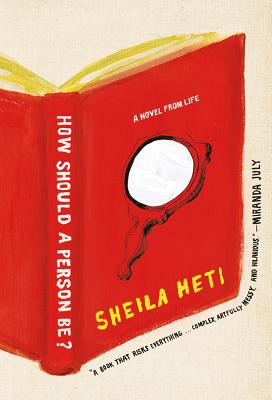
Owen says that his number one for the year is How Should a Person Be? by Sheila Heti.  I don't know, Owen.  You tell me.  How should a person be?
Jane at Lake Forest Park
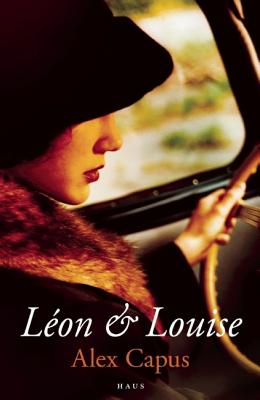
Jane is another bookseller who had trouble narrowing her favorites down.  But she says that her #1 of 2012 is Leon and Louise, but that is subject to fluctuation...depending on the day...and the weather.
Annie at Lake Forest Park
Annie says that Garth Nix is her second favorite author after Michael Ende.  Well, Garth Nix is pretty awesome, so maybe we should check out this Michael Ende character.
  1. A Confusion of Princes by Garth Nix
  2. Hold Me Closer Necromancer/Necromancing the Stone by Lish McBride
  3. Ready Player One by Ernest Cline
  4. Heir to the Empire: The 20th Anniversary Edition by Timothy Zahn
  5. Beauty Queens by Libba Bray
  6. Passion Play by Beth Bernobich
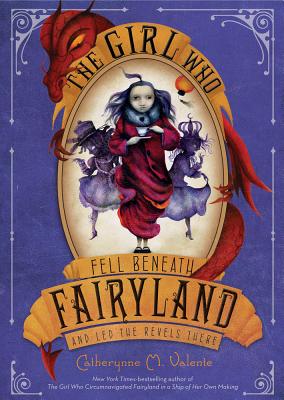
  7. The Girl Who Fell Beneath Fairyland and Led the Revels There by Catherynne Valente
  8. Wild by Cheryl Strayed
  9. North of Beautiful by Justina Chen
  10. Harriet the Spy by Louise Fitzhugh
Erin B. at Ravenna
Hey!  That's me!  Saved the best for last...am I right?
So that's it.  A great sampling of what we loved last year.  And already we are hard at work on our 2013 lists.

Sunday, February 24, 2013

What a Bargain

Bargain books or remainders, no matter what you call them one thing stays the same...deals, Deals, DEALS!


"What's a remainder?" you ask.  I actually found a Wikipedia article about them (which I find odd for some reason even though there's a Wikipedia entry for everything).  So you can read that, or I can just tell you.  Remainders are those books you'll find in both of our stores stacked on the "Bargain Books" tables, usually identifiable by the bright, yellow, price sticker on the front cover.

"But aren't those just used books?" you say.   No! Contrary to some customer opinion, those aren't used books.  Those are brand-spanking-new books!

"How are they so cheap?" you ask (you have a lot of questions today).  Well, remainder books are deeply discounted by the publisher, usually after the book has been released in paperback.  That's why most remainders are hardcovers.  Usually they are priced around $5.98, $6.98, or $7.98.  See, DEAL!

Eric is in charge of our remainders, and he says that right now he's got the best selection of nonfiction remainders that he's ever had.  Ever.  And the fiction isn't so bad either.  How's that for tempting?!  But you should know that once remainder books are gone, they're really gone (at least at that awesome price).  So you better hurry.

Here are a few of our current remainders:


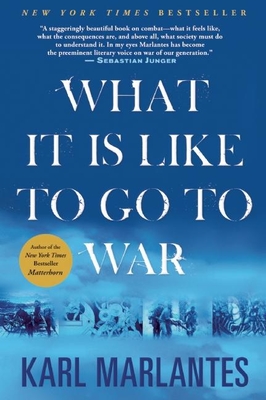
What It Is Like to Go to War by Karl Marlantes

The Turquoise Ledge by Leslie Marmon Silko

Arcadia by Lauren Groff