Welcome to the official blog of Third Place Books
Showing posts with label Graphic Novels. Show all posts

Monday, April 10, 2017

The Art of Independent Bookstore Day


Independent Bookstore Day is just around the corner (Saturday, April 29th!) and we've been busily preparing for all the fun. But Third Place's own in-house graphic designer, Stephen Crowe, has been extra busy with some special Seattle-specific Indie Bookstore Day projects. He's designing this year's Seattle Independent Bookstore Day Challenge Map, and he's also working on a lovely Insignia Print that will feature all of Seattle's favorite bookstores.


And read on for our interview with the artist!

What is your art background?
I graduated in English, but the year after my graduation I started a project to illustrate every page of by Finnegan's Wake James Joyce. Needless to say, I never finished, but I developed a small following of passionate nerds on the Internet, and in 2014 I was commissioned by a (very very very) small press to illustrate a new edition of Dubliners. After that, I started to focus more on comics, especially an ongoing story called The City that I make with my wife, Melanie Amaral.

How did you come to work at Third Place Books and what does your job entail?
After I finished the Dubliners job, I realised that I couldn't make enough money to live on illustration alone. I'd loved Third Place ever since I'd first come to the States from the UK in 2004. After twice missing the opportunity to apply, I began obsessively checking Craigslist for openings until one finally came up. I'm a general bookseller in charge of the poetry, essays, reference and bargains sections, but I've also become the store's unofficial in-house designer, responsible for the website, posters and displays, bookmarks, shelf talkers and whatever else needs to look like something.

What was your inspiration for the look and colors of the 2017 Seattle Bookstore Day passports?
I did the map in a digital "cut-out" style that I like to use. Initially I tried to avoid going green, because last year's map was green. But this is the Emerald City, so there's no getting away from it. The other colours I tried looked like a band-aid, apparently, so it's hard to deny we're better off.


Why do you think Seattle Bookstore Day is important to our community?
There are so many great bookstores in this area, and each plays such an important part in reflecting and maintaining the culture of its community. Customers tell me all the time how much they appreciate our store, and it's wonderful that there's a day to celebrate that appreciation. Especially in These times, an independent bookstore represents so many things that are absolutely vital: a strong local economy, literacy and free expression, and a community gathering together for companionship and the exchange of ideas.

Have you celebrated Seattle Bookstore Day in previous years? If so, what did you experience?
My first Seattle Bookstore Day was last year, and I was at work! It was a really fun, celebratory atmosphere, and the cake was delicious. I'll make sure I'm there for the cake.
What is your favorite book (or a great book you have read recently)?
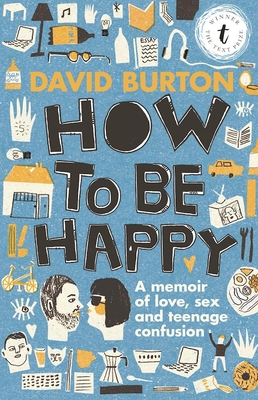
I find it impossible to choose one favourite book, but maybe the one that I think about the most lately is How To Be Happy, a beautiful and emotionally raw collection of short comics by Eleanor Davis (published by Fantagraphics!).

Other than Third Place Books, what are some of your favorite local bookstores?
Elliott Bay has a very friendly atmosphere, and my son loves to read in the castle. I read a lot of comics, so if I go to south Seattle and don't pop into Fantagraphics, it feels like a wasted journey. I go to the University Bookstore for my art supplies. And the Neverending Bookshop is a really cute little bookstore in Bothell opened by one of our former Third Place co-workers.

Tell me more about your bookstore insignia project for Seattle Bookstore Day.
I was asked to make some kind of commemorative print for the occasion, in the style of the bookstore-intersection illustrations that Kevin Cannon did for Minnesota bookstores. I'm a big fan of Kevin Cannon, so I was more than usually keen to avoid the possibility of comparison! I hit on the "insignia" idea from looking at old national park patches, and it's been a lot of fun to try to represent each store's individuality in patch form.


Saturday, April 8, 2017

New and Upcoming Graphica

2017 has not given me a lot to look forward to. Nonetheless, even as chaos rages all around, books are still being written and published. And that gives me little glimmer of hope for what’s to come. Here are some of my most anticipated adult graphica recently or soon to be released! 

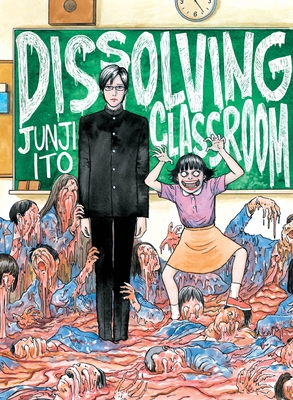
Junji Ito is a Japanese manga artist best known for his dark, disturbing works Uzumaki and Gyo. His newest manga, Dissolving Classroom, follows two cursed siblings, the older brother who is possessed by the devil, and the younger sister, who’s just plain evil. Wherever the two go, trouble seems to follow, as it weaves together stories sure to haunt you.

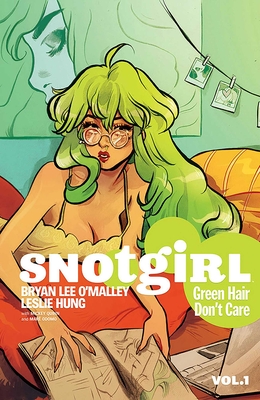
Lottie Person, aka Snotgirl, is a fashion blogger whose life looks like a dream online, but is pretty much a hot mess. She is surrounded by fake friends, keeps running into her ex, has a flowing river of snot and tears for a face (thanks allergies), and has to live with her own, honestly, terrible personality. To top it all off she seems to be teetering on the edge of a breakdown. Snotgirl is sure to be another great read from Scott Pilgrim creator, Bryan Lee O’Malley. 

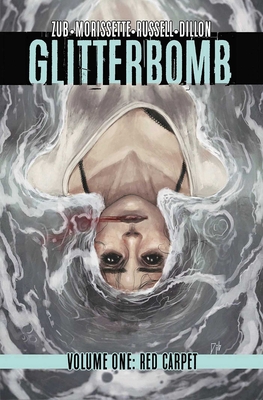
Jim Zub won me over hard with his ongoing series, Wayward, and I’ve been waiting for Glitterbomb to come out in trade paperback for what seems like ages. Horror meets Hollywood in this comic, as the dark side of the entertainment industry is personified in this chilling read.

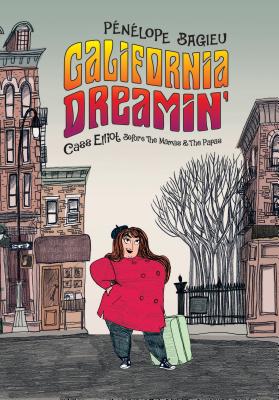
Cass Elliot was the astounding singer who formed The Mamas and the Papas, but is unfortunately known more for her untimely death and the false urban legends surrounding it. Penelope Bagieu explores Mama Cass’ life before hitting it big, giving this talented woman the story she deserves. If you’ve never belted out “Make Your Own Kind of Music” at the top of your lungs, hopefully California Dreamin’ will inspire you to do so. 

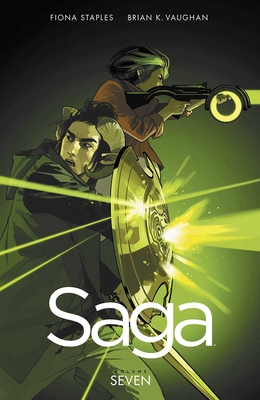
Saga volume 7 may be the title I’m anticipating most this coming year. Me and everyone else in the world. If you haven’t picked up this amazing story, you’re missing out. Be sure to catch up before April, because Saga truly lives up to its name.

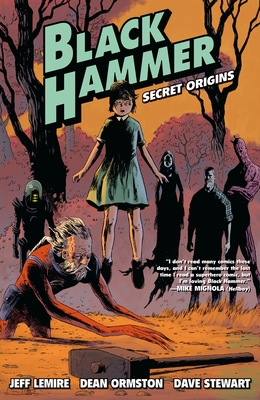
I have to be honest, I’m not really a fan of superheroes. That being said, I am a fan of
  Jeff Lemire (Sweet Tooth, Descender), as well as narratives about outcasts. I’m pretty pumped to read Black Hammer, the story of a group of superheroes living a rural, farm-town lifestyle after being written out of their own timeline.

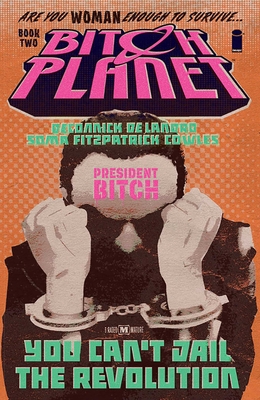
Now, more than ever, is a time we need to be non-compliant. In a not-so-distant future, women who do not comply with their roles in life (being mild and submissive wives and daughters to men) are imprisoned and reprogrammed on a lonely piece of rock floating through space dubbed “Bitch Planet”. After hopes have been crushed in the last volume, I think we can all relate to the characters in Bitch Planet Volume 2 who will surely be saying, “no more”. 

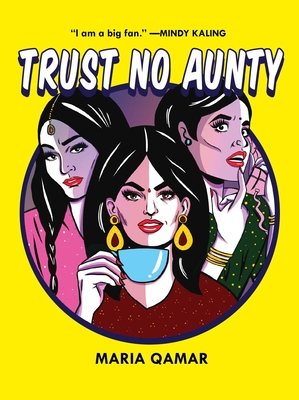
Trust No Aunty is Bollywood meets pop art in the best way possible. Maria Qamar’s experiences as a Pakistani-born Canadian are brought to life in her vivid, pointed,  and often hilarious paintings. I can’t wait to sit down and absorb her artwork in book-form.

-Ashley

Wednesday, February 1, 2017

New Arrivals : It's a Book!

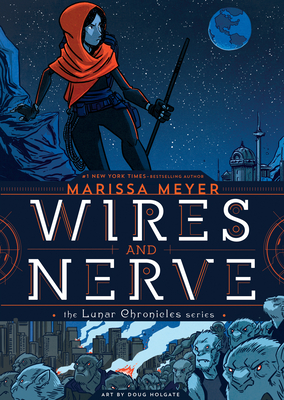
Wires and Nerve by Marissa Meyer, illustrated by Douglas Holgate

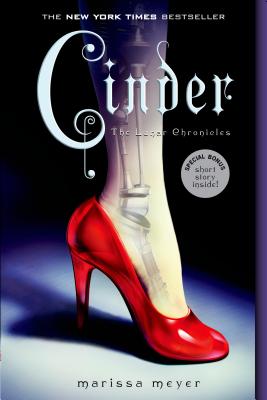
Like many people, I devoured the Lunar Chronicles series. They had me at “cyborg Cinderella” I’M NOT MADE OF STONE, PEOPLE.  It was a fun series with adventure, humor, and the kind of friendships we all hope for. So I was really excited to find out that Marissa Meyer was writing a comic book spinoff of the series. Wires and Nerve follows the exploits of Iko as she goes after the rogue wolf soldiers left on Earth. Excited, yes, but also a little nervous. I’m picky about my comic books—if I don’t love the art, it doesn’t matter if the story is great. And if the art is wonderful but the story is flat? I’m putting the book down. Not every novelist can manage the crossover into another form, either. Finally, there’s always the concern that a side character won’t have enough narrative oomph to carry a story on their own.
because

I managed to get my grubby little paws on an early copy of Wires and Nerve, and let me tell you, friends, you can breathe a sigh of relief. If you loved the original series, you’ll love the comic book. Meyer has used this opportunity to not only deliver Iko as her usual, charming self, but also to give us a more in-depth look into the problems of being an android. As much as Cinder faced prejudice for being a cyborg, Iko is constantly being dismissed as a non-entity—a frustration she handles with humor and wit, but a frustration nonetheless.

All of the other characters from the book are present, too. After all, things don’t wrap up with an easy, “And they lived happily ever after” at the end of the novels. Rebuilding takes work and time, and in the comic we get a glimpse of the characters getting on with the necessary business of starting over.

Let’s talk about the art. Wires & Nerve is done in various blues, blacks, and grays and usually I prefer my comics in full color. I thought the scheme worked for this book, though, what with the general setting being in ships, space, and the Lunar settlement. Doug Holgate’s drawings are charming and whimsical and I thought an excellent fit for the story.

Basically, if you liked the books, you need to get your mitts on the comic. Don’t usually read comics? This is a good place to start! Haven’t read the Lunar Chronicles? Well, you can read the comic without having read the series, but you will get a ton of spoilers for the books. So maybe you should just read all of the books. You won’t regret it. I mean, if cyborg Cinderella didn’t sway you, I’m not sure you can be reasoned with. Wolf soldiers? Dashing starship captains? Evil queens? Feisty androids that fight human prejudice as well as genetically engineered killing machines? I don’t know about you guys, but for me that translates into shut up and take my money.

Wednesday, February 3, 2016

A Graphic Enlightenment

Growing up my father kept a shelf of Calvin and Hobbes collections on a high bookshelf in the back corner of a room we never went into. To get to these books you had to climb onto the back of an old green leather chair, push past dusty office ping pong tournament trophies, avoid the mini darts sitting next to a dartboard, and grab whatever thin Watterson book you could before sliding down the back of the chair into a pile of afghans. 

This was my knowledge of graphica.

About a year ago, a good friend of mine suggested I read Watchmen, the classic Alan Moore superhero send up. Coming from a friend with Criterion Collection taste, I borrowed the graphic novel and skeptically sat down to read it. I scoffed at the idea of reading a comic. I was a novel reader. A poetry reader. I didn’t need pictures in my books like some child. 

Two days later I was done. 

The art enchanted me, the combination of graphics and narrative astounded and confused me; this was a completely new method of storytelling that blew the door wide open on the art of writing as far as I was concerned. 

And so with Calvin, Hobbes, and Alan Moore whispering in my head I venture into the confusing, and at times seemingly-impenetrable, world of graphic novels. I knew right from the start that the serialized superhero comic was not for me, despite my good friend Andy’s insistence at a deeper mythology. It's just not for me. But Andy is a persistent man.


He finally found something on his bookshelf that felt right; that combined my love of slapdash plot with pure insanity in the form of Manhattan Projects. Written by Jonathan Hickman and illustrated by Nick Pitarra, Manhattan Projects follows an alternative history starting at the end of World War II in which the end of the war and the development of the atomic bomb leads to, to put it simply, high concept sci-fi rigmarole. 

Without giving too much away, you have the main players in the real-life Manhattan Project: Oppenheimer, Feynman, Fermi, and Einstein, but they are all surreal versions of themselves. The opening of the book posits this question: What if Oppenheimer had an evil twin that destroyed the “real” Oppenheimer? And what if that twin had control of the atomic bomb? 

What I found so completely absorbing about MP was its total disregard for, yet amazing respect for, the truth. Hiding underneath the insanity, death, drug-use, and smashing of idols is a tightly written, historically-semi-accurate subplot. The events that unfurl throughout the first couple of books in the series read like a Lewis Carrol’s Wonderland version of United States history. 

I devoured these books. I started borrowing them one at a time and then just emptied his collection into my backpack and ran away. Reflecting on my journey into the graphic medium it is easy to see why these grabbed me as firmly as they did. The absurdity of Calvin mixed with the philosophic nature of Hobbes with the sci-fi bent of Watchmen all wrapped in an Adult Swim feel. This was tailor made for me and placed me firmly in the graphic novel fan camp. 

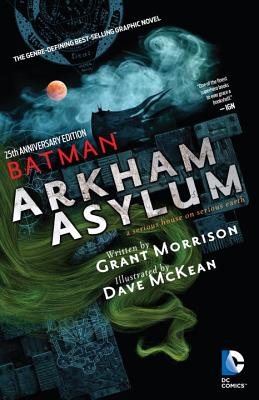
So now I enter into the dark woods of graphic novels with a few key guides at my side. Andy hands me superhero comics to see if they stick along with more high-concept sci-fi (see:Black Science). Coworkers of mine who come at graphica from an artists viewpoint hand me David Clowes, Eleanor Davis, and Chris Ware. Another coworker places in my hands Batman Arkham Asylum, which completely destroyed my view on the “super hero” graphic novel, along with Y The Last Man, which I will probably talk about at a later time. 

The graphic novel is not simply a book with pictures, nor is it art with words. It is the perfect merging of those two forms; the culmination of visual and textual storytelling. This descent into graphica and comics feels equally like a descent into madness and a step into a very new and beautiful world.

-Ryan

Friday, April 12, 2013

Getting to Know...Doug TenNapel


Until recently, if you stumbled into one of Doug TenNapel’s quirky fantasy worlds there’s a good chance that it was through the video game Earthworm Jim or Nickelodeon’s Catscratch. But TenNapel has also worked away valiantly in the graphic novel format for the past 15 years and now seems to have hit the pop culture jackpot with his Cardboard, instantly beloved by librarians and elementary school teachers around the country (nominating it for all sorts of 2012 “best-of” lists). It has also been optioned as a Toby “Spider-Man” Maguire film by the folks behind Ice Age. The fantasy device at the heart of this TenNapel story may feel very familiar, fairytale-familiar in fact: a boy is given a seemingly ordinary object which quickly displays astonishing properties, taking on a life of its own and churning out so much magic that the adventure soon threatens to veer into nightmare territory. But can something as mundane as cardboard ever pass convincingly for magical, you may ask. Yes. Imagination + corrugated paper . . . as every child knows, it’s a simple, foolproof, alchemical formula. Also, even older readers really don’t have much chance resisting the story’s enchantment--TenNapel doesn't play fair and always uses his vibrant illustrations as the jack up his sleeve, his loaded dice.

This is the third of his popular graphic novels published for Scholastic Books (earlier books having come mainly through Image Comics) and aimed at a young audience. The first was Ghostopolis, a story of a troubled boy's journey into the land of the dead. Ghostopolis is an unusually haunting, richly mythopoeic book for TenNapel and might function as a natural stepping stone for kids destined to wander--a few years down the line--into Neil Gaiman territory. Between the release of these two graphic novels, TenNapel produced the energetic adventure story Bad Island. This was something of a cross between Jurassic Park and elements of the original, animated Transformers: The Movie from 1986 (sigh, yes, I'm geeky enough to bring in that reference).

And for the readers who just can't get enough TenNapel, his slightly more mature (i.e. enigmatic and a bit bloody) Gear is something else entirely. Gear was the first of his graphic novels. It is raw and rough-hewn. It's so short on exposition, so unconcerned with being “accessible” that I'd be tempted to call the book uncommerical, except that TenNapel later raided his character cast here to create the Catscratch cartoon. And the artwork is just as bold and gonzo as the story.

-Adam