Welcome to the official blog of Third Place Books

Sunday, September 20, 2015

Hey, I've Read That

In which I review a book everyone else read five years ago.

I have never been known for my ability to keep abreast of all things pop culture-y. I still have my VCR. Which you might think is silly, but I get the cheapest movies at Value Village. Cheaper than Blockbuster even.

This inability to keep up (with the Kardashians) extends to my reading life. I spend a lot of time reading books published outside the current decade, so when I do read a "new book" most everyone else has already read it... five years ago.

But since I'm in charge of the blog, I can post whatever review I want, no matter how irrelevant it is. So here you go.

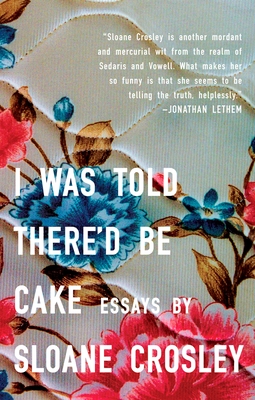
I Was Told There'd Be Cake by Sloane Crosley

This book is guaranteed to make you feel better about yourself. Almost every other essay, I found myself saying, "well, at least I've never done that."

Crosley pulls no punches in relating the miseries and embarrassments of her early adulthood. Failed relationships, and terrible jobs feature prominently. Her piece on being the reluctant maid of honor for her not-so-close friend is particularly hilarious.

Here you find the best friend, you're not quite sure you want. She's crass and selfish, sometimes mean, and will almost certainly get you into trouble. But she does it all with such wit and humor, it's difficult not to be charmed.

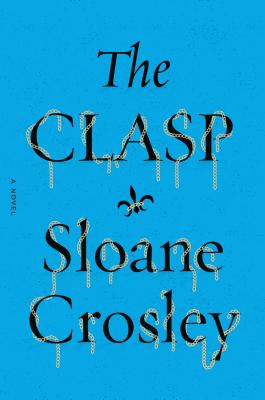
Sloane Crosley's new book The Clasp, her first novel, comes out October 6th.

HA! Tricked you! This post was relevant!

-Erin

Wednesday, September 16, 2015

Reading as a Contact Sport, or how to read a 700 page novel told in multiple voices (many with a thick Jamaican dialect)


Marlon James’ A Brief History of Seven Killings (Riverhead) is a complex beast of a novel. It is angry, rough and bloody but also nimble, playful and kind. It is a little intimidating to approach, but once you are engaged with it, it is an incredibly rewarding experience.

I was a little apprehensive about attempting this novel at first. I actually managed to successfully avoid reading it for almost a full year. But it kept popping up wherever I looked : amazing reviews, a finalist for the National Book Critics Circle Award, more amazing reviews, a shortlist finalist for the Man Booker Prize and even an appearance on Late Night with Seth Meyers (if that guy could make time for this book, so could I).

So I dove in, but decided to give myself some help along the way. What resulted was a fully immersive experience of this novel, an adventure everyone might not have the time or inclination for, but I highly recommend (I’m looking at you Man Booker Prize jury members).
When you’ve decided you’re going to tackle a 700 page novel, you have to carve out time every day to get to it. It’s a bit of a task at first, especially after work, meetings, and helping coach your daughter’s soccer practice, but it soon becomes addictive. My first week I read about 200 pages of the book (I’m pretty sure there were already more than seven killings by then, but I wasn’t expecting anything simple or straightforward from this “brief” novel).

It was then that I remembered a friend of mine had mentioned that he had listened to the audio version of this book on a road trip earlier this year. I got the audio and started alternating between the two experiences of the book, listening to the audio on my morning walk to work and reading the book itself at night. I usually don’t listen to fiction as I don’t want an actor’s interpretation of the author’s voice to muddy my experience of that voice. But this novel, told exclusively in first person voices, seemed extremely well suited to the audio-book experience. With an immensely talented eight person cast, this novel, especially the Jamaican characters, began living in my head in a way that sort of super-sized what was already a healthy meal of a book.

I then discovered Marlon James’ Spotify playlist for the book. Soon making dinner at home was accompanied by Bob Marley’s Natty Dread (the 1976 assassination attempt on Marley is the central planet around which the voices in this novel orbit) and the sounds of Ina Kamoze and Damien Marley. But, as the novel moves its way into the eighties and into the US, we also were listening to Andy Gibb’s Shadow Dancing and Herbie Hancock’s Rockit (I don’t think I have heard Rockit since my brother and I were laying down cardboard in our garage and practicing how to do a windmill in 1983 – it was fun to hear it again, but around the third time it came on my wife began asking how much longer until I was done with the book).

When you start listening to reggae in your kitchen, you start looking around for the conch and the jerk seasoning (at least I do). I clearly wasn’t going to find conch in Seattle, but I was willing to improvise. Digging through my cookbooks I came across a number of amazing recipes by Chef NormanVan Aken that clearly were going to satisfy the cravings that this book had conjured up in my belly. The family and I spend the next week enjoying Conch Fritters (cod for conch), Conch Salad (prawns for conch) and Jerk Pork Chops with Golden Pineapple Chutney.

It was a perfect way to end my summer. I’m sure I won’t read a better novel this year and it will certainly be a long time before another novel consumes my life and inspires me to immerse myself its world the way Marlon James’ masterpiece did.

I've heard this book compared to many others. Some have compared it to being like a Tarantino film, the works of Faulkner and Robert Bolano’s Savage Detectives. I kept thinking about Peter Matthiessen’s Shadow Country in that it also had multiple voices around a single violent incident, as well as the works of William Gaddis who also has kinetically charged monologues that propel his narratives along (I discovered afterwards an interview with Marlon James from a number of years ago where he mentioned reading Gaddis – probably during the time he was working on this novel). In the end however, A Brief History of Seven Killings is one of those unique books that really defies comparison. It is a book that will become an intimidating measuring stick against which to judge other bold, ambitious and gloriously reckless novels in years to come.

Robert

Monday, September 14, 2015

Read This Book: Current Events Edition

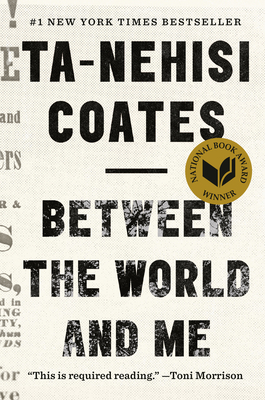
Between the World and Me by Ta-Nehisi Coates

This book is everywhere, with good reason. Many of us here at Third Place Books have read it. Here are two of our booksellers on why you should read it too:

Robert:

You are unlikely to read a more important book about race this year. Coates' letter to his 15-year-old son is provocative, upsetting, inspiring, and, like any passionate argument, an emotional roller coaster ride. It is the beginning, not the end of a much needed conversation.

Mark:

We all bring a lifetime of experiences to whatever book we read. I read Between the World and Me, keeping in mind that I am the father of a black son. My wife is also black. Being a white father, I cannot pass on the experiences of being a black man in America. As a member of white society, I can walk blithely through life unaware of the biases and profiling that affects my own family.

Between the World and Me is a memoir, written in the form of a letter to the writer’s fifteen-year-old son. Ta-Nehisi Coates is a black father, and in this book he relates his own experiences of growing up black in America. Sometimes he is quite angry – rightfully so – and his narrative is always personal and emotionally powerful. He’s not just talking about slavery and the subjugation of the African-American people, but the fact that America’s success was built on the backs of these people.

He uses direct quotes to dispute dangerous ideas, such as the Civil War not being fought over slavery. Coates covers institutional racism, and how most of us are deluded by this idea of whiteness, also known as “the American Dream”. There is a lot to digest in just over one-hundred and fifty pages, especially for those of us only familiar with the winner’s interpretation of history.

Every once in a while, a book deserves the exalted status it’s being given, and Between the World and Me is one of those books.

Monday, August 24, 2015

Operation Library Creation

About a month ago another local author, DP Denman, reached out to me about a fundraiser that she was spearheading and as a young adult author and an independent bookseller, the subject was near and dear to my heart.

She wanted help building a library and raising awareness for YouthCare, a non-profit organization that works with local homeless youth. YouthCare helps kids and teens with the basic needs we tend to take for granted (shelter, food, etc.). They also help prepare teens for the workforce, get their GEDs or get into college, and teach the skills necessary to live on their own. They are doing all they can to not only prepare these kids for adulthood, but to break the cycle of homelessness.

Specifically, DP was asking for my help with raising money for YouthCare's lending library.

Books are transformative. They provide shelter, escape and connection. Books teach us that we're not alone, that there are other ways of being--they open our minds and hearts. I told DP to sign me up!


Since the fundraiser wasn't for another month, I asked her if YouthCare would be interested in some donated books. I reached out to other bookstores via Twitter and instantly heard back from Elliott Bay Book Company and University Bookstore--they wanted to help too. And I already knew Third Place Books would help--we, like many local bookshops, donate to schools and non-profits all the time.

Once I gathered up all the donations I had five tote bags and four full boxes of books! I can't tell you how great it felt to drop them off at YouthCare. They said that they don't often get new/newer books and the teens would be so happy.

We donated a lot of books, but keep in mind that they have several locations, and several lending libraries that they're building. DP and I  are hoping we can fill their shelves with so many books that they'll need to build more!

If you are interested in making a donation to YouthCare click for more details on their current and year-round needs. If you're interested in making a monetary donation, click here

Check out DP's blogpost on the campaign here.

Thanks again to Elliot Bay Book company, University Bookstore, and Third Place Books for their generous donations!

-Lish

Wednesday, August 19, 2015

A New Orleans Reading Atlas

Summer travel means summer travel reading. And a trip to New Orleans means a feast of literary options. I've been reading novels, manifestos, atlases, and histories. I'm learning about levees, and funeral parades, and beignets, and bayous, and faubourgs. I have immersed myself in so much New Orleans reading, that I feel like a local... or at least a reasonably well-oriented tourist.

I try to read up on any new place I go, but New Orleans offers a richer experience than most. Its sense of place is so strong it's incapable of being confined to the page, and seems to conjure itself into being with a breath of heavy humid air, and a mournful brass note. Literary New Orleans is astounding not only in its variety but in its quality, innovation, and lyricism.

Here's my reading list.

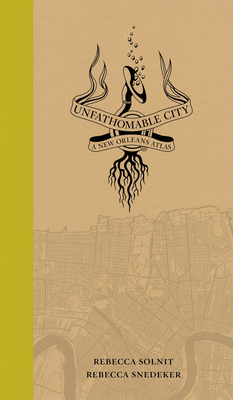
Unfathomable City by Rebecca Solnit and Rebecca Snedecker

This book is a brilliant reinvention of the traditional atlas, one that provides a vivid, complex look at the multi-faceted nature of New Orleans, a city replete with contradictions. More than twenty essays assemble a chorus of vibrant voices, including geographers, scholars of sugar and bananas, the city's remarkable musicians, prison activists, environmentalists, Arab and Native voices, and local experts, as well as the coauthors compelling contributions. Featuring 22 full-color two-page-spread maps, Unfathomable City plumbs the depths of this major tourist destination, pivotal scene of American history and culture and, most recently, site of monumental disasters such as Hurricane Katrina and the BP oil spill.

The innovative maps precision and specificity shift our notions of the Mississippi, the Caribbean, Mardi Gras, jazz, soils and trees, generational roots, and many other subjects, and expand our ideas of how any city is imagined and experienced. Together with the inspired texts, they show New Orleans as both an imperiled city by erosion, crime, corruption, and sea level rise and an ageless city that lives in music as a form of cultural resistance. Compact, lively, and completely original, Unfathomable City takes readers on a tour that will forever change the way they think about place.


The Moviegoer by Walker Percy

The Moviegoer is Binx Bolling, a young New Orleans stockbroker who surveys the world with the detached gaze of a Bourbon Street dandy even as he yearns for a spiritual redemption he cannot bring himself to believe in. On the eve of his thirtieth birthday, he occupies himself dallying with his secretaries and going to movies, which provide him with the "treasurable moments" absent from his real life. But one fateful Mardi Gras, Binx embarks on a hare-brained quest that outrages his family, endangers his fragile cousin Kate, and sends him reeling through the chaos of New Orleans' French Quarter. Wry and wrenching, rich in irony and romance, The Moviegoer is a genuine American classic.


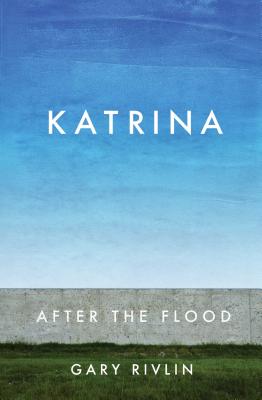
Katrina: After the Flood by Gary Rivlin

Ten years after Hurricane Katrina made landfall in southeast Louisiana--on August 29, 2005--journalist Gary Rivlin traces the storm's immediate damage, the city of New Orleans's efforts to rebuild itself, and the storm's lasting affects not just on the city's geography and infrastructure--but on the psychic, racial, and social fabric of one of this nation's great cities.

Much of New Orleans still sat under water the first time Gary Rivlin glimpsed the city after Hurricane Katrina. Then a staff reporter for "The New York Times," he was heading into the city to survey the damage. The Interstate was eerily empty. Soldiers in uniform and armed with assault rifles stopped him. Water reached the eaves of houses for as far as the eye could see. Four out of every five houses--eighty percent of the city's housing stock--had been flooded. Around that same proportion of schools and businesses were wrecked. The weight of all that water on the streets cracked gas and water and sewer pipes all around town and the deluge had drowned almost every power substation and rendered unusable most of the city's water and sewer system.

People living in flooded areas of the city could not be expected to pay their property taxes for the foreseeable future. Nor would all those boarded-up businesses--21,000 of the city's 22,000 businesses were still shuttered six months after the storm--be contributing their share of sales taxes and other fees to the city's coffers. Six weeks after the storm, the city laid off half its workforce--precisely when so many people were turning to its government for help. Meanwhile, cynics both in and out of the Beltway were questioning the use of taxpayer dollars to rebuild a city that sat mostly below sea level. How could the city possibly come back? 

This book traces the stories of New Orleanians of all stripes--politicians and business owners, teachers and bus drivers, poor and wealthy, black and white--as they confront the aftermath of one of the great tragedies of our age and reconstruct, change, and in some cases abandon a city that's the soul of this nation.


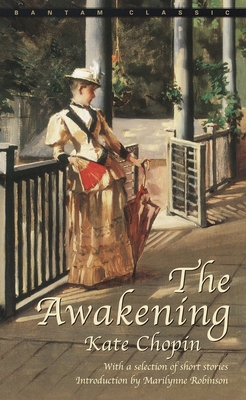
The Awakening by Kate Chopin

First published in 1899, this beautiful, brief novel so disturbed critics and the public that it was banished for decades afterward. Now widely read and admired, The Awakening has been hailed as an early vision of woman's emancipation. This sensuous book tells of a woman's abandonment of her family, her seduction, and her awakening to desires and passions that threaten to consume her. Originally entitled "A Solitary Soul," this portrait of 28 year-old Edna Pontellier is a landmark in American fiction, rooted firmly in the romantic tradition of Herman Melville and Emily Dickinson.


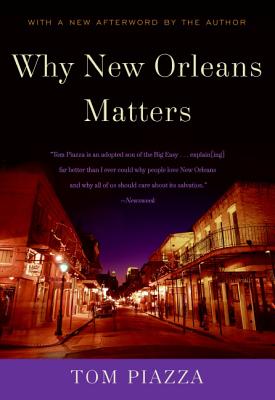
Why New Orleans Matters by Tom Piazza

In the aftermath of Katrina and the disaster that followed, promises were made, forgotten, and renewed. Now what will become of New Orleans in the years ahead? What do this proud, battered city and its people mean to America and the world?

Award-winning author and longtime New Orleans resident Tom Piazza illuminates the storied culture and uncertain future of this great and neglected American metropolis by evoking the sensuous rapture of the city that gave us jazz music and Creole cooking; examining its deep undercurrents of corruption, racism, and injustice; and explaining how its people endure and transcend those conditions. And, perhaps most important, he asks us all to consider the spirit of this place and all the things it has shared with the world: its grace and beauty, resilience and soul.

-Erin

Tuesday, August 11, 2015

On This Day in (Literary) History

We may be booksellers by day, but that's not all we are. Some of us are writers, some of us knit. Several of us could be considered pretty serious cycling aficionados. Lots of bakers and chefs. We've a few musicians. One pretty militant cross fitter. And of course we have artists.

Here's one now.

Introducing Stephen's new series of imagined author histories. He's hoping it becomes a weekly occurance. We hope so too. Enjoy!


Monday, August 10, 2015

Book News and Other Miscellany

Volume 2, Issue 2
Various links to cool videos, websites, articles, and news about books.

***
The Man Booker long list, also known as the "Man Booker (Baker's) Dozen" was announced late last month.


This is the second year that the prize has been open to writers of any nationality. Nomineess must also be originally written in English, and published in the UK. The shortlist will be announced on September 15th with the award itself announced on October 13th.

***
The Martian comes to movie theaters this fall. The trailer looks amazing! Several of us have read and loved the book and can't wait for the movie!


***

People who read actual, physical books fall asleep faster and sleep better than those who read e-readers. There's a super-long, fancy, academic study that proves it. Or you can read NPR's summary.


***
What's your personality? Take this quiz!

***

I love Flavorwire's lists. They are consistently interesting topics and always full of  books you wouldn't normally consider belonging to whatever particular list it is. I found Dancer from the Dance (one of my all-time faves) by Andrew Holleran on their list of Best New York Novels. It's also in their 50 Essential Works of LGBT Fiction.

I had been sampling pretty heavily from the LGBT list and that's how I came to read, Call Me By Your Name by Andre Aciman, currently my favorite book this year. Call Me By Your Name is also on the 50 Romantic Books list, which is how I ended up reading John Wyndham's The Chrysalids. And why I'm moving on to The Sea, The Sea by Iris Murdoch. You must check out these lists, they will inevitably throw you down a rabbit hole of binge-reading. Not a bad rabbit hole to be in.

***
And, a book and a cat.


-Erin

Wednesday, August 5, 2015

Astronauts on the Town

So we have this astronaut in the Commons. She's part of the Museum of Flight's Astronauts on the Town public art project. We've had lots of interest in our astronaut. Kids love her, grownups love her, we love her. And today, I met Kate Buike. She loves the astronauts so much that she's going around town sketching all of them. Kate is a volunteer at the Museum of Flight, and she's also part of Urban Sketchers, an international community of sketchers created by the Seattle Sketcher, Gabriel Campanario.

Kate just happened to be up at the info desk, gathering her things, and her sketchbook was sitting on the counter opened to the sketch of our astronaut. She was kind enough to let me gawk at her artwork, and snap a picture. Here she is with her really lovely work and of course, the astronaut!


Sorry, I didn't get a close up of the sketch, but you can check it out along with all the other astronauts here. And learn more about Kate on her blog, Red Harp Arts. Thanks so much for making us a part of your project, Kate. Happy sketching!

-Erin

Tuesday, August 4, 2015

On Running and Foundations

Lizzie at Lake Forest Park recently took a trip to Boston. While she was there, she headed out to Walden Pond near Concord, Massachusetts. Maybe it's the air that makes people ruminate when they're around that particular body of water, but ruminate she did. She wrote it up for us, and you can read it below.

***
"If you have built castles in the air, your work need not be lost; that is where they should be. Now put the foundations under them."
-Henry David Thoreau 

People like to spew the above quote about castles and foundations at young people, especially come graduation time. But what exactly does Thoreau mean by foundation? I always took it to mean one should set up in a place, settle down, and make enough money so that you could have the things you want and do the things you want. I'm beginning to think this is not what Mr. Thoreau had in mind when he spoke of building.

These are the things Thoreau preaches: Nature is good. Practice solitude. Man is wasteful, man is loud, man measures himself against another in futility. Nature teaches all, we must simplify our lives, and we must practice solitude and quiet. Build your foundations so your dreams may be built upon solid ground. Economical habits are held in high regard.

But his thoughts that make me squirm most are about homes and foundations. He wrote of houses, of building, of solid structure.  Beyond basic necessities, Thoreau didn't concern himself much with ownership of physical things. Build yourself, yes, build a foundation for your soul.

But how?

Running is a basic form of escapism I've found myself embracing lately. Even at such a place as Walden Pond, my very brain was running; too active, too loud to shut off. I just wanted to look and smell and enjoy and be in the moment.  It's harder than it sounds. Running is the only thing that shuts my brain up, lately. One thinks of running as the antithesis of building a foundation but I'm not certain that's the case.

Thoreau's admitted dislike for his "nosy neighbors", and his dismay at what he saw as living in excess, prompted him to reconsider what he wanted his foundation to be and led him to Walden. But let's call it what it is: the man ran away. He went to Walden Pond to escape a certain sort of living, and to avoid building a certain foundation.

I'd only recently done the very same thing. After graduation, I'd all but packed up my life and jumped on a plane, and did not land back on home turf for over a year. And I liked it that way. I learned a new language (bits and pieces of several others) and learned a kind of resilience and independence I'm not sure I could have if I'd stayed close to home.

But then again, neither of us ran forever, we both went  back to our respective Concords and our respective nosy neighbors. We both built something, but neither of us stayed forever in the place where we laid our foundation.

I didn't have time to read all of Walden sitting on the shore of Walden Pond, but I made time to read one chapter: the Conclusion. It felt fitting. In many ways one part of my life has reached its conclusion, and I must find another path around the pond. Thoreau stayed in his cottage by the pond for only two years, claiming that he'd lived enough of that solitary life, and needed to live another; to keep growing. "It is remarkable how easily and insensibly we fall into a particular route, and make a beaten track for ourselves." 

Maybe running away isn't the worst thing for a person can do. Perhaps running, in both senses of the words, was the biggest step I could have made in building my foundation for my castle in the air. It helps to run sometimes, whether around the pond or away from the pond. Maybe we must be alone, and far away, in order to learn. We can take our foundations with us, no matter where we run. So if you ever feel the urge to run, then you run and you run hard. You might find yourself building your castle and the foundation to keep it standing when you do.

-Lizzie

Sunday, July 19, 2015

You Read to Me, I'll Read to You

I love reading aloud, and not just children's illustrated books, novels too. It's unclear where this love came from, because reading out loud in grade school would send me into a panic-freeze-doom-spiral. But by undergrad, my friends and I were always reading out loud. Mostly Harry Potter, and romance novels. We'd spend countless hours procrastinating on our homework, reading out loud, and giggling at the racy bits (of the romance novels, not HP).


But reading out loud is only fun when you have an audience. And when there's no one in your life with the time or interest to listen to you read, there's really no reason to do it anymore. And so for a long time, I didn't.

And then, last year on a particularly slow day at work, one of my then co-workers (and current read-aloud friend) found ourselves with only one advanced reader's copy of Miranda July's novel, The First Bad Man. We started reading small parts out loud, and because it was such a slow day, those small parts became longer and longer, until we had read an entire chapter out loud. We enjoyed ourselves so much we didn't stop and spent a lovely evening on her porch, drinking cool beverages, and reading to each other.

Both of us were struck by how much we missed reading aloud, and being read to. And that's how Grown-Up Storytime was born. We call it LoLS, The League of Literary Snobbery: Storytime for Grownups. Yes, it's a regrettable name born of an astounding lack of imagination, and that calling something "Adult Storytime" would generate an entirely different audience.

Every third Monday of the month at the Ravenna location, at 7PM, we gather in the Pub, get our drinks and adjourn to the Reading Room. And we read out loud. Mostly it's me reading, but others join in from time to time (we gladly welcome new readers). Sometimes there's a theme, and sometimes not. It might be an article, a short story, an essay, or a piece from a novel. Sometimes the occasional poem gets thrown around. We play it pretty fast and loose.

And, according to this completely unresearched (by me) link on the internet, reading aloud is good for you! It:
  • Sharpens Your Focus 
  • Increases Your Vocabulary 
  • Results in Greater Comprehension 
  • Gives you an Opportunity to Play 
  • Exercises Your Body 
  • Challenges Your Use of Intonation 
  • Improves Listening and Reading Skills
You should join us. Tommorrow, Monday July 20th at 7PM. Meet in the Pub at Ravenna Third Place. I'll read to you, and you'll drink drinks, and there will even be popcorn...and air conditioning. Hope to see you there.


Wednesday, July 15, 2015

Fresh from the Vault

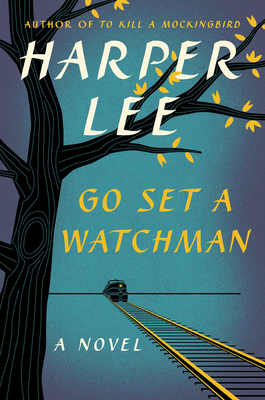
Go Set a Watchman. It's the only thing anyone is talking about. Except Stephen. Our newest bookseller at Lake Forest Park has imagined what other famous first drafts publishers could release. I really think someone should write number four. I would read it. Check it out.

***

Following the rampaging success of Go Set a Watchman, the recently rediscovered early version of Harper Lee's beloved classic To Kill a Mockingbird, what other lost works are being unearthed?

1. The Brilliant Bartlett - F. Scott Fitzgerald's Obvious rip-off of the PG Wodehouse's Jeeves novels featuring the hilarious misadventures of Jay Gatsby and his ingenious butler.

2. The Young Man and the Beach - Ernest Hemingway A small boy spends all day trying to catch a
lizard. When he finally gets hold of it, its tail comes off.

3. A la recherche de Caen perdu - Marcel Proust In six epic volumes, a sensitive young boy struggles to find accurate directions to a French seaside town.

4. Pride and Prejudice - Jane Austen Lizzie Pride is a maverick detective who doesn't play by the book. Sparks fly when she's forced to partner with straight-laced police constable Darcy Prejudice.

5. Harry Potter and the Lonely Cupboard - JK Rowling A dark and tedious story about an unloved orphan trapped under the stairs by his evil guardians.

-Stephen

Saturday, July 11, 2015

Old News

I'm always so behind the times, but did you watch Death Comes to Pemberly? BBC made the P.D. James' novel of the same name into a miniseries back in 2013, though it didn't air in the US until last year. You should really watch it if you missed it too. The acting is wonderful, the story engaging, and it's gorgeous. The costumes, the castles, the scenery.

Swoon.

And how could you ever get enough of Elizabeth and Darcy? You can't.


Sunday, July 5, 2015

Bookseller Spotlight!

Wesley at Lake Forest Park

Wesley has been with Third Place for a year, but he's been a bookseller for nearly 17 years. Lots of knowledge here folks. So much knowledge that he's one of our main used books buyers. He also dabbles in computer orders, social media, and shelves Sociology, Ethnic/Gender Studies. and True Crime.

Wesley's favorite food is pho, and he's pretty passionate about it. He's had a pen pal since junior high with whom he has an agreement to never meet or communicate via anything other than pen and paper and maybe a phone call every few years. Although he has no pets of his own, he claims vicarious ownership of old and cranky Jack Rusell Terriers he encounters on the street. He names them either Gary or Howard, depending on the day.

I usually summarize and edit the answers to this inane questionnaire. But Wesley's answers are so fantastic, I simply cannot deny you the pleasure of his own words.

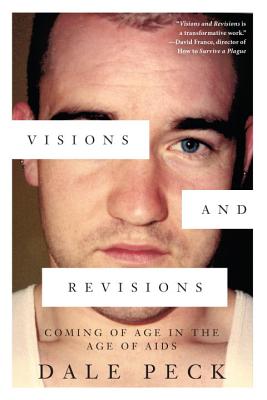
Favorite book in your section?  Right now, my favorite is Dale Peck's Visions and Revisions. A hybrid of memoir and cultural history, it is a refreshingly direct and opinionated examination of AIDs literature and growing up in the thick of the crisis. No punches pulled, no political correctness or apologies employed.

What's your favorite section in the store?  To browse, fiction. For a chuckle, new age kookery.

What book do you recommend most? Julie Orringer's The Invisible Bridge and Vendela Vida's Let the Northern Lights Erase Your Name are my back pocket crowd-pleasers. Whether you read for character, atmosphere, plot, meaning, or emotion, they fit the bill.

Favorite bookstore besides Third Place?  Even split between Grey Matter Bookstore and Troubadour Books in Hadley, Massachusetts and Mast Books in New York. Grey Matter and Troubadour are two separate used shops that share a sprawling basement space in western Massachusetts and provide, to my mind, the most enjoyable rainy afternoon browsing experience known to man. Mast is a small space in the East Village, a used shop curated within an inch of its life and a better store for it. The literature section doesn't represent a single dog and the selection of art books is staggeringly on point. Blindfolded, I could empty my bank account in there without the slightest regret.

What are you reading now?  Mary Karr's The Art of Memoir (September 15th). I have no desire, discipline, or talent (nor do I possess interesting enough battle scars) to write an autobiography BUT IT'S MARY KARR. That voice, even instructionally, is an inimitable pleasure.

Can you read more than one book at a time?  Usually. I keep nonfiction and fiction that requires deeper investment by the bed or reading chair and keep something lighter that's easy to digest in fits and starts with me on the bus and at work.

Do you have to finish a book once you've started?  Ennui is the only thing with which I like to wrestle. My ex did a fantastic imitation of me that's very easy to emulate. At the first point of irritation/boredom: make a short, sharp frustrated noise, toss the book out the window and mutter "who cares?" Repeat with every third or so book. I currently live on the ground floor but the pedestrians in my neighborhood still see a lot of free reading material.

A book you regret not reading sooner or a book you regret never having read?  I wish I had started reading Fran Lebowitz at three instead of thirty. Could've saved myself a lot of hassle and unnecessary apologies.

Favorite author, or three, or five? Mary Robison (not to be confused with Marilynne Robinson, please), Julie Hecht, Lydia Millet, Mary Gaitskill and Ann Beattie. Heidi Julavits. Valerie Martin. Claire Messud. Vendela Vida. Joy Williams. An old co-worker used to tease that "if you show Wesley a book by a thin-lipped lady he won't sleep until he's sold ten."

Least favorite author?  Bret Easton Ellis. I would never refuse to sell a book but American Psycho gives me serious pause. Argue with me all you like but Alberto Manguel said it best: "The only book I ever banished from my library was Bret Easton Ellis's American Psycho, which I felt infected the shelves with its prurient descriptions of deliberately inflicted pain." Truer words. 

Do you have an all-time favorite book?  To name one favorite is a suffocating task that brings me close to tears. Safekeeping by Abigail Thomas, Edward Hirsch's Wild Gratitude and Mary Gaitskill's Veronica are three works I make a point to reread annually and feel more like security blankets than books at this point. Hypocritically, there's a line from a John Berryman that I think may be the single most beautiful thing in the English language.

Guilty reading pleasure? Hippie communes. Religious cults. Don't get me started.

Do you keep books? Borrow them? Lend them?  I keep only the books that are emotionally irreplaceable or financially idiotic to part with. When I was moving back to Seattle and fretting and wringing my hands over what I would keep and what to sell, a friend gave me the greatest piece of advice I've ever gotten where my library is concerned. He handed me a small sheet of paper and a pencil and told me to list every book I owned off the top of my head. After a shockingly short list emerged, he tucked the list in my pocket, told me to go home and sell whatever I hadn't written down. Twenty odd boxes were sold, four were kept and I have absolutely no regrets.

How are your bookshelves arranged at home?  Alphabetical by author (though art, poetry, and vintage paperbacks are segregated and a bit more of a fly-by-night operation).

Do you judge books by their covers?  Unquestionably. Dismissing things out of hand based on aesthetic is one of the greatest pleasures of living in a democratic society.
A book you loved that you wouldn't have read if someone hadn't recommend it?  Julie Hecht's Do the Windows Open? was recommended (nee forced upon me) by the ex with excellent mimicry skills. The soft, borderline Thomas Kinkade cover, the New Yorker sensibilities. Both enormously off-putting, but I'll be damned if it didn't feel tailor-made for me with the neurotic, befuddled protagonist who just can't get on board with these modern times.

Favorite movie version of a book?  They Shoot Horses, Don't They? elevates its source material to phenomenal effect and Play It As It Lays is a wonderfully executed but woefully forgotten adaptation.

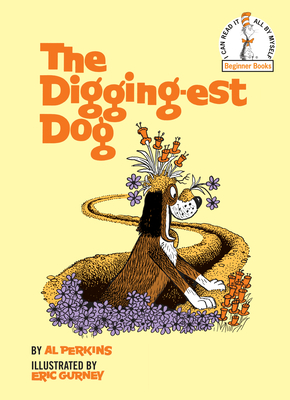
Favorite book as a kid? The Digging-est Dog by Al Perkins, a VERY minor title in the Seuss
Library. I still have my copy from childhood and flip through it every so often, mystified I developed a love of reading through something so flat.

Have you read Ulysses? Nope.

Moby Dick? Nah.

What is a book you've recently read and are raving about?
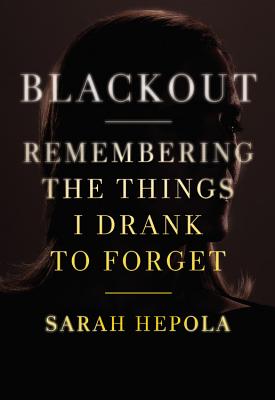
Blackout by Sarah Hepola has really reawakened my love of confessional nonfiction and reminded me of the importance of the addiction memoir. To my mind, there really hasn't been a work about alcohol abuse since Caroline Knapp's Drinking that has felt this humble and forthright. As she's the personal essay editor for Salon, it really shouldn't be too surprising that it's so compulsively readable and relatable but her ability to steer clear of navel-gazing and address past transgressions and personal reckoning so frankly and without sensationalizing her drunkalogue is inspiring.

Monday, June 22, 2015

Read This Book


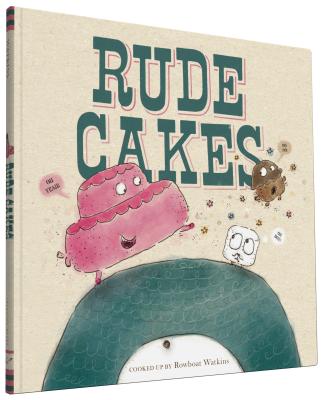
You MUST read this book. Rude Cakes by Rowboat Watkins.


It's pretty much impossible to walk by this book and not pick it up. Just look at that cake! Adorable! In fact, so adorable, that we've made it Picture Book of the Week. The inaugural winner. Also, it's by someone named Rowboat Watkins. How is that not a selling point?

It's the story of an angry cake, and the lessons a case of mistaken identity can provide. All kidding aside, this is a delightful little book. Funny and sweet, but none of that cloying kind of sweetness that can plague other, more earnest picture books. Charming illustrations, and a great message. Plus, it's about cake.

Check out Rude Cakes, and then eat some cake. Both of our stores boast delicious bakeries. The Honey Bear in Lake Forest Park, and Vios Cafe at Ravenna.

Yum.

Thursday, May 28, 2015

On Hating Books Part II

You are reading Part II of this post. The body of the post is hidden to prevent spoilers.

On Hating Books

I've been giving some thought to why we read. What is it we're looking to find in those pages? The answer is different for each of us. I read to learn, and to feel. I love a book because its characters charm me, or the story stirs me. But what does it mean when we don't like what we find between the covers? Recently, I had the opportunity to really ruminate on what happens when I hate a book.

For days, I'd been wrapped up in a certain novel--loving it. I was enmeshed in the world and emotionally invested in the story. In short, captivated. A friend of mine was reading it at the same time and we would text back and forth about the characters as if gossiping about friends.

And then the author did something so unthinkably cruel and awful, I felt like I'd actually been punched in the stomach. This book had me crying a few times, but at that moment all I felt was white-hot, visceral rage and I threw the book across the room. I'm serious. I've never done that before. It was automatic, an unconscious impulse. One moment I was reading, and the next, the book was hurling through the air. I went from loving it to hating it in one sentence.

I left the book lying where it landed for at least a day. But I did eventually finish it, fuming the entire time. I felt so manipulated, and so stupid for believing all the things the author had me believing.

And I could not let it go. It was all I thought about, all I talked about.

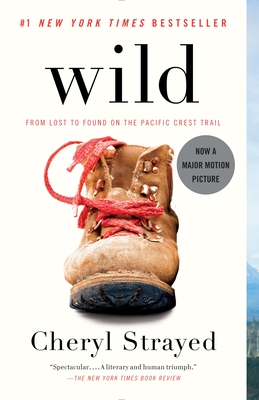
Around this time I came across a blog called I Hate Cheryl Strayed. Fans of Cheryl Strayed may want to steer clear, this woman's anger is for real. I read a few posts of her 39-part review of Wild. 39 parts!!!!! After that, she goes on to review the movie version, and then Cheryl's other book Tiny Beautiful Things. The blog is entertaining but I didn't really understand; if she hated the book so much, why waste so much time on it?
And I thought about the book I threw across the room. I wasn't writing a blog about it (though now I am), but I certainly spent a lot of time thinking and talking about it. And, after all, I did finish it. The writing is beautiful and the characters really did feel like friends. I wanted to feel something, and I certainly did. So, did I really hate it that much? Or perhaps the better question; did I really care that I hated it that much?

Whatever else this book was to me, it was an experience, and I'm glad I read it. And with a little time and perspective of what real book-hatred looks like, I can even say I liked it. I'm not saying there aren't books out there that I legitimately hate, I am not one to find value in a book simply because it's a book. And I'm not saying that the blogger above doesn't legitimately hate Wild. I'm only saying that I liked this particular book so much that it didn't matter that I hated it.

So the book I swore I would never recommend--I'm recommending it. I hesitate to reveal what book I'm talking about, worried that there may be inadvertent spoilers in this post. So, I'll leave it up to you. Click on through if you want to know.

Sunday, May 24, 2015

Book News and Other Miscellany

Volume 2, Issue 1
Bringing this back. Various links to cool videos, websites, articles, and blogs about books. Enjoy!
***
You may recall the "squee heard round the world". Here's the trailer that accompanies said squee.


Do. Not. Tell. Me. Anything. The first episode was last night and I haven't seen it yet.  
***
I was trying to find a literary holiday for you to celebrate this week, but I found something better instead. Melville House's commentary on literary holidays, Major Literary Holidays Other than Read an e Book Day. International Lie About Having Read Proust Day is my new favorite holiday. It's "actually everyday, though it's officially recognized on August 13." I'll be exchanging gifts if anyone wants to join me. It was a serious toss-up between that and January 13th, Give Up Trying to Read 2666 Day.


***
The Man Booker International Prize was announced last week. If you think that's the ordinary Man Booker Prize, you're wrong. Don't worry, we didn't know what it was either. Everyday's a school day! The Man Booker International Prize is awarded to ...
one writer for his or her achievement in fiction. Worth £60,000, the prize is awarded every two years to a living author who has published fiction either originally in English or whose work is generally available in translation in the English language. The winner is chosen solely at the discretion of the judging panel and there are no submissions from publishers.
Where the regular old Booker Prize is given to one book, yearly, the Man Booker International Prize is awarded for a body of work every two years. Kind of like the Olympics. Actually, not at all like the Olympics.

Your new Man Booker International Prize winner...

László Krasznahorkai!!!!

Some of his more recently translated work includes Santantango and Seiobo There Below.


***
And now, a brand new section of Book News:
Cool books I really want to read, but haven't had a chance to yet.
Admittedly, not really news, just my sneaky way of pointing out cool and worthwhile books you might be interestded in.

The Ice Palace by Tarjei Vesaas
A new edition of what is commonly seen as the legendary Norwegian writer's masterpiece, this story tells the tale of Siss and Unn, two friends who have only spent one evening in each other's company. But so profound is this evening between them that when Unn inexplicably disappears, Siss's world is shattered. Siss's struggle with her fidelity to the memory of her friend and Unn's fatal exploration of the strange, terrifyingly beautiful frozen waterfall that is the Ice Palace are described in prose of a lyrical economy that ranks among the most memorable achievements of modern literature.

***
And a book and a cat.

Thursday, May 21, 2015

Last Words

A few months ago, Oliver Sacks announced that he has terminal cancer. He wrote a beautiful piece in the New York Times, and if you haven't read it, I urge you to do so now. It's here. His keen observations fill dozens of books, and even now, as he comes face to face with the end, he offers the same effortless wisdom. While I am cheered by his thoughts on a life fully lived, it's impossible not to be saddened by the thought of a world without his particular mind.

And that got me thinking about letting go of and saying goodbye to other great and creative minds.  It seems Melville House has been thinking about it too with their lovely series called Last Interviews. Each book in the collection features interviews spanning the career of various brilliant artists and writers, including the very last interview. The series currently includes Lou Reed, Hannah Arendt, David Foster Wallace, James Baldwin, and many others. These beautiful books offer insight and wisdom and the heady feeling of knowing you're reading some of the very last provocative thoughts of some of our greatest thinkers.


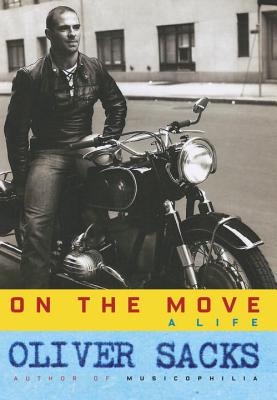
Speaking of great thinkers and Oliver Sacks, the man himself just published his autobiography last month. Check it out for more brilliant thoughts. And yes, that IS him on the cover. Super Hot Author Alert!

On the Move: A Life by Oliver Sacks

When Oliver Sacks was twelve years old, a perceptive schoolmaster wrote in his report: Sacks will go far, if he does not go too far. It is now abundantly clear that Sacks has never stopped going. From its opening pages on his youthful obsession with motorcycles and speed, On the Move is infused with his restless energy. As he recounts his experiences as a young neurologist in the early 1960s, first in California, where he struggled with drug addiction, and then in New York, where he discovered a long-forgotten illness in the back wards of a chronic hospital, we see how his engagement with patients comes to define his life. 

With unbridled honesty and humor, Sacks shows us that the same energy that drives his physical passions weight lifting and swimming also drives his cerebral passions. He writes about his love affairs, both romantic and intellectual; his guilt over leaving his family to come to America; his bond with his schizophrenic brother; and the writers and scientists Thom Gunn, A. R. Luria, W. H. Auden, Gerald M. Edelman, Francis Crick who influenced him. On the Move is the story of a brilliantly unconventional physician and writer and of the man who has illuminated the many ways that the brain makes us human.

Wednesday, May 13, 2015

Read This Book

Wow, this space has been a little silent lately.  *crickets*  I will blame the fact that I've been spending all of my time reading. And not just ordinary reading. I'm talking serious, off the charts, far afield, way out of my comfort zone reading. And all that experimental reading gives me the confidence to recommend this truly fascinating book! So here we go...

Erin says, "Read this book."

Thrown by Kerry Howley

Never.

I never, ever thought I would care about Mixed Martial Arts, (cage fighting if you need a visual) let alone read an entire book about it. It's violent, and dangerous, and just so stupid. But then I found this book; a world-expanding and wonderfully weird read about philosophy and obsession, failure and hope, and yes--cage fighting.

While bored out of her mind at a writing conference Kerry Howley decides to follow a group of men who lead her to a makeshift fighting octagon at the very same conference hotel. It is here she witnesses her first MMA fight and undergoes a transcendent experience that she doesn't fully understand, but longs to replicate. That night she meets one to the two fighters she will follow over the course of the next three years. Inserting herself into their lives as a "space taker," Howley chases that unexplained, otherworldly feeling while her fighters chase dreams of glory, fame, and brotherhood.

This book is wild. I learned more about MMA and phenomenology than I ever thought I wanted to (not that I actually ever thought about those things or knew what they were until now). It's absurd, and smart, and sad. In a word--captivating. Read it.