Welcome to the official blog of Third Place Books

Thursday, October 28, 2010

Last Minute Costume Ideas (or five reasons to justify buying this awesome tutu!)

Who doesn't love a good tutu? Sarah, who can usually be found in our Kid's department, has combined two of her favorite things, kids' books and tutus, to bring you five (easy) last minute costume ideas!

1) LADYBUG GIRL = red tutu + red shirt painted with black dots + attach pip cleaners to a headband for antennae  (Bonus: does your LadyBug Girl have a little brother? Try Bumblebee Boy = black pants + yellow and black striped shirt)

2) PINKALICIOUS = pink tutu + pink shirt + pink tights + pink shoes + pigtails & a tiara

3)FANCY NANCY = any color tutu + lots of accessories! (bows, jewelry, glitter!)

4) LITTLE MERMAID = green tutu + bathing suit (try a long sleeve shirt under your swim suit if its cold)

5)ANGELINA BALLERINA = any color tutu + paint mouse nose & whiskers on (an eyeliner pencil works great) + optional: ears and tail

Already have a costume? The greatest thing about a tutu is they are fun for the whole year!  So stop by our kids' department today and grab yours before they're gone! (And maybe stay a little while to read a book or two. Sarah highly recommends the new Fancy Nancy, Fancy Nancy and the Fabulous Fashion Boutique, and Mo Willems' Knuffle Bunny Free.)

Friday, October 22, 2010

Publishing Through Print on Demand

This weekend marks the first public event in what we hope will be the beginning of an exciting and fun partnership. Publication Studio, a small innovative press in Portland, OR, is allowing us to "co-publish" an edition of their latest book, A River Story  by American Book Award winning author Anna Odessa Linzer. Publication Studio and Third Place Press are excited to partner on this real-time publication project that models the use of non-exclusive rights and multi-publisher collaborations.


The Book : A River Story  is a novel about Fish Town, a self-invented community that took root along the banks of a river much like the Skagit, near La Conner, Washington, in the 1960s. Poet Mike Dillon calls it a "subtle, knowing" book that "nails the hubris, hypocrisy, and genuine hopes of the 60s and 70s all too believably."


 The Philosophy : Publication Studio is a press that is carving out new ways for books to be circulated, author's to be paid and the book industry to think about the "life" of the book. Here is part of their mission statement

Publication Studio is an experiment in sustainable publication. We print and bind books on demand, creating original work with artists and writers we admire, books that both respond to the conversation of the moment and can endure. We attend to the social life of the book, cultivating a public that cares and is engaged. Publication Studio is a laboratory for publication in its fullest sense — not just the production of books, but the production of a public. This public, which is more than a market, is created through deliberate acts: the circulation of texts; discussions and gatherings in physical space; and the maintenance of a digital commons. Together these construct a space of conversation, a public space, which beckons a public into being. - read more


The Edition(s) : Third Place Press is creating 2 editions of A River Story through its print on demand Espresso Book Machine (Ginger). Each with original art by two local artists, Charles Krafft and Eli Hansen.

The Event : Sunday 10/24 5:30pm  - Matthew Stadler founder of Publication Studio, Robert Sindelar Managing Partner of Third Place Books and Vladimir Verano of Third Place Press will all be present along with the author and artists to celebrate this book launch and new partnership. Those interested the book machine are reminded that they can arrive as early as 4:30 pm, when they can order a copy of A River Story and actually watch their book as it is produced by Ginger.


Monday, October 18, 2010

Gift-a-palooza

Here at Third Place we are very lucky to have the lovely and talented Wendy Manning as our Gift Buyer (and assistant manager, author event coordinator, music coordinator, marketing manager, and resident fashionista) because our Sidelines section is often praised by customers.  Whether you're just looking for a birthday card to send to Aunt Mary-Jo or you're on the hunt for the perfect wedding shower gift, our sidelines section has something for everyone.

If you're looking for something a bit more..."off the beaten path" shall we say, than a leather-bound journal or a booklight, we've got you covered there too.  In fact, you might say that we specialize a bit in the wackier side of the gift realm.


In this picture we have a set of miniature chattering teeth, ninja nesting dolls, a pink glitter-covered skull (To be or not to be fabulous?!), a squeezably soft Salmonella, curry flavoured mints, and the oh-so-classy Farts in a can.

So while books may be the name of the game here at Third Place don't forget about our fantastic gift selection!

Saturday, October 9, 2010

Sloane Crosley Interview, part deux

VV: Take a Stab At It is a good example of what I kind of see as a bit of hyper-realism that approaches fiction. It was a very interesting surprise that happens in the middle of that essay suddenly I found myself in the middle of a ghost story and I didn’t expect it. Your essays made me think of – I had to look it up because I’d forgotten what the term was but now they call it New Journalism, Creative Nonfiction, authors like Didion and Wolfe and Truman Capote – were they a big influence on you?

SC: They definitely are. Oh my gosh! They’re so big that that I wouldn’t even name them as influences because I feel almost uncomfortable at all being mentioned in the same breath. It’s not like I was writing and I thought, “Well, God, you know, geez, what did Truman Capote do? Let me look.” And think that I could possibly even pretend to imitate. But I think there’s some sort of subconscious way that they’re influencing me while I write. I try not to read – I read those people or reread works of theirs that I love, you know, God, I mean, Truman Capote, Other Voices, Other Rooms, and Goodbyes and all that and the Didion and stuff like that. But you go back and visit something like Slouching Towards Bethlehem, but afterwards. While you’re writing it, I think it’s important to read the phone book, or the back of cereal boxes—or a big giant novel, or anything, anything else. But yeah, that particular essay, it’s funny, because people have all these tiny little things that seem embarrassing that really aren’t risking that much. And you know? That’s the gamble of the last essay, that’s risking a lot. And that essay you just referenced, Take A Stab At It, is risking a lot because it’s much more risky to say, “I full-on believe I saw a ghost when I was nine and here’s the story,” versus, you know, “Oh, I got caught picking my wedgie in the street.” Wooooooo! It’s not – it’s so funny that the things people think are everyday embarrassments, I don’t feel remotely shy about sharing.

VV: Ah, yes. An Abbreviated Catalog of Tongues. It’s a great title and also the experience of raising countless amounts of animals is really spot on because that’s what happened with me and my family. My mother and my older brother were always having this just obsessive need to have pets around. You know, they did have a lot of pets in the family –

SC: [Laughs.] Oh, they’re family. Don’t confuse, yeah – if you have a loyalist in your household, do not make the mistake of calling them ‘pets’ – they’re brothers and sisters. [Laughs.]

VV: And it was really funny, because, you know, you’d think you’d go through as traumatic an experience as the loss of an animal and then, nope, a few weeks later or a few months later, there’d be a new animal.
Do you own a pet now?

SC: I’m so happy you asked, because I’m proud to be a crazy cat lady. Although I think you’re not a crazy cat lady if you have one. And I do have one, and her name is Mabel. And she was adopted from a family. She was abandoned in an apartment complex in North Carolina and my friend who went to West Point and was stationed at Fort Bragg and was renting out somehow an apartment in this complex and found Mabel as a kitten. She was given birth to by this cat who had been abandoned, I’m sure – and this is not a very interesting story – but the one funny part is that I ended up adopting her and she – you know, if you’re going to get a cat and adopt it, you should have it litter trained by someone who went to West Point.  Because the cat has never done anything wrong. She’s like the most perfectly affectionate, lovely animal, who’s never pissed or shat anywhere otherwise than where she’s meant to. So – it’s not my fault she’s so cute. She was born that way. So that is my story, to answer your question, “Do I have an animal?”

VV: Well, I was wondering if you had been burned out by the whole experience of growing up with animals.

SC: I had a long, long time in which I had no pets, and perfectly happily, so, I mean, obviously through college, and about the first four or five years in New York, and you know, and then I had no intention of getting one, actually, and then she came my way.

VV: Well, okay. So a couple of very brief questions, and I know you hate being put on the spot about this sort of stuff.

SC: I do? I do hate that? Have I gone the record saying that I hate –

VV: Phobias.

SC: Phobias. Oh yes do I ever. I hate knives. And little kids with sticky lollipops who are unmanned – just running around with sticky things, and I don’t know where their parents are. And then my biggest phobia by far is, I don’t like speed. Roller coasters. Planes taking off. Motorboats, that’s a big one. Just speed. Anything that moves super-duper-duper fast.  I really, really, really hate it. That is my biggest fear. So…

VV: Huh. So no dream of being an astronaut?

SC: No.

VV: [Laughs.]

SC: I hate planes; it’s funny. I have a pretty terrible fear of flying and turbulence and things of that nature because of that. It’s very specific –I have no claustrophobia, I’m not afraid the plane’s going to crash, I’m fine with being in that space for a while. None of that’s a problem. So it’s funny when you’re flying and you explain what it is to people and they’ll inevitably – even if you explain it’s takeoff – they say, “Oh, but it’s a short flight!” Well, do you have to leave the ground because of it? So I guess a speedy chamber with lollipops everywhere and knives sticking out would be my worst nightmare.

VV: Wow. That would be one interesting astronaut training program.

SC: Yes.

VV: So several of your essays involve traveling to places like Alaska and Portugal and so on. Any places you’re still craving to visit?

SC: Oh, my gosh. Yes, tons.
The truth is, if anyone expects this to be a travel book, they’re going to discover that I’m quite poorly traveled. I mean, I would love to go to Japan, Thailand, Africa especially, India.  I would love to go to Brazil. Yeah, places like that. So the list is endless. Unlike the fears, which are finite, the list of places I want to travel is pretty huge.
I can’t read a travel article without thinking, like, “Okay….now how am I going to do this?”

VV: How involved are you with the Internet?

SC: I am poorly involved with the Internet. I do have a Twitter feed and I do have a Facebook account. I try and keep them up, and I think certain writers, Colson Whitehead is a good example, we were just talking about him earlier, and he has taken to it like a fish to water. And certain writers have the humor of the pithy remark. And some just don’t care for the format of it. I do like it but I don’t do it nearly enough. But I also don’t have the Internet at home.

VV: [Laughs.] Really?

SC: Total Luddite. Yeah, I don’t have it at home. I mean, I have a day job where I have it all day long. I’m constantly exposed to media, all sorts of magazines, books, whatever. I’m constantly online, you know, refreshing various web pages. I have a BlackBerry for emergency emails, and I just don’t have it at home.
It’s rarely, rarely a problem.

VV: The reason why I was asking is that it crops up with certain writers about how distracting the Internet is.

SC: Yes. I’m not really distracted by it.

VV: The other part of that question was, “Do you Google yourself?”

SC: Oh, yeah. Sure. I’ll self-Google. But not a lot.

VV: Is it surprising what you come across sometimes?

SC: Mmm – nah. I don’t think I’ve ever been just shocked or anything like that. I’m not surprised by reviews. I think sometimes people’s personal blogs can be surprising because I think, even if it’s negative, a weird part of me is flattered because I rarely have the urge to share my opinion with everyone constantly. And that can be good or bad. I’m certainly grateful for the people that have enjoyed my stuff and they do share it with their friends. I mean, word of mouth and buzz is really I think how a book like this exists. And sometimes it can be intense – really, really fun. I mean, critiques like, “Why are you not writing for somewhere else?” And sometimes the negative ones can be fun too. But I’ve just never had  the urge to directly interact with the person who either provided the entertainment or the horror.  I‘ve enjoyed something, or been appalled by it, and I’ve taken it into my own life and told people about it.

VV: How does it feel being in the publishing industry now you’re actually kind of the product rather than the promoter or the publisher? How does that inform your overall understanding publishing now?

SC: Well, think there was something I had lost a little bit when my first job was for a literary agent where you’re taught,  the author is right’ and you’re ‘protecting the author against the big bad publishing house,’ and then pretty quickly I ended up working for a big publishing house, and then another big publishing house, and I’ve been there for about nine years. And I think that you now realize, you see things a little more balanced. I think I’d gone too far the other direction of thinking that people’s expectations were too high, or not worrying enough about different authors’ feelings, and I now see what it’s really like to be on the road and it’s rough. But on the other side is, not that rough. You know, I’m sorry you have to wake up at 6:00 AM so that you can then go to a bookstore where people will listen to what you wrote, because someone’s bound it. Like, that’s a pretty sweet experience. So unless you’re AS Byatt, you’re Philip Roth, you’re Toni Morrison – who should never be woken up at 6:00 AM for a flight, you know – aside from that? Suck it up. That’s my conclusion.

Friday, October 8, 2010

Sloane Crosley Interview

Sloane Crosley stopped by Third Place Books recently to sign some copies of her newest collection of essays, “How Did You Get This Number?” While she was here Vladimir, who runs Third Place Press and operates ‘Ginger’, our Espresso Book Machine, had the opportunity to ask Sloane a few questions:

(Vladimir is introduced to Sloane Crosley. A brief moment of awkwardness while they discuss accents, podcasts, the Espresso Book Machine in the room, being a fan, and finally Vladimir figures out that his tape recorder is actually working)

VV: When you first started writing, was the essay form your aim, or just something that kind of happened to come up?

SC: I think the concept of making people laugh is certainly an aim. It’s not always the aim, but when I first started writing I thought I was going to write fiction – and I still might write fiction but the essay form for now, at least, is what’s coming more naturally to me.
Writing is a strange thing. I mean, you’re a volunteer. No-one needs you, so the question is sort of, “Why write?” Because you try to respect yourself and you try and get close to whatever it is you feel you have to say or whatever it is, the combination of what you feel you have to say and what you feel other people have to hear. It’s important to have the balance between that. I start writing essays, I generally know about 80% of what’s going to go in there. And then I generally end up learning, through a boomerang effect about 20%, something I didn’t know before I started writing about how I feel about an experience or really about what something means. And that’s what I do like about the essay format, and when you get that with fiction.

VV: How does the humor always slip in?

SC: Hopefully naturally and hopefully amusingly. I don’t really know. I think humor is a very difficult thing to talk about because the second you try and address why something is funny, how it’s funny, – when do you pull back,?when do you insert something? – . It kills it a little bit. Yyou do have a natural instinct when you’re editing, thinking, “Well, this is going too far in one direction. You know, too slapsticky, or this is trying too hard, not trying hard enough.” You have a sense when you edit it, but when you first write it, I have no idea. It’s a funny thing that – I mean, I don’t know how one gets funny or how –

VV: You’d rather leave it a little mystical?

SC: I would actually rather do the opposite. I’d rather know exactly how it works, because then I could harness it a hell of a lot better and make all these essays perfectly funny.

VV: Do you think the label of a “humorist” can get in the way of a writer’s ability to grow?


SC: I think any kind of label does that, I mean, unless your label is, you know, “Pulitzer Prize winner.”
You could probably grow under that, with that kind of soil. But it does get in the way a little bit. You just want to make sure people know what they’re buying. It’s the same thing as if you label something “chick lit” and it’s not, or you label something as “Memoir” but this doesn’t really feel like a memoir to me. I mean, they’re essays. That’s something very different. I don’t think of myself as telling my life story, you know. If people are disappointed because they don’t like your book, or they think they wanted it to be better, or they don’t think it’s “whatever” enough, that’s fine. That’s totally their right, but it’s dangerous if they think, “Oh, this is going to be just like this other writer,” and then it ends up being maybe a little sadder, maybe a little darker than they thought it was going to be. You just want to make sure that everyone knows what they’re getting into.

VV: So, it must be risky to lay your life out so honestly. What kinds of reactions are you getting from friends and family?

SC: Mostly good. While this sort of a slightly darker, more melancholy book [Than the first collection, “I Was Told There Would Be Cake’], it is nicer in a way. I think [the people I’ve written about] could take it in a lot of ways and there are a couple tributes to certain friendships and obviously those people aren’t going to complain. Most of them sort of aim the ridicule at me, and sometimes they turn the shield outwardly [toward] people that I’m not really talking to so I don’t know what they think. But they know that they’re buried, any identifying characteristics or salient details are completely glossed over. They’re not their real names or where they work and they’re also essays, so therefore they’re not, you know, permeating the entire collection, so at a certain point the responsibility comes off me and is back on to them. If they want to tell everybody that they’re outraged that I said that I had a roommate I didn’t get along with—I’m not telling anyone who it is.
It is kind of a funny line to walk, though. At what point does the responsibility no longer become you. It’s the same thing with reading in general. At what point have you lost control of what you’ve written and the fact that it’s now public domain?

VV: True. When people sit around and discuss your book and it turns out they’ve pulled things out that were never there?

SC: Mmm. That’s amazing. I mean, that’s actually something everyone learns in fifth grade when you start reading the sonnets or whatever, and you start: “ the host of golden daffodils” and what this means and you think, “I had that, Marshall McLuhan moment from Annie Hall when Woody Allen is, you know, on a line and someone’s debating about the director’s work and what it means. And all of a sudden the director appears and says, “Actually, no, that’s not at all what I meant. You’re totally wrong. You’re way off base.” You kind of wish for that.

VV: This is kind of a follow-up to what you just mentioned, but I did notice that your new book is – it’s more nuanced. It’s still very funny, but you’ve developed a deeper sympathy towards the world at large and how your personal experiences fit into it which I think enriches the whole experience of your essays. Was it harder to write this book because of that?

SC: It’s interesting. I mean I thought maybe people might read this one. [Laughs.] I didn’t write the other one thinking that anyone would, and I think that honestly maybe it boils down to something as simple as that. But beyond that, I wanted to challenge myself a little more. I wanted to write about things that were objectively unfunny. Being lost; Having a weird crisis about furniture; Having a violent experience with a bear; Being broken up with; almost moving into a crazy old brothel. You know, these are not always really funny. And I think the trick is to make them funny, and if you can do that—I don’t know if all of these pull it off or not—but when they do, I think that’s the writing I’m most proud of. And really the last essay, which is almost novella-like, was really hard to write —I’ve never really written about relationships because it’s not something I’m particularly interested in writing about. These aren’t very female-oriented essays except that one. That is the only one that kept me up at night.

VV: Well, speaking of that essay, that was probably the one that I connected with the most, and I think any writer’s hope is to be able to make that kind of connection with someone. You mentioned that was more of a female kind of perspective, but I think you really managed to walk that line. I have to say, vouching from a guy’s point of view, I think that the things you explore in that story are universal. I personally found it cathartic for personal reasons so I really appreciate it.


SC: Oh good! I mean, that’s the thing. It’s so hard, especially with narrative non-fiction – if something—not bad, even, but just off-kilter—something significant happens to you, the world is not your therapist. What are you working out on the page? And that line between essentially blogging and journaling and actually creating something that has structure, that has meaning, that is at least trying for something. I would never say that all of these succeed in that. But I know I can say with authority that they’re all at least trying to connect somehow.
I think the “only connect” thing – might be the answer to why I’m writing to begin with. [Laughs.]

VV: I get that. I think ego is kind of out of the equation when it comes to writing. At a certain point, everybody just wants to get in touch with the world at large sometimes.


SC: Yeah, it enters back in when you’re thinking, “Which one of these should be my author photo?” But you cannot possibly be in your head when you’re writing, if you want to write anything.

Stay tuned for Part 2 of the Sloane Crosley interview coming tomorrow!

Thursday, September 30, 2010

Knuffle Bunny Meets Cormac McCarthy

Three things that landed this week that everyone should know about.
 
Knuffle Bunny Free – One of the many joys of having young kids is having a chance to read Mo Willems books over and over again. The Knuffle Bunny books are huge in my house and this third and final installment in the trilogy may be the best yet. Its warm, funny and has a really positive message without being preachy. A number of staff members here got a bit misty eyed at the end.
Blood Meridian 25th Anniversary Edition – Hooray for the marketing and design department at the Modern Library for choosing to use the original artwork from the 1985 edition of the classic for this newly released anniversary edition. If you want an original hardcover first edition of this book, you can get one that has been stepped on and has spent time floating in someone’s bathtub for about $700. A clean copy will probably run you about $1,500. So this handsome new edition at $22.95 is a steal. Some argue that this is McCarthy’s best book. That’s kind of  like arguing about whether you like Van Gogh’s Starry Night over his Sunflowers. If you’ve only read McCarthy’s latest works, do yourself a favor and check out this masterpiece.
Paris Review Issue 194 – This is the first issue under the new editorial leadership of Lorin Stein and I find it to be a stand-alone case for not only literary journals but the value of print over electronic media. If I were to have received this issue electronically, I probably would have skipped quickly to the story by Sam Lipsyte (whose novel, The Ask, I loved) and possibly moved onto Lydia Davis’ translations of Flaubert’s stories. I would have stuck to what was familiar and then moved onto the thousand other things that are asking for my attention on my laptop and iphone. But sitting down with the journal without distraction, I found myself reading it cover to cover. I discovered a great new voice in fiction, remembered how much I like and am challenged by the poems of Frederick Seidel, and learned that I could be moved by an essay about, Andrew Lytle, someone I knew nothing about previously. If you haven’t checked it out yet, there’s a great review of this issue by Maud Newton and an offer on that site for a discounted subscription rate. Of course we have it on our shelves as well.

Posted by Robert

Monday, September 27, 2010

It's the Most Wonderful Time of the Year!

No, no.  Not Christmas.  Though that is pretty great from a retail point of view.  I'm talking about CALENDAR SEASON!  We've been busy little bees here at Third Place Books unpacking box after box full of 2011 calendars.  Wall calendars, desk calendars, page-a-day, mini locker calendars; our calendar racks are bursting at the seams and we're still unpacking more every day.

Some of our staff members have picked out their favourite calendars and we want to share them with you:

Emily is excited to welcome back the Edward Gorey mini-wall calendar.  Every year it's based on a different Gorey book, this year's installment is The Osbick Bird and quite sure, like its forebears, to sell out quickly.

Chris is channeling the Black Bear on the cover of this year's Beth Van Hoesen wall calendar featuring portraits of animals staring straight into your soul.  Who wouldn't want a chinchilla or a cougar boring holes into you while you get dinner ready for the family?

 Moleskine has long been known for their finely crafted and beautifully designed journals but several years ago they ventured into the world of engagement calendars and the results were electric.  Autumn's favourite calendar this year is Moleskine's "Colour a Month" daily diary/planner.  Each month is separated from the whole in its own jewel toned notebook perfect for slipping into a pocket or purse and jotting down thoughts, observations, poems, or song lyrics as they occur.  Seriously, Autumn's in love with this gorgeous little set.

 Hit any calendar stand and you're inundated with puppies, artists, half-naked firemen, and questionably talented teen hearthrobs (*coughjustinbeibercough*) which is why Robert's favourite 2011 calendar is so very refreshing.  Though it looks to me like he's a little concerned about the lack of kitties... 

Swing on by the bookstore any time to pick out your favourite calendar but keep in mind that a lot of the really cool calendars can sell out pretty quickly so time is of the essence!  If you have a special request for a calendar let us know, we might be able to order something in for you.  

As we march ever closer to the madness of the holiday shopping season the calendars keep appearing.  If anything else pops up that's just too awesome we'll be sure to let you know!

Monday, September 20, 2010

Dead Writers We Like: Part IV

Monica has been at Third Place Books just over a year, and her insatiable appetite for books have quickly made her a part of the fabric. Though she continues to read books hot off the presses, Monica has a tender spot for a childhood favorite, the creator of everyone's favorite orphaned red-head.

 
Lucy Maud Montgomery, 1874-1942
Photographed  circa 1900 in a truly awesome hat


Bookseller sans awesome hat dressed as Anne Shirley for Halloween 2009.

Q. Who was L.M. Montgomery?
Lucy Maud Montgomery was a Canadian author who,  like her most famous character, Anne Shirley, was raised by two strict older guardians in a small town on Prince Edward Island. And like her most autobiographical character, Emily Starr (Emily of New Moon), she lost her mother when she was very young but her father remained in her life until she was seven, at which point he moved to Saskatchewan and she was given over to the aforementioned grandparents. She grew up to work as a teacher and a journalist, always writing fiction in her spare time. After some romantic chaos, including several proposals and one broken engagement, she married a minister named Ewan Macdonald.

As with both of her well-known heroines, Montgomery was a lonely child and relied upon her imagination for her entertainment and happiness. As an adult, she said, "I cannot remember when I was not writing, or when I did not mean to be an author. To write has always been my central purpose toward which every effort and hope and ambition of my life has grouped itself." While her heroines grew up to happy womanhood, Montgomery continued to use her imagination and her writing as an escape throughout her life.  

Q. How did you first learn about L.M. Montgomery?
When I was eight, someone gave me a copy of Anne of Green Gables and I devoured the whole series, learning some words that were unusual for a third-grader, like "fortnight." I rediscovered the books in college when I needed some reading for a long train ride: I picked up a box set of the Anne series and read my way through three in a row before falling asleep.  

Q. What's your favorite work and why?
I like the Anne series best, although the Emily books are engaging in their own right. At the moment, I'll give the title of "favorite work" to Anne of the Island, which makes for some lovely college nostalgia and romantic drama.  

Q. Favorite quote?
I haven't been able to determine if it's authentic or apocryphal, but I do like "I am simply a 'book drunkard.' Books have the same irresistible temptation for me that liquor has for its devotee. I cannot withstand them." Montgomery and I are kindred spirits in that regard. 

Q. What's the most outrageous thing about the author?
After all those sweet and wholesome books about Anne and her family, Montgomery wrote a ninth book entitled The Blythes are Quoted. The book reportedly (it's available in Canada, but not yet released in the US) blends poetry attributed to Anne and her son, Walter; stories which take place in the family's hometown; and dialogues between Anne and her husband, Gilbert. In addition to this unusual blend of formats, the book also takes on topics such as adultery, illegitimacy, revenge, murder, and death - a significant departure from Montgomery's typical rose-tinted depictions of the Victorian and Edwardian eras. The book was published in part as The Road to Yesterday and has only recently been published in full.


Tuesday, September 7, 2010

Man-Booker Update


The 2010 Man-Booker Prize for Fiction announced the shortlist this morning. Thirteen British Commonwealth authors were whittled down to just six.  The finalists are:

Parrot and Olivier in America by Peter Carey 
Room by Emma Donoghue
In a Strange Room by Damon Galgut
The Finkler Question by Howard Jacobson
The Long Song by Andrea Levy
C  by Tom McCarthy


Tom McCarthy's C and Donoghue's Room just came out today. Come and check them out as they smolder on our new hardcover table! The prize will be announced Tuesday, October 12th so you still have a bit of time to read and cast your vote.


Saturday, September 4, 2010

Bookseller Hair Daze

Watch for flying pigs in the LFP! Brandon is clean shaven and Jessica has gone relatively au natural.
But for how long?


Friday, September 3, 2010

Dead Writers We Like : Part III

Chris - bookseller, used book buyer, and fiction maven - is this week's interviewee for Dead Writers We Like. An aficionado of short fiction, and with a special affection for the vibrant but dusty literature of Latin America, Chris has selected Adolfo Bioy Casares, the Argentinian novelist and short story writer, as an  author well-deserving homage.


The author
September 15, 1914 – March 8, 1999

Q. How did you first learn about the Casares?

Chris: I was first introduced to Casares by a coworker of mine at Third Place Books. He handed me The Invention of Morel, his best known work, and told me "You'd like this." It was one of many things he handed to me over the months I worked with him, but Casares' work, particularly that novel, has stuck with me the most. So, I guess you could say that my interest in Casares is relatively new, but the type of fiction he wrote, mainly fantastic or speculative fiction, was something I had been interested in for years. Plus, the edition he gave me was an NYRB (New York Review of Books), a series of reissued, long neglected "classics."

Q. What's your favorite work by Casares?

Chris: After reading most of his fiction I still find The Invention of Morel to be his finest work. I should mention that Casares was known for his relationship with Borges, a collaborative literary friendship that remained strong and vibrant for decades. Borges, who I was already familiar with, amazed me with his erudition, his intellectual puzzles and his ability to create a fictional universe so convincing that you had to do your research in order to realize his was making it all up (or most of it). However, his work often left you feeling a little cold, distant, somehow removed from real life. Casares on the other hand was a writer that took the fantastic, the playfulness, the idea-driven fiction of Borges and infused it with human emotion, with everyday situations, with LIFE. Morel is essentially science-fiction (it borrows heavily from H.G. Well's novel The Island of Doctor Moreau) in that it imagines a scenario quite unlikely to exist, yet convincing portrays a man dealing with very real problems. The novel is an exploration of madness and isolation, what it means to love and be loved, and what sacrifices one is willing to make in order to achieve fulfillment. The novel also inspired Alain Resnais's film Last Year at Marienbad which is considered by many (myself included) to be one of the great surreal films of all time.

Casares' other works, which include seven novel and hundreds of stories, are all highly compelling and employ a similar idea-based narrative rich with human complexities. His novel Asleep in the Sun portrays a man whose wife literally turns into a female dog, in Diary of the War of the Pig the senior citizens of Argentina are being systematically killed off by the youth, and in Dream of Heroes the protagonist must recreate the events of one fateful day that have become an obsession. Unfortunately, most of his work is out of print and hard to find. Let us all thank NYRB for reissuing Morel and Asleep in the Sun.

Q. Tell us something quirky about Casares...

Chris: It's hilarious to note that one of Borges and Casares's first collaborations was a pamphlet on the virtues of yogurt. Sound like something Pablo Neruda would have written an ode to (maybe he did?). Oh, and how cool is it that we share birthdays!

Q. And what's your favorite quote?

Chris: "But still I feel (perhaps I only half believe this) that if she looked at me for a moment, spoke to me only once, I would derive from those simple acts the sort of stimulus a man obtains from friends, from relatives, and, most of all, from the woman he loves." - A.B.C. from The Invention of Morel.

Friday, August 20, 2010

Dead Writers We Like: Part II

Our new blog feature continues with sewing sensation Jessica who easily chose a lifelong favorite: Roald Dahl. Though this British author is beloved world round by children for his many books starring odd children with fantastic destinies pitted against nasty grown-ups (and candy factories and bone-crushing giants), he has also written for the grown-ups themselves. In fact, though the writer's life is often one of solitude and contemplative effort, Dahl was not without an exciting (and surprising) past... 


(A picture of a young Roald Dahl in uniform with that Sean Connery look-alike, Ernest Hemingway.)

Q. When did you become aware of Dahl?

Jessica: Sometimes I think I was born loving Roald Dahl. I have no distinct recollection of “discovering” him. I do remember associating him very closely with his typical illustrator Quentin Blake and being really thrown off by the books that didn’t feature his unique, scribbly watercolors. It took my mom a while to convince me that Charlie and the Chocolate Factory came from the same author as my beloved BFG. But once I got a few pages in and found the now familiar recipe (2 parts whimsy + 1 part epic comeuppance,) it was clear that the magic was not in the images but in the words and thus an impermeable bond was forged.

Q. What is your favorite work by him?

Jessica: I think James and the Giant Peach may be my favorite children’s book by him when all is said and done. The unapologetic surrealism combined with the lure of exotic travel continues to appeal to me even as an adult. It undoubtedly formed the foundation for many of my adult tastes like Shirley Jackson and Haruki Murakami. Now that I’m grown, I find it interesting that he mainly wrote short stories for grown-ups and managed full length books for kids. It’s almost like he couldn’t be bothered to go on too long if you were going to insist on his making any sense at all. His adult work features delightfully unsettling stories, often highlighting how mankind makes a better monster than anything that one could make up. It’s a weird world out there and Mr. Dahl knew that well. My favorite of these is called Skin and relates the fate of a tattooed man whose tattoo artist is revered as a master artist after his death.

Q. What else?


Jessica: Though Roald Dahl is sadly gone, the reading pleasure to be derived from his life is far from over. His biography is a truly extraordinary tale filled with terrible tragedy, great love and intrigue. September 14th will see the release of Storyteller: The Authorized Biography of Roald Dahl by Donald Sturrock. Highlights include his rocky but glamorous marriage to actress Patricia Neal, the medical tragedies and accidents that befell their family, his success as a flying ace in WW2 and, of course, his time working for British Intelligence with fellow spy and writer Ian Fleming. That’s right, I said HE WAS A SPY! A SPY! If that isn’t one of the most phenomenally stupifying thing to find out about your childhood hero, I don’t know what is. For those who can’t wait for Storyteller, The Irregulars by Jennet Connant, elaborates on his adventures in deception on our unsuspecting shores. If you’re ready to introduce your tot to Roald Dahl, or if you're ready to revisit him yourself, there’s no better time. September 13th is Roald Dahl Day! He would have been 94.

Q. Favorite quote?

Jessica: “A person is a fool to become a writer. His only compensation is absolute freedom. He has no master except his own soul, and that, I am sure, is why he does it."

Friday, August 13, 2010

INDESTRUCTIBLE!


More video high jinks, capers, and antics! Thanks to Erica, Eric, Rene, Greg, Jason, Erin, and our star, and book devourer...Emily!!!

Cookbook Review


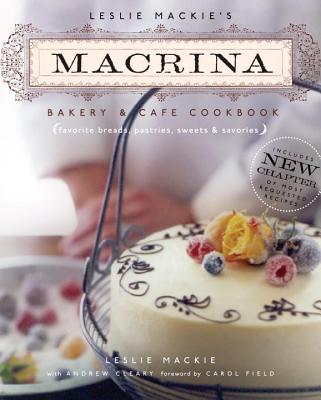
Yes, we have an in house bakery, and yes, it's very yummy.  But sometimes nothing beats the free food brought in by co-workers, especially when it's delicious.  Last week Emily brought us cherry almond scones baked from the Macrina Bakery & Cafe Cookbook... they didn't last long.


I admit it. I make excuses to go to past Macrina Bakery. They make yummy potato bread, and the cherry almond scones are to die for. Even better, the recipes for these coveted goodies are included in Leslie Mackie's Macrina Bakery & Cafe Cookbook. I tried my hand at the scones and brought some in to the bookstore to share. They were hastily devoured. By the time I thought about taking a picture, only crumbs remained.      -Emily


Tuesday, August 10, 2010

New Steampunk Hot Off the Press!

Fresh from that steamy, punky, future-past world, it's Cherie Priest's latest!  We've just received a small shipment of the new short novel of the Clockwork Century, Clementine.  Although it takes place in the same world as her tremendously popular, Nebula and Hugo Award nominee, Locus Award-winning, Boneshaker; it's not exactly a sequel.  Clementine is more of a tangential stand-alone story featuring Boneshaker alum and supporting cast member, Croggon Hainey.  Stolen airships and their pirate captains become entangled in the top-secret mission of a former confederate spy.  Gasp!  Whether you're looking for some summer fun or need something to satisfy your steampunk fix until the release of Priest's next novel, Dreadnought (September), this is the book for you.  And for you collectors, this is a relatively small print run from Subterranean Press.  Once they're gone, they're gone.
Here's Steve, enjoying a sneak peek...with the proper eye wear of course!

Friday, August 6, 2010

Dead Writers We Like: Part I

We've decided to start a new feature on this blog called Dead Writers We Like, in which Third Place booksellers can highlight favorite (dead) writers who we believe merit attention - whether because they've faded from the public eye or just deserve more fans!

Our guinea pig is Eric McDaniel, night manager at Third Place Books, who chose none other than his namesake Eric Arthur Blair. (You might know him as George Orwell.)

                                                             George Orwell 1903-1950

Q. How did you first  learn about George Orwell?

Eric. I'm not sure when I first became aware of George Orwell. I know that my Grandmother read to me from Animal Farm when I was still too young to understand it's political message, but enjoyed the idea of talking animals. Perhaps it was Apple's famous Macintosh launching Superbowl commercial which first brought 1984 to my attention. I didn't read this famous dystopian novel until my early teens. But it was neither of these iconic works that cemented my love of Orwell.

Q. What did it?

Eric. His early autobiographical work, Down and Out in Paris and London, gave him a permanent place on my bookshelf. It first came to my attention when I was staying just around the corner from the rooms Orwell kept in Paris. A fellow traveler, who was reading Down and Out at the time, pointed out the address as we walked by and I had to admit that I hadn't even heard of the book. Having now read and re-read this chronicle of scraping by in two of the world's greatest cities, I think that it's an essential read for any lover of travel.


Q. Favorite Quote?

Eric. "Men can only be happy when they do not assume that the object of life is happiness."

Thursday, August 5, 2010

Staff Picks

Some recent staff reviews:

Emily:
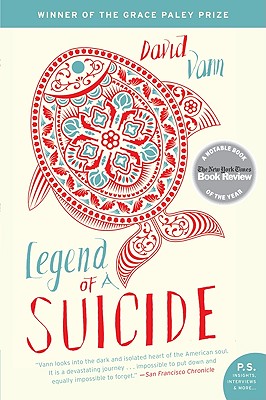
Legend of a Suicide: Stories, by David Vann
The humor in the first few stories caught me off guard. The bulk of these stories evoke the Alaskan landscape, both physical and emotional. The survivalist, the disgruntled, the independent, and the unorthodox all surface in this beautiful collection.


Robert:
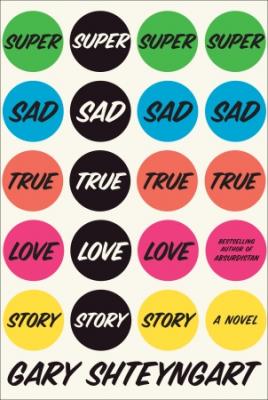
Super, Sad, True, Love Story, by Gary  Shteyngart
This hilariously satiric sneak peek into our country’s potentially not so distant future frightens as much as it amuses. Shteyngart’s brutal re-envisioning of our world where our fates lie in our credit scores, books are artifacts and youth and sex dominate every corner of society will keep you up at night, first laughing, then worrying about what you were laughing at.


 Chris:
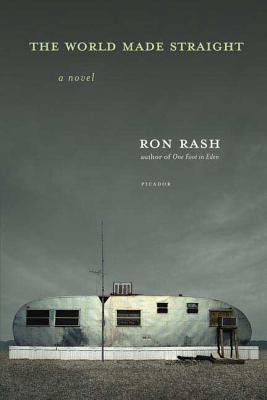
World Made Straight, by Ron Rash
A sparsely written coming of age tale set in North Carolina, where the past lingers amongst the inhabitants of the present. Rash's evocative landscapes and detailed description of wildlife bring the novel to life, using them both to reflect the inner turmoil of Travis, the young protagonist. It's one of those books that reminds us: the past doesn't go away, especially if you try to ignore it. In this case it's the Bloody Madison massacre during the Civil War. Look forward to reading more by Mr. Rash.

Sarah:
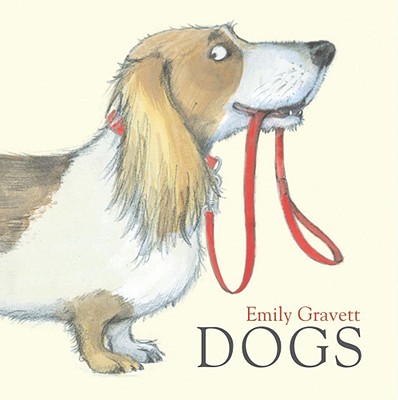
Dogs, by Emily Gravett
From one of my favorite illustrators, this book is sure to be a hit with any dog lover. I particularly love the ending when you realize the story is narrated by a cat. "But the dog that I love best? Let's see...is any dog that won't chase me!


Greg:
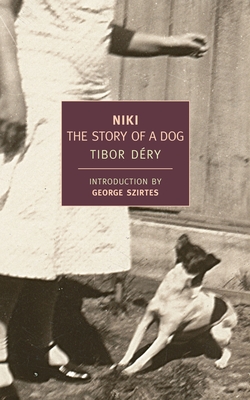
Niki: The Story of a Dog,by Tibor Dery & Edward Hyams
Wonderful story of a dog and the couple she adopts. Set in and around Budapest during the Rakosi regime, this short novel follows the antics of Niki, the falling out of favor of her engineer, and the sad fortunes of his wife in the aftermath of his "disappearance." The closely observed evolutions of character (human and canine), fine moral distinctions, and a full freight of history and its human toll made this an entirely satisfying read.

Erin:
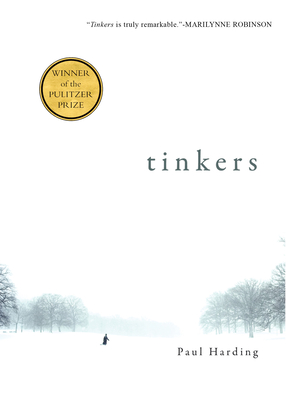
Tinkers, by Paul Harding

Anything I write about this book will undoubtedly diminish it. So I will just say that there is a passage, about 3/4 of the way through that makes this entire novel worth it -- no, that's not severe enough... this particular passage is the reason we learn to read.

Monday, August 2, 2010

Bookseller Twin Alert!

Kid's Booksellers Patti and Sarah in matching purple!  They sell kid's books and they dress alike!