Welcome to the official blog of Third Place Books

Sunday, April 24, 2016

Why Eh? : The Adventures of an Adult Reader

This is the first in a series featuring Courtney, a normally, Non-YA-Reading reader, reading YA. Got it?

***

I have always had a very intense (and completely rational) fear of borrowing books from friends. Not because my dog may likely chew on them like she once did to a very expensive textbook, or because I tend to walk like a baby deer and may trip at any given moment, and the loaned book may go flying into a conveniently placed sinkhole. No, the real source of my anxiety comes from the fear of hating the book they loved so much. I would never be able to look them in the eye. I would have to completely abandon my life and start anew in a different city with a fake ID and a new name. 

After enduring an incredibly passionate rant on Tamora Pierce’s books, from fellow bookseller, Lizzie, I was ordered to begin my education with The Song of the Lioness Series. She recomended these books with such a sense of awe and adoration, I began to sweat so much I became dehydrated. I have never found myself enjoying the fantasy genre so Lizzie's casual mention of sorcery and knighthood made me queasy, automatically assuming I would hate it.

But alas, like a majority of my fears it was for nothing. Thankfully I won’t have to retreat back to Alaska because I quickly fell in love with the character Alanna and the world Pierce created. Here is a book about a young girl who wants to be a knight, and instead of accepting the fact that its simply not allowed, she disguises herself as her brother in order to train. It’s a classic Shakespearean trope but unfortunately is still a relevant topic. Pierce ,though, never portrays her gender as a weakness or something incongruous with being a fighter and that is what makes all the difference. She trains among the boys, has all sorts of wild adventures, hangs out with princes and fights evil wizards and none of this is at odds with her perception of herself as a girl. Not only are these books overwhelmingly positive, but Alanna also has several romantic and sexual relationships, and the narrative contains no indication of slut- shaming or the hint that she should regret exploring her sexuality. Nor or any activities viewed as traditionally feminine are devalued either.

 It may also be important to note that this series came out in 1984 which is practically the stone age of YA. I could rant all day about the importance of characters like Alanna to young readers, and I wish this was a series I had been introduced to in the peak of my confusion and weirdness about being a girl. Especially when the only books at my library  had only male protagonists going on adventuress or were about traditionally feminine girls and their boy troubles. And for a young queer kid such as myself who has never been comfortable with the way femininity has often been shoved my way, it would have made a world of a difference if someone would have given me these books. Preferably a magical library troll or even a cool librarian who looks like Tina Fey and later becomes the Miss Honey to my Matilda. 

For now though, I have 24 more Tamora Pierce books to read and a Meg Cabot bookclub meeting to attend. So read these books, give them to everyone forever always as gifts, and bask in the amazingness that is Alanna.

-Courtney

(editor's note: I've used the old covers of these books because the current incarnation totally buys into gender norms and I think Alanna would disapprove.)

Wednesday, April 20, 2016

Eat Your Artichoke Heart Out

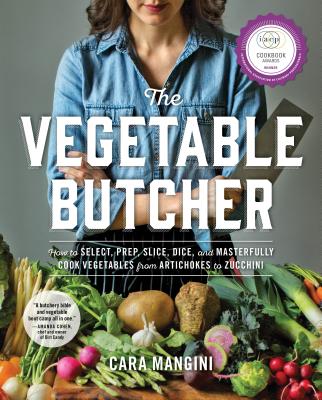
Back in January, our marvelous Workman Publishing sales representative asked if I'd be willing to participate in recipe testing for a forthcoming cookbook called The Vegetable Butcher: How to Select, Prep, Slice Dice, and Masterfully Cook Vegetables from Artichokes to Zucchini. When he said I'd receive some recipes and a box of artichokes, of course I agreed.

Fast forward to the end of March. I'm moving in 10 days, and my kitchen, usually replete with specialty gadgets, machines, spices, etc, is mostly packed up. Only the bare necessities – knives, cutting boards, a few pots and pans, salt and pepper – remain. And now, the long-ago promised box containing two pounds of baby artichokes appears on my desk.

I immediately went through a mental list of friends who might let me invade their kitchens for a evening,  but I was getting ahead of myself; I should at least look at the recipes before panicking.

Fortunately, the two baby artichoke recipes included in the excerpt appeared achievable in my minimized kitchen state. I chose to make the Baby Artichoke Torta, an egg-based baked dish with Parmesan, breadcrumbs, garlic, and onions. I hadn't prepared an artichoke in over 15 years (can you tell they're not my favorite?), so I followed the instructions for butchery and read the notes carefully. Too bad I wasn't so careful about reading the ingredients list before I started. I had to make a last-minute run to the grocery (thankfully across the street) for not one or two but FIVE ingredients. I think that's a personal record. Hey, I'm moving. I blame the stress.

I boiled the trimmed artichokes, then sauteed them with diced onion and minced garlic. Once the artichokes started to soften, I added a few spices and some freshly chopped parsley. Then I whisked 7 eggs and slowly added in the hot vegetable mixture. I added some breadcrumbs and Parmesan, tossed it all in an 8 x 8 baking pan (a glamorous disposable foil one that I'd found the week before in the recesses of a cabinet above the fridge), and baked it for 35 minutes.

As soon as it was in the oven, I bolted out the door to the bookstore to pick up the salvaged packing material I'd stashed earlier in the day, and I walked back in the door just as the timer sounded. Perfect! My apartment smelled of toasted breadcrumbs and parmesan with a veggie undertone.

I relaxed on the couch for ten minutes while dinner cooled, then cut squares of the torta and served it with a mixed green salad drizzled with olive oil and balsamic vinegar. The crumb topping was crispy, the filling flavorful, and the texture just right. Next time someone presents me with a pile of artichokes, I know just what I'll do.

-Emily

Thursday, March 31, 2016

Read This Book : Author Event Edition

Brian Castner, author of The Long Walk, will discuss his new, highly anticipated follow-up All the Ways We Kill and Die at our Lake Forest Park Store on Monday, April 4th at 7PM

In an extended profile about recent war literature, famed book critic of the New York Times, Michiko Kakutani wrote:
“War cracks people’s lives apart, unmasks the most extreme emotions, fuels the deepest existential questions. Even as the wars in Iraq and Afghanistan morph into shapeless struggles with no clear ends in sight, they have given birth to an extraordinary outpouring of writing that tries to make sense of it all: journalism that has unraveled the back story of how and why America went to war, and also a profusion of stories, novels, memoirs and poems that testify to the day-to-day realities and to the wars’ ever-unspooling human costs.”
Over the past few years many books by ex-military writers have been released to great acclaim. It has become difficult to pick which ones to read. As someone with no close personal ties to anyone in active service, I find the subject deeply fascinating for the very reasons Kakutani mentions.
Former Explosive Ordnance Disposal (EOD) officer Brian Caster is one of the writers featured in the New York Times article. Castner is the best-selling author of The Long Walk, and with his new book, All the Ways We Kill and Die, he solidifies his place as one of the best military authors writing today. 
Castner’s first book, The Long Walk, chronicles on his deeply personal account serving three tours of duty in the Middle East as commander of the EOD unit in Iraq. Rather than detailing the specifics of the various campaigns he led, the book focuses primarily on his postwar experience and the psychological struggle he faced returning from war.
His new book, All the Ways We Kill and Die, again draws the reader in by appealing to the pathos of war. In the opening pages we see Castner learn his close friend and EOD-brother has been killed in action in Afghanistan while Brian and his family sit by their Christmas tree at home in Buffalo, New York. The story launches into action from there as Castner, no stranger to such tragedies, becomes obsessed with the question, “Who is the man who killed my friend?”

In telling the story of his friend’s death, Castner profiles the struggling widow, two war amputees, female biometrics engineer, a bomb-maker, a contractor for hire, and, in one of the more fascinating and stunning sections of the book, a drone pilot. With these detailed accounts, the book pieces together the story of “The Engineer,” the man responsible for the bombs. Considerably more technical than his first book (a 7-page glossary in the book helps readers navigate Arabic, military jargon, and acronyms),  All the Ways We Kill and Die is a book that brings readers backstage, intimately unveiling modern warfare in a way that is completely fresh. Castner’s books are a must read for anyone wanting to know more about the real individual lives of the soldiers who fight the wars of today.

Join us at the Lake Forest Park store on Monday April 4 at 7pm to meet Brian Castner.
-Kalani

Sunday, March 27, 2016

I Think You Forgot Something : Barbara Gowdy

Erin and I recently found ourselves in a high-pitched conversation around our shared love of Canadian television and resultant frustration of its categorical dismissal in the American cultural colloquy, if it's considered at all. It was a conversation so animated it scared other booksellers into hiding, which is a shame because Canadian television is worth a little shouting and you guys missed some great recommendations.

Namely it was our shared love of Don McKellar that brought us to a tremulous fervor, most specifically my bark bark barking about his most recent series, Sensitive Skin. McKellar plays Al Jackson, a newspaper columnist who writes light, humorous cultural criticism and is invited to sit on a literary award's panel. In his typical fashion, Al overanalyzes his responsibilities and presents full-blown dissertations on each nominated book, only to be mortified upon realizing the other, more esteemed panel members dismiss each submission with a single repudiation of "garbage," "terrible," etc.

Adding to my already immeasurable delight that a sitcom would incorporate a literary award was the brief cameo of author Barbara Gowdy as a panel member. It was a two second appearance that sent me reeling into a two month rediscovery of a staggeringly talented and original writer.

Gowdy in Sensitive Skin

***

Enormously esteemed in Canada (and Germany, apparently?), Gowdy is widely read and critically hailed for her luxuriant prose that nestles against tales revolving around the darker human impulses. Our neighbors to the North celebrate her work as most American literary institutions praise Eggers, Egan, etc. So why, in almost twenty years as a bookseller, have I only encountered a total of four other readers who know who the hell she is? That boils down to one every five years and, especially after rereading the majority of her work for the blog, the obtuseness of her work and reputation became increasingly lamentable with each passing sentence.

Barbara Gowdy became known to American readers with her fifth book, The White Bone, which has remained a fairly popular book club selection since its release almost twenty years ago but it is her story collection, We So Seldom Look on Love, that is the most fitting entry point to what she does best. A collection full of tales that seamlessly shift between the lyrical and the macabre, it is also her most exaggerated; each narrative carrying the haunting, ominous air of an Ennio Morricone score. An uncompromising otherness inhabits each story, a situation or description that feels abrasive and utterly foreign, almost pornographically close, yet undeniably attractive.

There is something shocking in the sheer beauty with which Gowdy translates her supremely discomfiting material: the awkward, almost grotesquely detailed physicality of a truly unlikable behaviorally disabled foster child; a necrophile's desires stripped of their brutal implications by the author's intoxicating ability to seduce the reader; the humiliating rebellion of every young person's body is taken to a narrative nightmare alley of extremes by the presence of a pair of small, extremely delicate extra legs growing out of the young protagonist's torso in "Sylvie". What makes these stories, and all of Gowdy's work, so remarkable is her very singular ability to make us question and examine just how far it is a person has to travel before repugnance gives way to attraction. And, occasionally, how terrifyingly short that trip is.

***

In all of her work, the beautifully undulating atmosphere and refined tone is Gowdy's greatest strength and she is working at the height of her powers when she relaxes and focuses not on our physical oddities but our emotional deformities, The Romantic being the best example. Nominated for the Man Booker, it is a coming-of-age novel whose foundation is built on an ominous, broiling darkness brightened only by the protagonist's persistent grasp on pragmatism and emotional compartmentalization, the book finding its heartbeat in that juxtaposition.

Shortly after her mother abandons Louise and her father, Louise becomes infatuated with her new neighbors, the Richters. Her initial fascination belongs to Mrs. Richter; Louise's desire to fill the empty spaces left by her mother's disappearance convincing Louise that Mrs. Richter is her first true love. But it is Abel, the adopted and only child of the family, who will take hold of Louise's affections for more than a decade. As children, he inadvertently provides Louise with a much-needed lesson in developing her inner strength and certitude while much later acquainting Louise with the rapturous nature of passion and its much less friendly cousin obsession. The tone of their relationship and it's duality between light and dark is foretold exquisitely in an early chapter where, in the wooded outskirts of their suburb, Abel exposes one of nature's small fascinations in the eyes of a frog:
I am rudely startled. That something so glamorous could be contained in something so loathsome offends both my sense of fair play and my nervous grasp of cause and effect.
As in her more unconventional work, there is also a wonderfully unexpected sense of play at work in the novel's underpinnings. The character of Aunt Verna, the sister of Louise's father, who arrives to relieve some of the familial tension brought on by the mother's fleeing infuses the novel with a little humor, broadening its emotional scope. A loud, brash, intensely demonstrative woman, Verna is a former private investigator whose crowning achievement was solving a case for the actress Sophie Tucker, "whose kidnapped Siamese cat [she] single-handedly located, bound and gagged but alive, in a hotel laundry hamper."

While willing to shine some light here and there, for Gowdy it is the devil in the details that is most enticing. She seems to have an endless wealth of eloquent but gruesome vividity at her disposal. Most often, Gowdy's touch is a finer, sneakier thing. Hints of darker things to come, a nascent sense of dread, is illustrated in the every day: after Louise's mother intentionally fails to provide enough chairs for dinner guests and enjoys the ensuing awkwardness, it feels symbolic of the growing discord in the family, a warning shot. Other times the imagery is overt, like Louise's deflowering, a sensation "like a hundred tiny bones snapping" (those same broken bones are conjured again soon after in the depiction of the resultant fetus and its "bones brewing" inside her).

Abel continually exposes tiny freedoms and unexpected beauty to Louise, making it difficult for her and the reader to decide if it is Abel himself that is so addicting to her childhood self and shackles her to a lifetime of unflagging devotion, or if she is simply looking to sustain that adolescent sense of wonder.

But conscious or not, Louise's driving force is undeniably her faith in Abel, though he seems to desire nothing but absolute self-obliteration. They both romanticize the void, the vacuum created by the oneness of their impulses and insatiable appetites for their respective objects of desire. I found myself wholly immersed and devoted to both characters, oscillating wildly in my opinion of whose addiction is costlier and, as a result, struggled to recalibrate to my physical surrounding when setting the tale aside.

And therein lies Gowdy's magnificence - her characters, no matter how familiar or difficult to translate they may seem, are woven into the reader's everyday tapestry with the most exquisite subtlety. Such effortless grace and depth are a gift to any reader and to plate darker, subversive tales and sticky morality plays on fine bone china would expose most writers as barbarians. Gowdy, though? Her murkiness is dressed in a deceptive prettiness, a loveliness that draws the reader in only to leave them abandoned on the side of a dark, unfamiliar road with no idea how such a lovely Sunday drive could end so unpleasantly.

That ability to manipulate her audience, to infiltrate their subconscious and rewire their perceptions and expectations of how a plot should unfold or what a story's hero should be makes it easy to draw comparisons to Canada's most famous literary export, Margaret Atwood. But Gowdy is Atwood's cooler but possibly emotionally unstable step-sister: full of sharp edges, intimidatingly unpredictable, occasionally cagey in morality  but ultimately an elegant, beguiling mystery.

-Wes

Wednesday, March 23, 2016

What Are You Reading Now? Featuring Helen Simonson

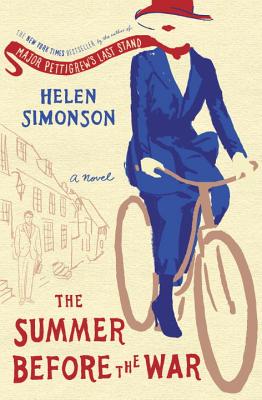
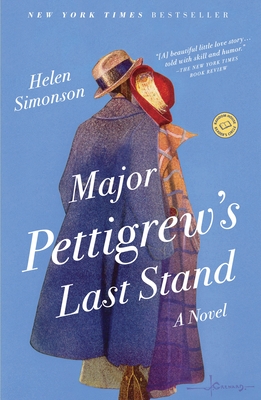
The release of Helen Simonson’s first novel since Major Pettigrew's Last Stand is perfectly timed. Just as America’s dramatic obsession with Britain’s World War I-era idiosyncrasies is left behind by the finale of Downton Abby, we get The Summer Before the War to put us right back in the English countryside. 

The Summer Before the War takes place, literally, the summer before World War I breaks out in 1914. But in Sussex, where the small towns and hamlets seem so removed from the violence of the Ottoman Empire, the most controversial thing to happen is the arrival of a young, attractive, female Latin teacher. 

Coming off the heels of Simonson’s first triumph with Major Pettigrew, as well as its reminiscence of Downton’s characters and imagery, Simonson’s new novel is already receiving high praise

In preparation for her appearance at our Lake Forest Park store on March 30th, we asked her what she’s been reading now that her novel’s hitting shelves. It’s a new series we’re going to feature on the blog and in our newsletter, but we thought Simonson would be the right author to start things off.       
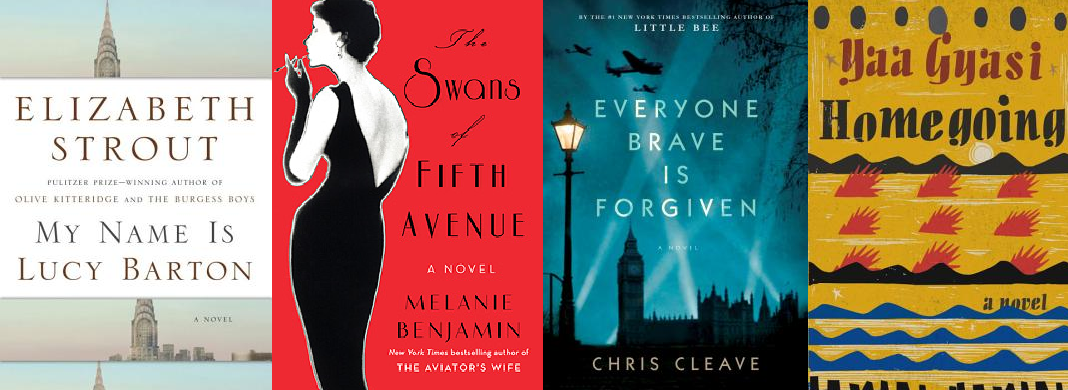
Maybe it's possible to find new pockets of time for reading?  I've just discovered that on a plane I can read a real book all through take off, landing and that endless waiting on runways for the ground crew to get back from lunch and open the gate. And what am I missing - mindless TV or the humiliation of snoring in the middle seat?  Among the high-flying books I've read?  Try The Swans of Fifth Avenue by Melanie Benjamin, a fascinating portrait of betrayal for Truman Capote fans. I've read and re-read My Name is Lucy Barton by Elizabeth Strout (just nominated for the Bailey's Prize) because it's a master class in creating a unique voice.  And I've been lucky enough to read advance copies of Everyone Brave is Forgiven, by Chris Cleave (coming May) and Homegoing by Yaa Gyasi (coming June).  The former is a gripping World War II story of love and duty set in London and the siege of Malta and the latter is a stunning debut exploring the history of slavery in Ghana and tracing many generations; including those who remained and those who were shipped as slaves to America.  With books as good as these, my new reading habit just might stick!

Please join us on Wednesday, March 30th at 7:00PM, for Helen Simonson in conversation with local fave, Jennie Shortridge.

Friday, March 11, 2016

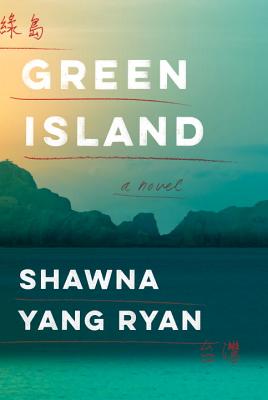
The Green Island: Author Event

Historical fiction has always been somewhat of a literary enigma for me. You can mention it in the same breath—for better or worse—as other genre fiction staples: mystery, thriller, romance, etc… But, at the same time, it often belongs on the same shelves as literary juggernauts.

Take Shawna Yang Ryan’s The Green Island: it is deeply influenced by Tai-Pei’s troubled history and begins amid a nationalist uprising in 1947. It is, by all accounts, at least part historical fiction as its plot and narrative are wrapped up in real world historical events. But, like all good genres, The Green Island transcends its own boundaries and slowly turns into literature with a capital ‘L’.

Shawn Yang Ryan is currently on a west coast tour for The Green Island and visited the Lake Forest Park store last month. Her audience spilled out of the den and into the regular stacks. But because the prose in her book is so lush and lyrical, the reading remained intimate as lookers-on continued to arrive.

It got me thinking: what is it about historical fiction that seems to capture audiences and readers differently than other genres of literary fiction? Because historical fiction is defined by its genre elements, it can be hard, sometimes, to take it seriously as literature. Literature, as opposed to thrillers or detective novels, is defined precisely by its lack of genre archetypes: it provides subtly complex characters in familiar, though inflated, situations. The questions literary novels ask evolve and expand throughout the reading. Meanwhile, genre novels deal with clear questions posed at the start: Who killed the guy? Will they fall in love? Is that a ghost?

Historical fiction, however, includes both structures. The Green Island begins by asking what will happen to Tai-Pei and then continues to explore how the events of 1947 effect us today? This is why Ryan’s audience was so large and so engrossed. As a society, we are still wondering what will happen as North Korea continues to flop rockets into the South China Sea and as the U.S. signs over our commitment in the Trans-Pacific Partnership. The questions posed in Ryan’s lyric narrative continue to echo.

What keeps us reading a mystery is the nagging need-to-know. But what keeps us turning the pages of The Green Island? We already know what happens, historically. Many people are, in fact, still living through it. But like all readers of literature, we want to know that our experiences are not an anomaly, rather shared and universal.

-Josh

Friday, February 19, 2016

Hey, I've Read That: we review books everyone else read (fifty) five years ago

Indie Next, that flyer we have at the front of the store, all about new books, has started what they are calling Revisit and Rediscover, which looks suspiciously like this very, (sometimes) recurring, blog feature. Regardless, I am happy to see Revisit and Rediscover. I'm a big backlist reader, and feel there is still much to celebrate in old books.

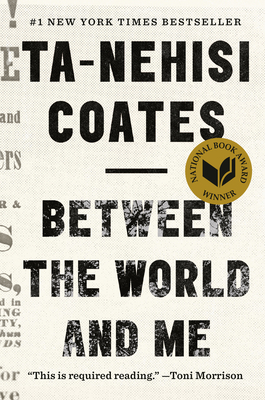
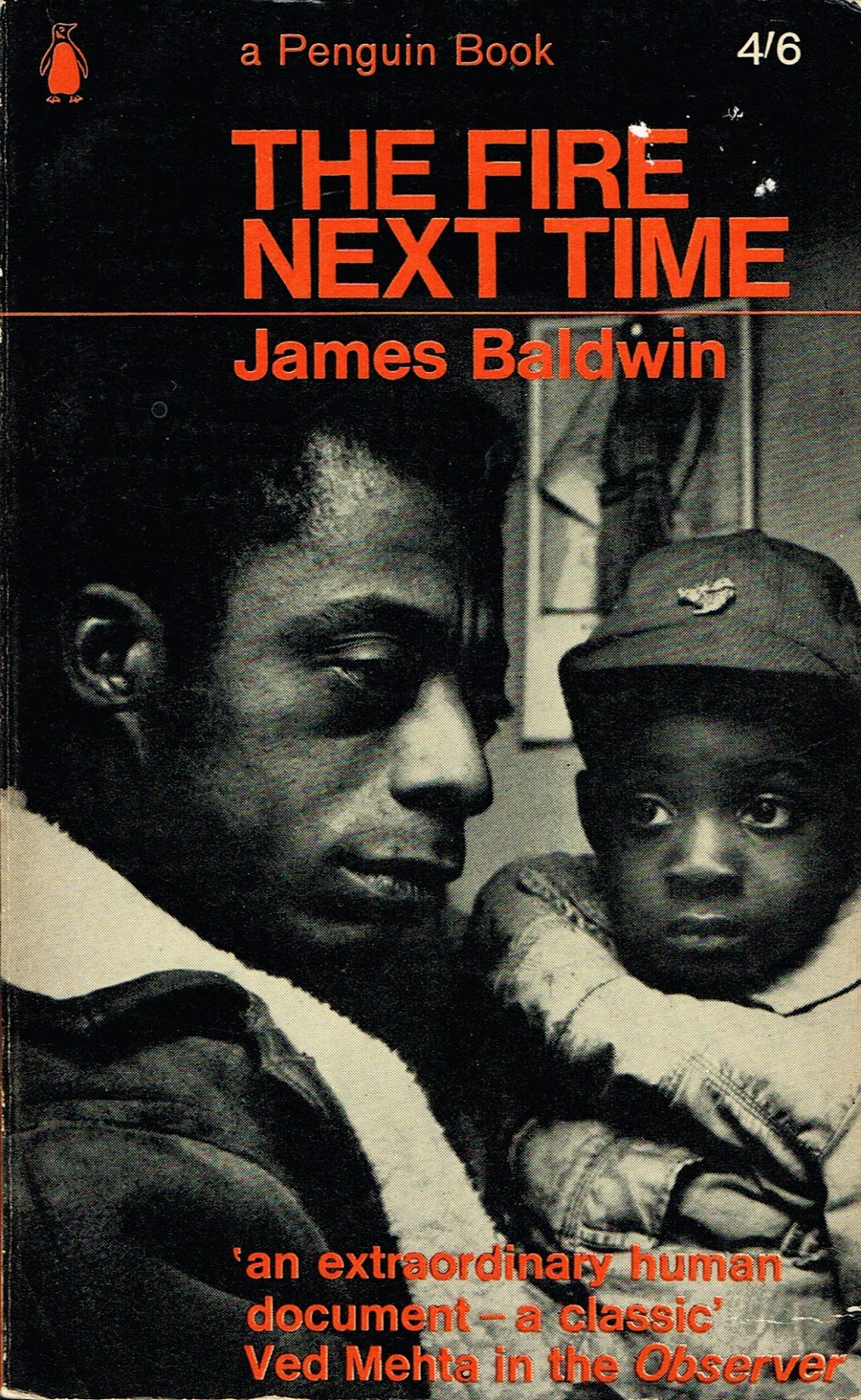
By weird coincidence, I recently read one of the February Revisit and Rediscover titles, The Fire Next Time by James Baldwin. Somehow I escaped this book in school. I've become increasingly concerned about the quality of my education considering the unforgivable number of classics my teachers didn't make me read. My dismal curriculum aside, I wanted to read The Fire Next Time after picking  up Ta-Nehisi Coates' Between the World and Me. There's a quote on the back from Toni Morrison. Among her praise of Coates. she says, "I've been wondering who might fill the intellectual void that plagued me after James Baldwin died." 

I decided to read The Fire Next Time first, given all the comparisons between it and Between the World and Me. And I have a strange affinity for James Baldwin. It's an admittedly recent love affair for me. I only read my first Baldwin a few years go, Giovanni's Room, which I could not get over. That book lead me on a rather intense foray into LGBTQ literature that has defined my reading for the last two years. I feel a sort of debt--an immense gratitude to Baldwin for this, and I was happy to increase the depth of my acquaintance with him.


The Fire Next Time is made up of two essays, the first being a letter to his nephew on the centennial of the signing of The Emancipation Proclamation, the other, an exploration of racism in Harlem, and the roles of Christianity and Islam in race relations. It is a slim volume, and so the amount of fury and anguish and fear and hurt and redemption and hope that tumble off its pages is surprising, as if from a much longer book.

Baldwin's descriptions of being stopped and frisked by police and left lying on a Harlem street as a teenager are eerily familiar. His agony over the unfairness of his nephew's place in life determined only by the color of his skin all too recognizable. "The limits of your ambition were, thus, to be set forever. You were born into a society which spelled out with brutal clarity, and in as many ways as possible, that you were a worthless human being."

For a country where one in three Black men can expect to be incarcerated, his words are sadly prophetic. And then the heartbreaking realization--those two letters were never meant to be a prophecy, that's just how little has changed since he wrote them in the early 1960's.  The overt racism of James Baldwin's United States has merely hidden itself behind our insidious institutional racism and the false promises of a "color blind" society, too proud of its ability to finally elect a Black man as president.

Beyond the sad timeliness of his subject, Baldwin's writing is hypnotic. "For here you were, Big James, named for me...here you were: to be loved. To be loved, baby, hard, at once, and forever, to strengthen you against the loveless world." The tone and cadence of his words seems to mimic the beat of his heart and with it, the obvious love he has for his nephew. The richness of his writing is matched only by the clarity of his thoughts:
Life is tragic simply because the earth turns and the sun inexorably rises and sets, and one day, for each of us, the sun will go down for the last, last time. Perhaps the whole root of our trouble, the human trouble, is that we will sacrifice all the beauty of our lives, will imprison ourselves in totems, taboos, crosses, blood sacrifices, steeples, mosques, races, armies, flags, nations, in the order to deny the fact of death, which is the only fact we have. It seems to me that one ought to rejoice in the fact of death--ought to decide, indeed, to earn one's death by confronting with passion the conundrum of life.
The Fire Next Time is a powerful and provoking manifesto, and a hopeful exploration of what we all must find within ourselves. It is indispensable--and a compelling companion for Between the World and Me. Read it. Read them both. Join the conversation.

-Erin

Sunday, February 14, 2016

Book News and Other Miscellany

Volume 3, Issue 1
Various links to cool videos, websites, articles, and news about books.

***
No. Way. A new Harry Potter book is coming! The book will be released on Sunday, July 31st (Harry's birthday, obvi). It will be the eighth book, and it's actually a "special rehearsal edition" script of a new play, based on an original story by J.K. Rowling. Sounds confusing, but who really cares? Harry Potter and the Cursed Child is about the harried(ha) life of an overworked Ministry of Magic employee, father of three little wizards, and former savior of the wizarding world. So you know, normal everyday stuff. I wonder if Harry and Ginny have a minivan.


***
And speaking of Harry Potter, here's the trailer to Fantastic Beasts and Where to Find Them In case you're like me and completly missed it.


***
We think our Instagram account is pretty spectacular. Find us @thirdplacebooks, if you aren't a current follower. But there are tons of other great book related Instagram accounts.

Bustle.com put together a list of 10 Accounts Every Book-Lover Should Be Following Right Now. It's a pretty good list. They seem to cover the gamut of what the book Instagram world consists of; that being, cats, coffee, young adult readers, and bookstores. 

***
Check out this Seattle Times feature on our 
new, soon to be open, Seward Park Store!
Managing Partner, Robert Sindelar, overseeing construction

 ***
Here's a random new staff pick from one of our lovely employees. Christina at Ravenna thinks you should read...

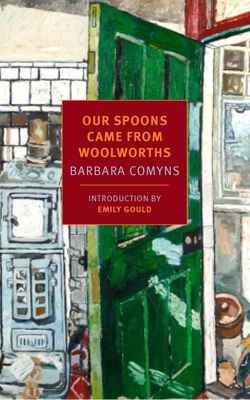
This beautiful book, the story of an impoverished, naive young artist in 1930s London, totally took me by surprise. At first the mishaps of newly-married Sophia and her husband Charles are funny and awkward--everything Sophia cooks tastes like soap; they paint all of their furniture sea-green; they live in terror of Charles' forbidding relatives; and they're always hard up for money. But through a masterful technique of Comyns, Sophia's wondering attitude slowly reveals as much about her (and her unconscious attempts to deflect the emotional impact of constant disappointments) as it does those around her, who benefit from exploiting her optimism and self-doubt. Some moments of the book approach psychological horror, and the happy ones (they exist!) come as a great relief. 

***
In honor of Valentine's Day, find out what literary couple you and your significant other are. Take the quiz here.

***
And ... a book and a cat.

Wednesday, February 3, 2016

A Graphic Enlightenment

Growing up my father kept a shelf of Calvin and Hobbes collections on a high bookshelf in the back corner of a room we never went into. To get to these books you had to climb onto the back of an old green leather chair, push past dusty office ping pong tournament trophies, avoid the mini darts sitting next to a dartboard, and grab whatever thin Watterson book you could before sliding down the back of the chair into a pile of afghans. 

This was my knowledge of graphica.

About a year ago, a good friend of mine suggested I read Watchmen, the classic Alan Moore superhero send up. Coming from a friend with Criterion Collection taste, I borrowed the graphic novel and skeptically sat down to read it. I scoffed at the idea of reading a comic. I was a novel reader. A poetry reader. I didn’t need pictures in my books like some child. 

Two days later I was done. 

The art enchanted me, the combination of graphics and narrative astounded and confused me; this was a completely new method of storytelling that blew the door wide open on the art of writing as far as I was concerned. 

And so with Calvin, Hobbes, and Alan Moore whispering in my head I venture into the confusing, and at times seemingly-impenetrable, world of graphic novels. I knew right from the start that the serialized superhero comic was not for me, despite my good friend Andy’s insistence at a deeper mythology. It's just not for me. But Andy is a persistent man.


He finally found something on his bookshelf that felt right; that combined my love of slapdash plot with pure insanity in the form of Manhattan Projects. Written by Jonathan Hickman and illustrated by Nick Pitarra, Manhattan Projects follows an alternative history starting at the end of World War II in which the end of the war and the development of the atomic bomb leads to, to put it simply, high concept sci-fi rigmarole. 

Without giving too much away, you have the main players in the real-life Manhattan Project: Oppenheimer, Feynman, Fermi, and Einstein, but they are all surreal versions of themselves. The opening of the book posits this question: What if Oppenheimer had an evil twin that destroyed the “real” Oppenheimer? And what if that twin had control of the atomic bomb? 

What I found so completely absorbing about MP was its total disregard for, yet amazing respect for, the truth. Hiding underneath the insanity, death, drug-use, and smashing of idols is a tightly written, historically-semi-accurate subplot. The events that unfurl throughout the first couple of books in the series read like a Lewis Carrol’s Wonderland version of United States history. 

I devoured these books. I started borrowing them one at a time and then just emptied his collection into my backpack and ran away. Reflecting on my journey into the graphic medium it is easy to see why these grabbed me as firmly as they did. The absurdity of Calvin mixed with the philosophic nature of Hobbes with the sci-fi bent of Watchmen all wrapped in an Adult Swim feel. This was tailor made for me and placed me firmly in the graphic novel fan camp. 

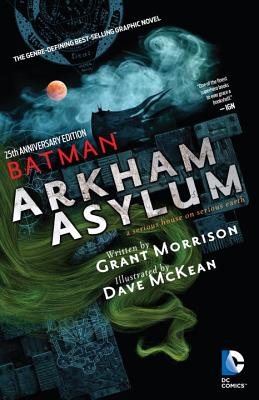
So now I enter into the dark woods of graphic novels with a few key guides at my side. Andy hands me superhero comics to see if they stick along with more high-concept sci-fi (see:Black Science). Coworkers of mine who come at graphica from an artists viewpoint hand me David Clowes, Eleanor Davis, and Chris Ware. Another coworker places in my hands Batman Arkham Asylum, which completely destroyed my view on the “super hero” graphic novel, along with Y The Last Man, which I will probably talk about at a later time. 

The graphic novel is not simply a book with pictures, nor is it art with words. It is the perfect merging of those two forms; the culmination of visual and textual storytelling. This descent into graphica and comics feels equally like a descent into madness and a step into a very new and beautiful world.

-Ryan

Saturday, January 16, 2016

I Think You Forgot Something: L.J. Davis

In an interview on KCRW's Bookworm, Lydia Millet says "humor is about objectification…I have to have the freedom to objectify because of the distancing that always happens when you objectify something. Distance is created that then can be brought back and telescoped into the too-closeness of communion. The idea that we can step out of ourselves and be with others in some fundamental way, the impossibility of that is also present." It's a balancing act few pull off well because, as Millet later goes on to say, "that kind of humor only works when the humorist loves the thing he/she objectifies, that if not handled lovingly, it is simply cruelty." In her inimitable style, Millet perfectly expresses what is so appealing to me in satire or subversive humor.       

This idea and the high-wire act it demands is present in all of L.J. Davis's fiction. The author of four novels first published between 1968 and 1974 (all but one of which, preposterously, is out of print), he was seemingly fascinated by the threat gentrification can pose to the working-class. Tossing well-intentioned, if somewhat self-indulgent, social misfits into the lion's den of  capitalism and alcoholism (synonymous conditions in his work), as well as grimace-inducing look at misogyny and perceptions of race. Davis's characters are men who drowsily saunter after the American dream, hellbent on the simplest of things: a nice place to hang their hat and an occasionally nice girl on whom to hang it. If this description paints the characters as a touch hypocritical, it's not by accident. Blithe can be charming but it is navel-gazing as well. Davis's characters tend to be overly sensitive but defensive men; they are victims but oftentimes that victimhood is borne of their own solipsistic demands. Lena Dunham with a John Wayne complex, perhaps.


Lowell Lake, the protagonist of A Meaningful Life (the one work still in
print), evaluating his marriage:
The old dim pleasantness had departed from their dealings as completely as if there'd never been any to begin with, but a peculiar side effect of this development was that Lowell found himself interested in his wife's personality. He couldn't remember a time when he'd been so interested in it, not even in college, when what had principally interested him had been her ass, if the truth be told, although he had also concerned himself with her personality at least to the extent of finding out whether she had a good one or a bad one. He'd decided she had a good one. Since then he'd thought about it very little except on the infrequent occasions when something seemed to go awry with it, but it always seemed to get fixed pretty quickly, and then it was all okay again, like a table whose wobble had been repaired. The rest of the time it just sort of stood there, a good and serviceable object whose height, width, length, shape color, and approximate density were assumed to be known. You could always count on it; it was exactly the same when you returned as when you left, never mind those phone calls to her mother and the midnight crying fits in the bathroom. It was a good little piece of furniture. For nine years Lowell had been married to a table.
His protagonists move through the novels with absolutely no impulse control, sometimes (mis)guided by a sense of do-goodery, their actions always to the detriment of everyone involved. They are little id-fueled narcissists who "disliked merry people and always suspected there was something wrong with their heads." This past reading of A Meaningful Life, my third, I found myself downright mortified twice but lost count of how many times I laughed out loud. I also found myself squirming through some of his startlingly dry social critique.

Not for everyone, to be sure. But as we move into a new year, the sleepiest time of year for new book releases, and Seattle's weather inflicts its worst on our collective Seasonal Affective Disorder, exploring Davis or one of his contemporaries (Percival Everett's novels, Joy Williams's stories, Michael Robbins's poetry)  could very well be your saving sardonic grace.


-Wesley

Saturday, January 2, 2016

Ryan's Favorite Books of 2015!!!!!

I've become better at starting early, and pestering my coworkers sooner, and thus producing the Bookseller Top Tens a little earlier with every passing year. Last year, I had them done on January 11th. The year before, on Jan 17th. And the year before that...February 26th. But this year, done on January first. Too good to be true!

And it was.

I forgot one. And this, after I berated and bullied people into getting me their lists on time. Ryan, in particular, asked me on the deadline day if he could write blurbs for his list. I said he could if he could get it to me by the end of the day, the end of the day being 15 minutes away.

He didn't write them.

But then I forgot his list.

So, here it is. Ryan's ten favorite books of 2015, complete with the blurbs I wouldn't let him write before.  Sorry, Ryan!

***
Ryan’s List of Books

Much like my life, there is no order to this list. So deep. And also, much like my life, this list is regrettably full of white men and very few women. There’s always next year.

  • In the Skin of a Lion by Michael Ondaatje - Prose from a poet's mouth, this book feels shrouded in fog and sepia toned. Ondaatje, known best for The English Patient, writes with understated poetic language that seeps directly into you. 
  • Last Exit to Brooklyn by Hubert Selby Jr. - One of the first and most powerful books to give a voice to the people. Selby has an unmistakable way of writing a dirtbag so that you emapthize with them and their struggle. 
  • The Soft Machine by William Burroughs - Madcap, grotesque, frustrating, and ultimately overly obtuse, Burroughs never fails to enrage. The Soft Machine is the first in his groundbreaking cut-up trilogy and while it may be inaccesible garbage to some, to the right reader it is somewhat accesible garbage. 
  • The Selected Poems of Pablo Neruda by Pablo Neruda - "Leaning into the afternoons I cast my sad nets/ towards your oceanic eyes." The most influencial poet (and possibly writer) of South America, Neruda writes with the utmost emotional power. 
  • A People’s History of the United States by Howard Zinn - Zinn rewrites the story of America, focusing on the laborers, women, slaves, natives, and all the "minorities" that were swept under the rug by the elite. This book should be required reading if only to get another narrative in the public consciousness. 
  • Slouching Towards Bethlehem by Joan Didion - In a quick series of essays Didion shines a light on her time in California in the early 60s. Didion quickly entrances the writer with her massive intelligence and piercing gaze, able to see through the flimsy disguises we as a nation erect. 
  • The World Doesn’t End by Charles Simic - Prose poetry at it's height, Simic takes the ordinary and tweaks it until it is surreal. Simic draws on his Eastern European upbringing to highlight the absurdity of the everyday. 
  • Men Explain Things to Me by Rebecca Solnit - In a world where we should all be feminists, Solnit has created a manifesto. At times devestating in what it sheds light on, Solnit is able to perfectly outline the series of powers that opress and malign the women of the world. Stomp the patriarchy!...or at least acknowledge that it is there.
  • David Boring by Daniel Clowes - This graphic novel is David Lynchian in its pace and plot and feels eerie in an indescribable way. Follow Boring as he floats through a nihilistic view of the world as a whole. Equal parts murder mystery and love story without the ethos of either. 
  • Beneath the Underdog by Charles Mingus - Can a myth tell its own story? Mingus attempts to, blending fact and fiction to an uncertain and satisfying conclusion in this memoir of his life. When it begins with the telling of his birth from his perspective, you know you may have a less-than-reliable narrator on your hands. Jazz fans rejoice. 

Friday, January 1, 2016

2015 Bookseller Top Tens!

I did it. The top tens before the end of January. And this year, in the format of one really, really, REALLY long post. We've got 28 lists of 280 (or so) great books for you. So, you have some reading to do.

Remember, our top tens do not have to be composed of books published only in the last year. If you read it this year, even if it was written and published 200 years ago, it can be on the list.

Also, new this year, I've consolidated all of our lists into one, giant, mega-top-ten list. The ten favorite books among all of us. Don't worry, all of our lists are available in their entirety after the jump.

The first four titles on the mega list had the most votes. The remaining six all had two votes each, as well as another nine titles. I chose the final six based on how much I heard coworkers talking about these books and what was said. For example, Ancillary Justice made the list over others based on the fact that I know two other booksellers who liked Ancillary Justice, just not quite enough to make their top ten. Negative comments overheard about books also factored in. It's a totally scientific, totally legit process. Trust me.

-Erin
Third Place Books' Definitive Best Books of 2015 
Colossal Top Ten List
  1. Between the World and Me by Ta Nehisi Coates
  2. A Little Life by Hanya Yanagahara
  3. Did You Ever Have a Family by Bill Clegg
  4. Barefoot Dogs by Antonio Ruiz Camacho
  5. Ancillary Justice by Ann Leckie
  6. Eileen by Otessa Moshfegh
  7. Smoke Gets in Your Eyes by Caitlin Doughty
  8. Ongoingness: The End of a Diary by Sarah Manguso
  9. Princess and the Pony by Kate Beaton
  10. The Game of Love and Death by Martha Brockenbrough

Click through for all our other favorites!

Monday, December 28, 2015

Why I read Old Books


I rarely read new books. Two or three a year might make the cut if they sound too good to miss (please keep writing, Marilynne Robinson), but the vast majority of my diet is drawn from the books of the dead. In part there is a simple reason for this, rooted in my unusually high capacity for both pickiness and laziness. Most of the worst old books have been weeded out by the passage of time, leaving a well-tended garden of excellent reading. New books, on the other hand, can be a thankless slog through mediocrity. I'll never get back the time I spent reading White Teeth. And all that Ian McEwan! It was like the literary equivalent of white noise. 

But there's another reason I love old books that extends even to the ones that aren't that good. Novelistic clichés can be found in any era, but it's the ones from the present time that bother me the most: upper-middle class academics having affairs; young people making pop-culture references, anything described as 'off-beat'... I once began a book in which the protagonist was an artist living in New York with a sister who was a writer in London. I threw it against the wall after three pages. 

But by a magical process similar to the beneficent aging of wine and cheese, the same kind of offhand, thoughtless writing in an old book is transformed into fascinating cultural detail. Here is a real, sincerely-delivered line of dialogue from John Buchan's The Three Hostages (1924): "He's a first-class sportsman and said to be the best shot in England after His Majesty." What a great line. If that book had been written today, I'd have to say the author was a satirical genius. It's like reading an adventure story written by Bertie Wooster. 

There's a short story by Jorge Borges called "Pierre Menard, Author of the Quixote," in which the narrator reviews an entirely faithful recreation, by a contemporary French writer, of Cervantes' Don Quixote. "Cervantes’ text and Menard’s are verbally identical," writes the critic, "but the second is almost infinitely richer." It's a conceit that plays on the fact that any book is enriched in complexity and subtlety merely by the passage of time. Reading old books, we all become Pierre Menards, recreating them in the light of our own times. Even the best historical fiction can only emulate the way people thought in another time and place; only actual historical books can offer the real thing.

Borges

What often stand out are outdated prejudices. Jules Verne's Around the World in Eighty Days (1889) portrays a world in which all English people are emotionless robots and no American bats an eye at dueling on a moving train. Comparing H. Rider Haggard's King Solomon's Mines (1885) with John Buchan's 1910 African-adventure novel Prester John (which reads like a colonial Mein Kampf) is to witness the invention of the racist logic of Apartheid before your eyes.

But you can gain insights, too, that are difficult to find anywhere else. In Cause for Alarm (1937) and his other pre-war thrillers, Eric Ambler dramatized his anxiety about the spread of fascism. The Weimar-era stories of Christopher Isherwood mention very little about fascism, but they offer a window on a society that was all too short-lived. 

So go buy an old book! They're cheaper, too.

-Stephen

Saturday, December 26, 2015

New Author Crushin'

There are many joys that come with bookselling, naturally other booksellers being top of the list. Besides their wit, kindness, humor, and general all-around goodness, they're also readers. And as a reader, I often turn to these other, more well-read readers for ideas on what I should read next.

Wes!
So when I was hoping to find some books or essays on obsession, I knew just who to go to. Wes is invariably the guy you want to talk to if what you're searching for is just a little bit unsavory, just a little outside the mainstream, just a little cringe-inducing, but hugely fascinating. What's great about Wes is his ability to offer books that target just what you need but also suggestions so weird they couldn't possibly work and then turn out to be exactly what you're looking for. So in my search for obsession, Wes offered up a book about stalking, and one about drinking, and also one about a diary.

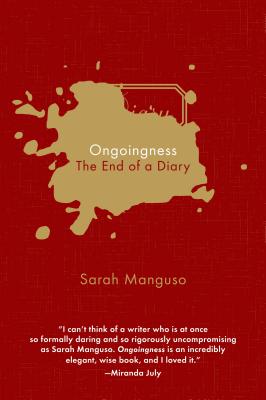
Well, more precisely, it's about a woman keeping a diary, and then not keeping that diary. The book is Ongoingness: The End of a Diary, and the author is Sarah Manguso. Wes had figured that Manguso's obsession with recording her life, (her diary had stretched to 800,000 words-- for a frame of reference, War and Peace is just a little shy of 600,000,) was exactly the kind of obsession I was looking for. He was right.

Ongoingness is one of the best books I've read this year, perhaps my favorite. Instead of a memoir, it's more of a commentary on the keeping of her diary. What it meant to her, what she wanted it to be, how it failed. It seems no coincidence that Manguso's manifesto comes in this slim little volume; miles away from 800,000 words.

Of the diary, she says, "I wrote so I could say I was truly paying attention. Experience in itself wasn’t enough. The diary was my defense against waking up at the end of my life and realizing I’d missed it."

Illustration by Montse Bernal/Reference:
Andy Ryan; From the New Yorker
Ongoingness feels like a study of thinking and overthinking. It's spare and  precise; brilliant. And eerie in it's universality. She explores motherhood, mortality, purpose, but mostly her compulsion to record evidence of her own existence. Manguso reads my mind and writes about my exact worries, yet she says it with an elegance and economy that is startling. So many times I stopped, and reread, and opened my journal to record her words and my own meager thoughts about those words. There is no way to read this brilliant woman and not feel like a dullard in comparison, but the kind of dullard who may just be on the right track

After Ongoingness, I inhaled more of her work. The Guardians, an elegy on the loss of her friend, his madness, and her fear of her own. And The Two Kinds of Decay a study of the rare disease Manguso battled in her twenties and the depression and havoc it lead her to. All of her books are beautiful; all of her thoughts, wise. She is the writer I wish I was, the thinker I aspire to be.

Read her.

-Erin

Monday, December 7, 2015

Bookseller Spotlight!

Christina at Ravenna

It was probably always Christina's fate to wear big glasses and work with books.

How long have you worked at Third Place? Less than six months. Before that I worked in speciality coffee for several years.

What section(s) do you shelve? History, Gardening, Crafts, Fashion/Beauty, Art/Architecture/Photography, Adult Coloring Books (a burgeoning section if ever there was one!), African-American Studies, Native American Studies, Women's Studies, LGBT, Economics, Business, Nature, and Environment. (editor note: Christina also handles Ravenna's Instagram account, go see her beautiful pictures.)

Most underrated/ book in your section? I am always very happy when people take home a copy of An Indigenous Peoples' History of the United States by Roxanne Dunbar-Ortiz!

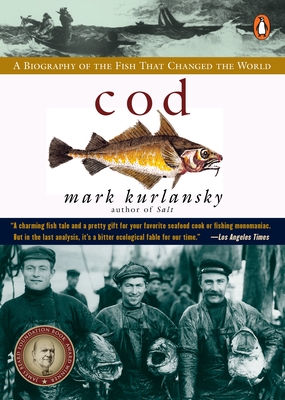
What's your favorite section in the store? Probably history. There is always, always something to learn, and I think the more familiar one can be with history, the greater perspective and compassion one can gain. Also, history has Mark Kurlansky and that guy loves cod enough to make it interesting, which is pretty miraculous (see his 1997 book, Cod: A Biography). I think about Kurlansky's cod monomania and the paths his wonkish interest took him down almost as often as I think about how Joanna Newsom and Andy Samberg are married.

What book do you recommend most? Right now I'm recommending my November staff pick, Sofia Samatar's A Stranger in Olondria from Small Beer Press. I'll quote from my review: "Samatar is an incredible writer and [her novel's] plot of a naive young man drawn into matters over his head will speak to anyone whose travels have made them both sick with excitement and the longing to go home. "

Favorite bookstore, besides Third Place? My favorite bookstore will always be Book People in Austin, TX. I pretty much grew up there! My summers as a kid were often spent there, dropped off at my request with lunch money and quarters for the pay phone. My family were late adopters of cellphones so that line about pay phones probably makes me sound older than I am.


What are you reading now? Right now I am reading Eichmann in Jerusalem, by Hannah Arendt and also a Georgette Heyer omnibus. I suspect I am not alone in wanting to leaven heavy reading with something light.

Do you have to finish a book once you've started, or do you give up on books? Uh, I give up on books all the time. I try to give every book a fair chance but sometimes the book is awful or you just aren't in the right mood. Also, the grim satisfaction to be found in discarding a book that's driving you up a wall is not to be missed. My grandmother and mother both claim that Gravity's Rainbow is the only book they've ever (independently within their own histories as readers) thrown across the room. I didn't throw it. I set it down very firmly.

A book you regret not reading sooner or a book you regret never having read? I wish I had read
Octavia Butler sooner! Everyone should read Butler as soon as possible.

Favorite author, or three, or five? Susanna Clarke, Octavia Butler, Fumiko Enchi, Nnedi Okorafor, Dorothy Sayers, Karen Armstrong, Ursula LeGuin, Natsuo Kirino, Gao Xie, Yoko Ogawa, PD James, Barbara Tuchman, Per Petterson, Tove Jansson, Miyuki Miyabe, Roxane Gay, Karen Lord, Junichiro Tanizaki, Rabih Alemeddine, Sofia Samatar, Janet Mock, the Bronte sisters, Wilkie Collins, NK Jemisin...

Do you have an all-time favorite book? What is it? I'll say instead that a book I wish I'd written is The Ill-Made Mute, by Cecilia Dart-Thornton.

Guilty reading pleasure? I am firmly in the camp of "there is no such thing as guilty reading". If we feel guilty about reading something--romance novels, erotica, thrillers, whatever--it is probably because there is a problematic social stigma against it that has nothing to do with the work's content or value, and everything to do with narratives about whose words are important or what subjects are "legitimate".

Do you keep books? Borrow them? Lend them? Borrow and lend! I love that a thing my coworkers do at Third Place is buy multiple copies of their favorite books expressly for the purpose of loaning them out with no expectation of getting them back. That's awfully cute.

How are your bookshelves arranged at home? My bookshelves at home are like a messed-up Tetris level. There are floor stalagmites of books which I have tried to arrange aesthetically. There are two booksellers in my household, so...

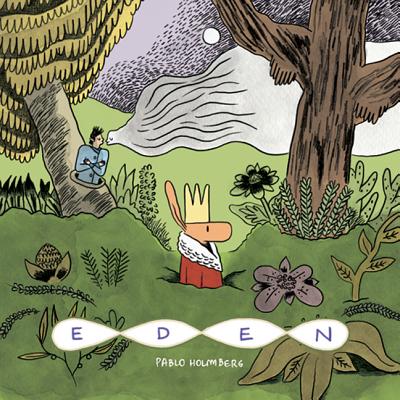
A book you loved that you wouldn't have read if someone hadn't recommend it to you, who recommended it? Eden, a graphic novel/comic by the Argentinean artist Pablo Holmberg. My partner recommended it to me!

Favorite movie version of a book, or a movie that most ruined a book? The news that a favorite book is being adapted into a movie usually causes either wild panic or a headache. Like, the Golden Compass adaptation was cringeworthy. But the BBC miniseries adaptation of Jonathan Strange and Mr Norrell is amazing. I was so scared it would be bad, but it's not!